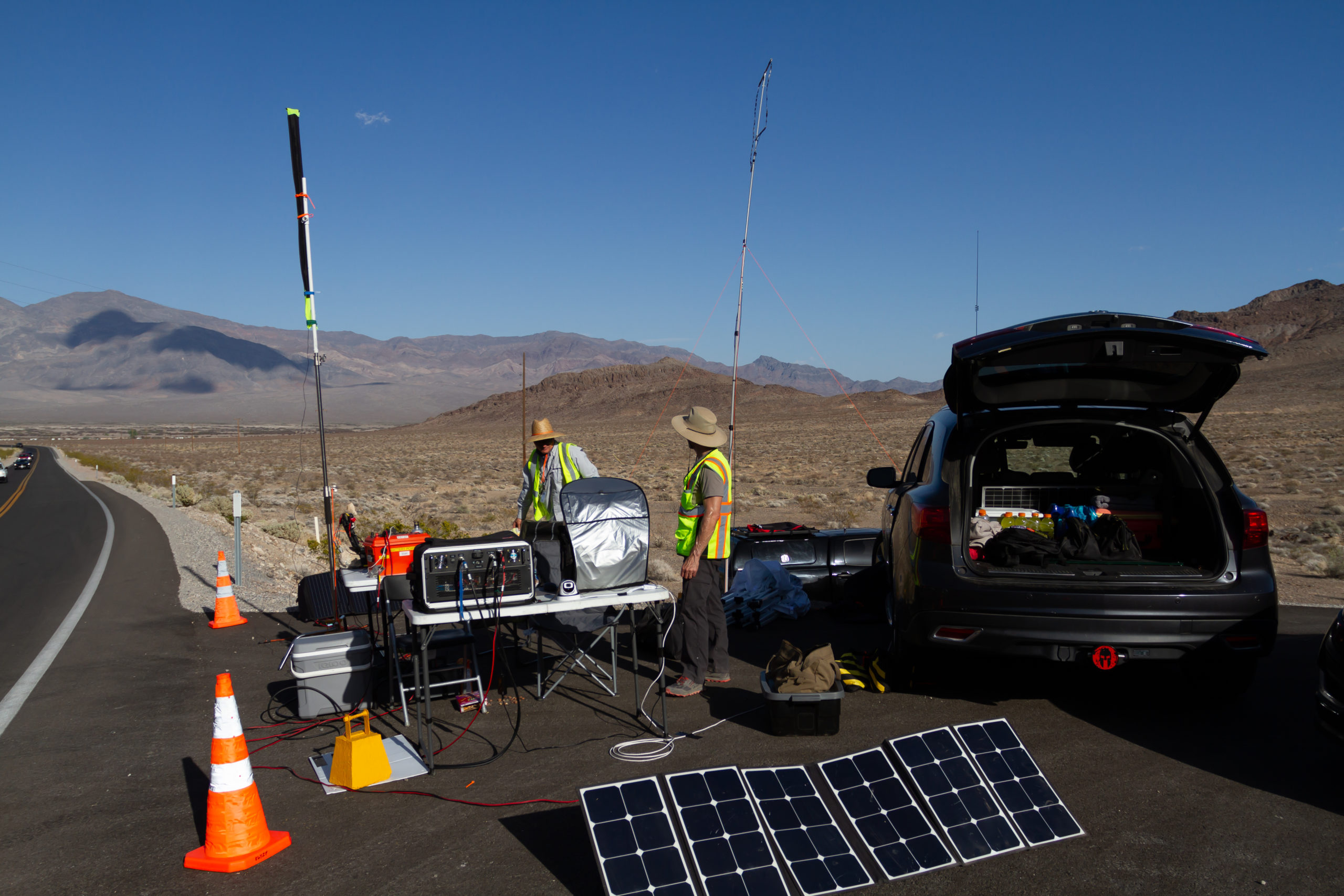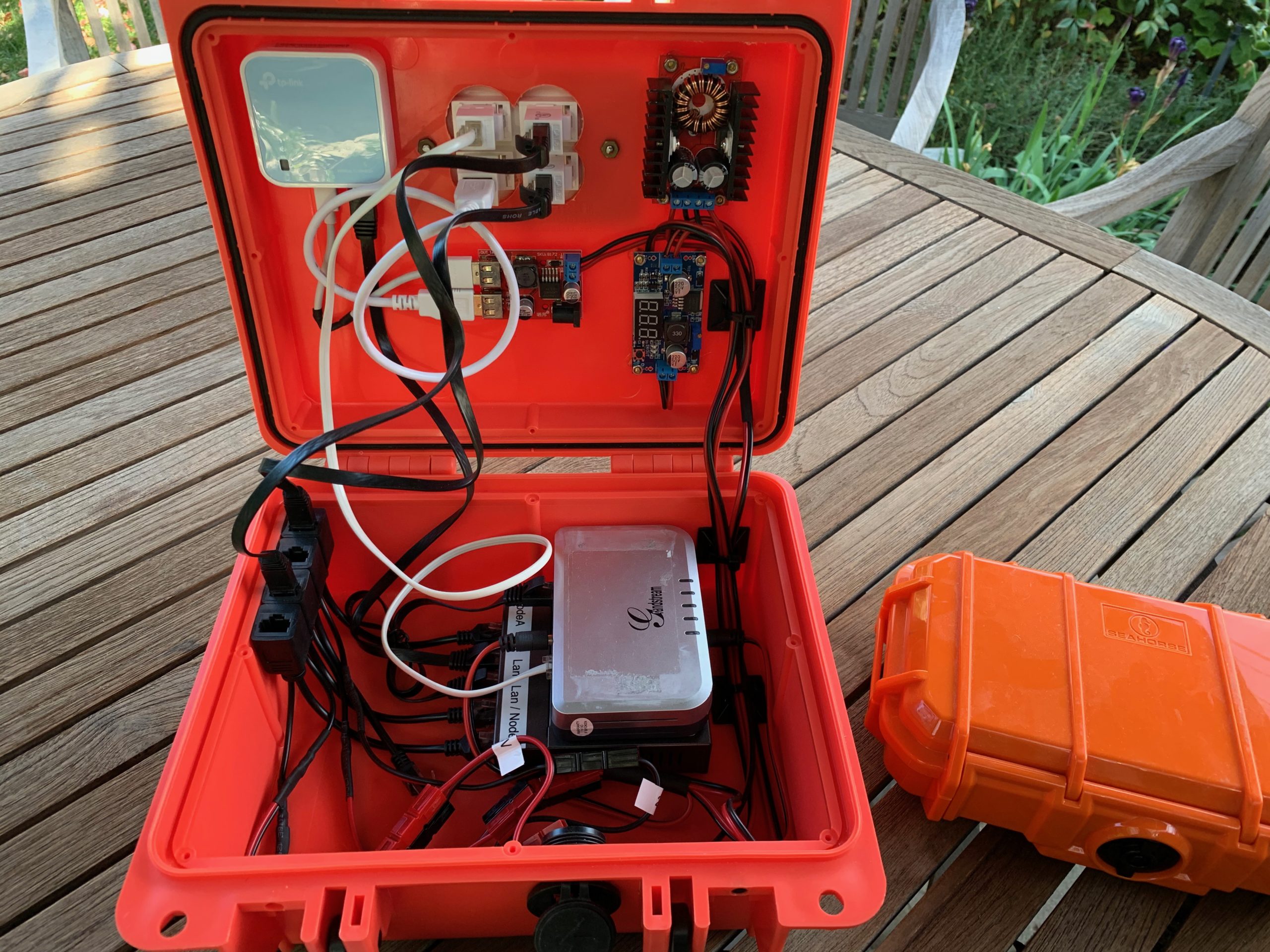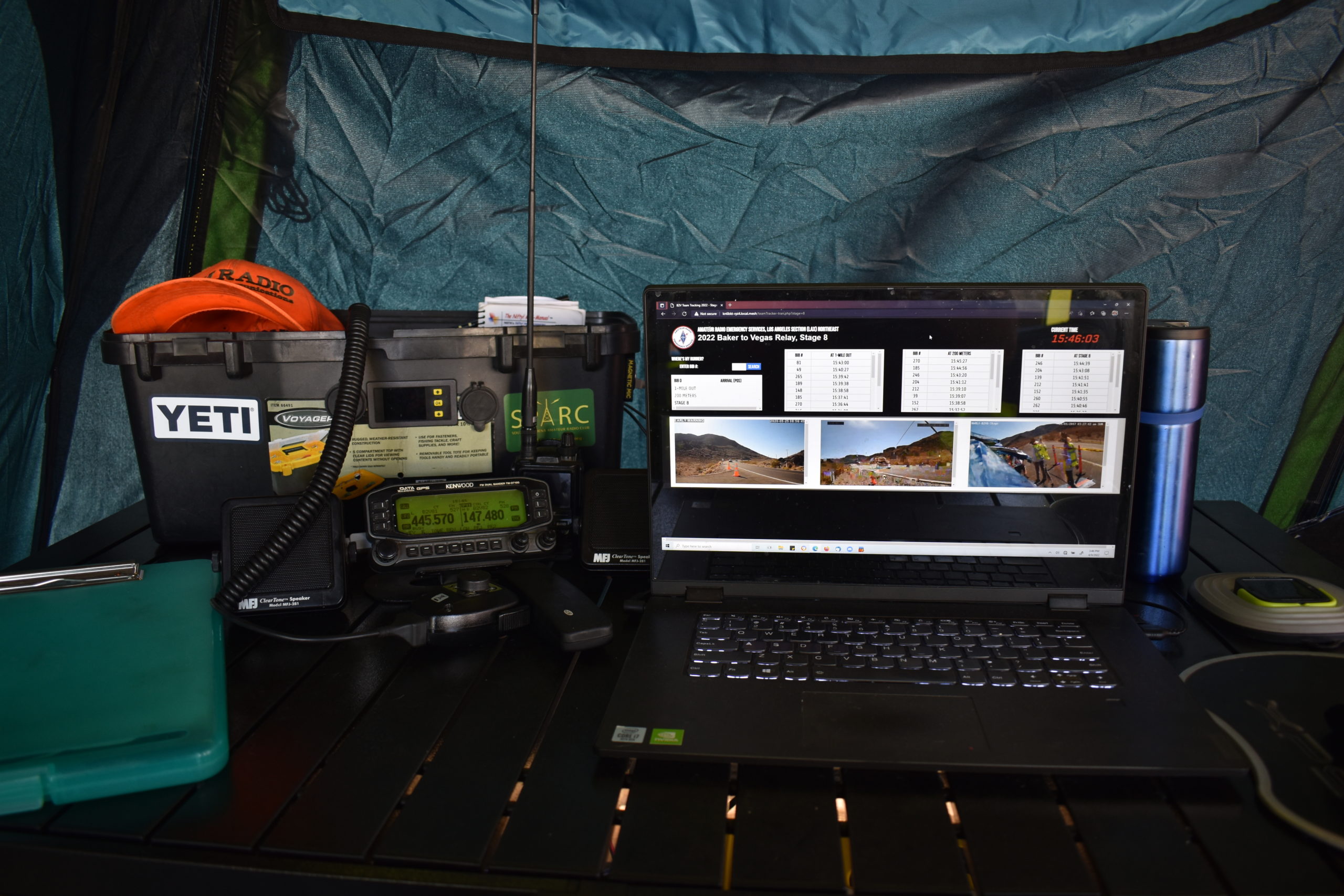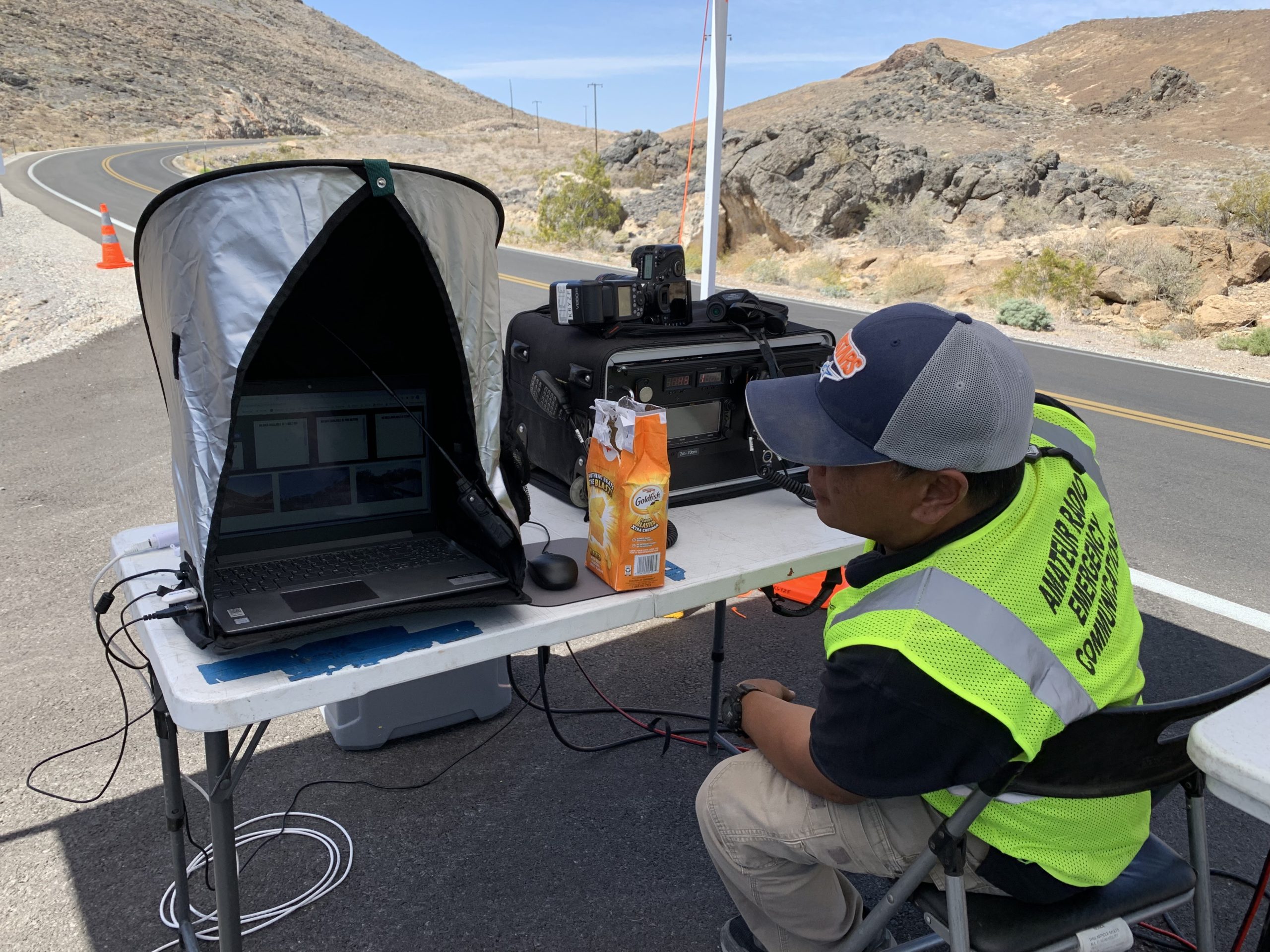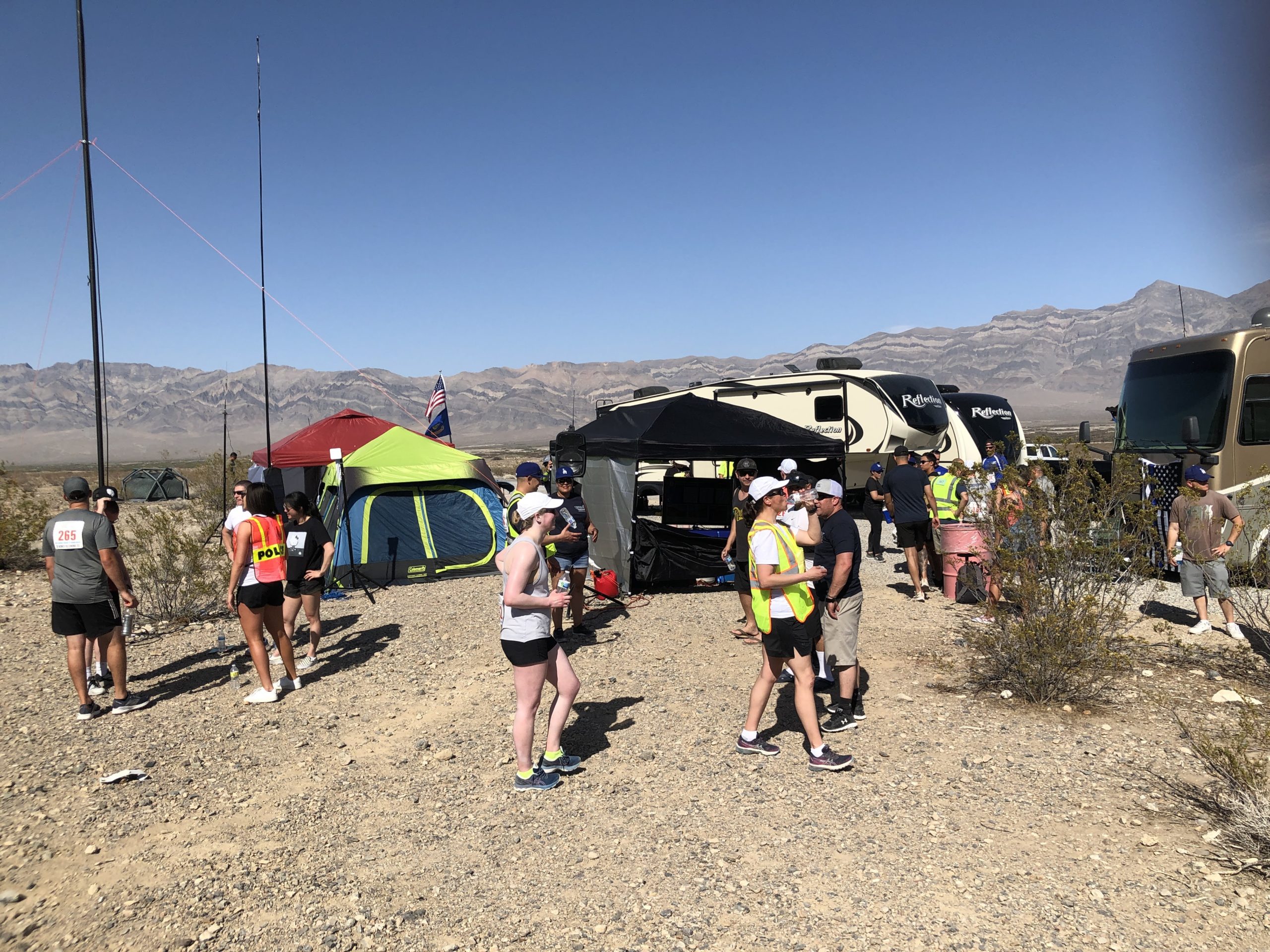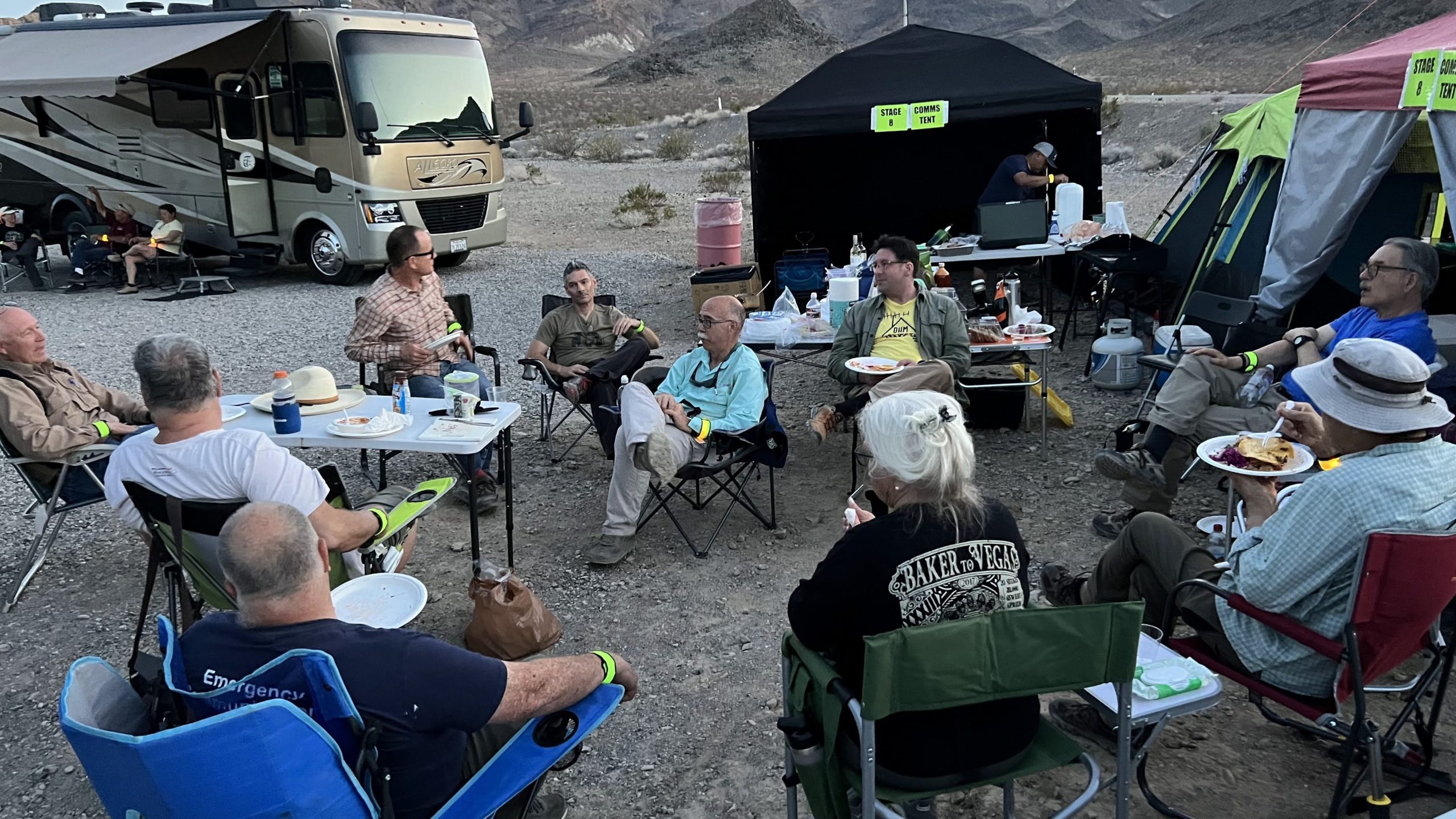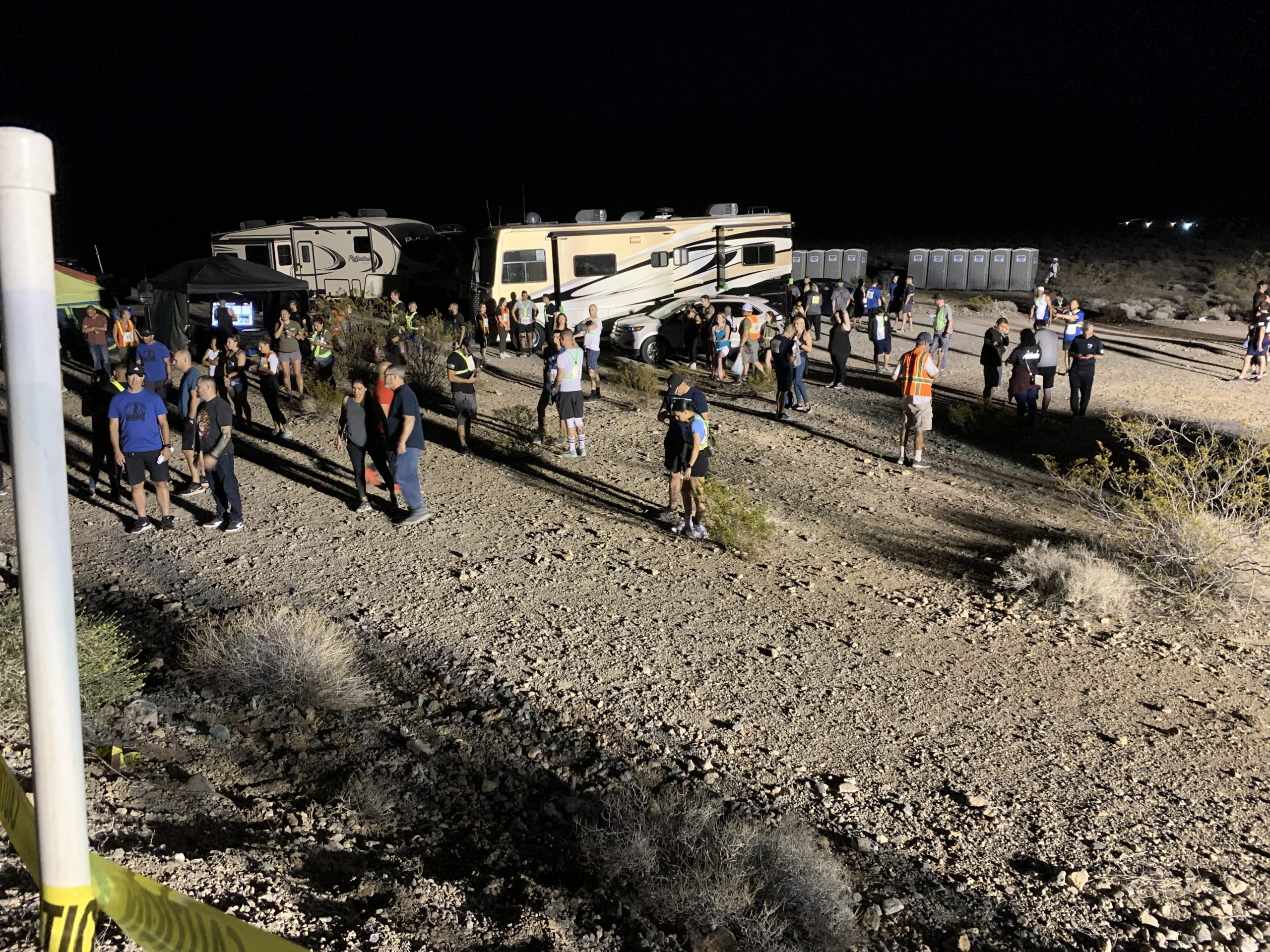

At our May 4 membership meeting, Jeff Liter, W2JCL, presented a recap of ARES LAX Northeast’s deployment to the annual Baker to Vegas relay race. Each year, a dedicated team of volunteer operators from Northeast maintains a checkpoint along the race route. Below are a few of the pictures that Jeff shared.
The lunar landscape of the Baker to Vegas race.A portable mesh kit for WiFi speed on the go.This station monitors activity via cameras on the mesh network.Robert, K6YZF, operates at Stage 8 of the race.Baker to Vegas has a fun, positive energy despite (or maybe because of!) the difficult conditions.The ARES LAX Northeast team takes a meal break.The camp site at night.
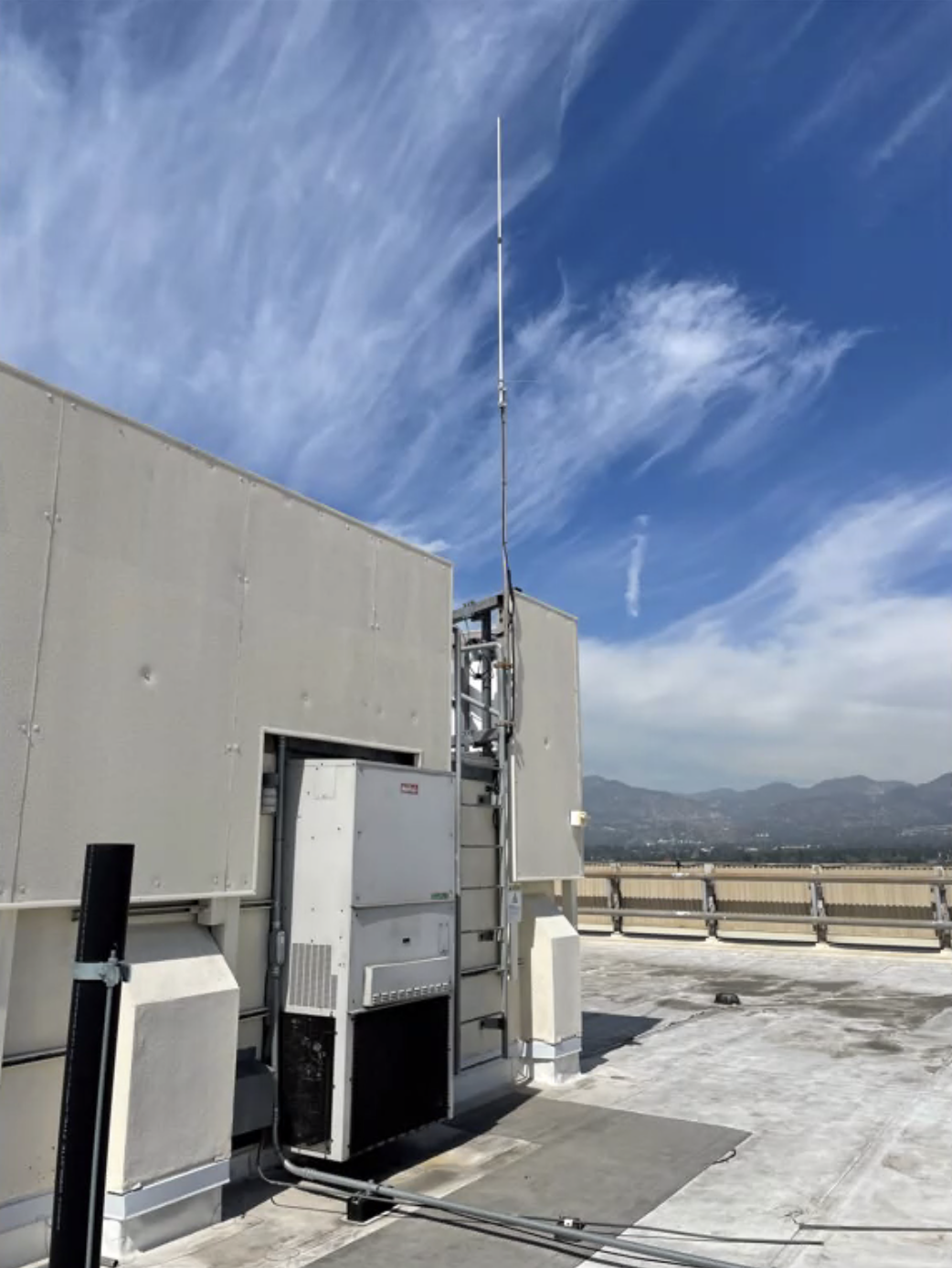
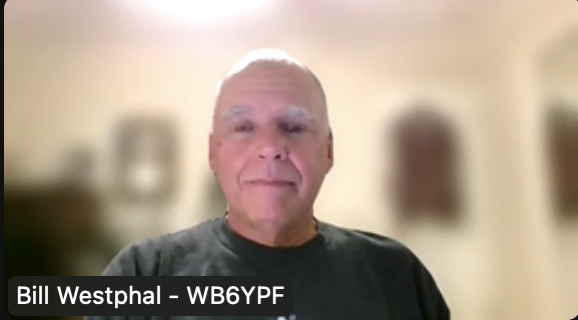
On Wednesday, April 6, SPARC welcomed Bill Westphal, WB6YPF, the trustee of one of our area’s most important ham radio resources, the TELCO repeater in Pasadena.
TELCO, W6MPH, was originally installed by the amateur radio club of the Pacific Telephone and Telegraph Company (hence the name). Bill joined the phone company right out of high school in 1969, and he has been carefully maintaining the repeater since 1992. In 2017, the Pasadena Radio Club stepped forward to contribute funds for the repeater’s continued operation. PacTel may be gone, but the legacy of its radio club is in good hands.
Bill gave a brief history of repairs and upgrades he has made to TELCO over the years. The most important recent repair to TELCO had nothing to do with the repeater itself – a microwave antenna located on the same roof as TELCO was leaking signal and causing interference. After grounding the offending equipment, the noise is gone and TELCO sounds great once again. Bill also revealed the origin of the station identification, “Welcome to the D Light Full W6MPH repeater.” The digital ID system doesn’t include the word “delightful,” so Bill programed it to say the word phonetically. For a time, Bill connected a PC to the repeater that would read “A Visit from St. Nicholas” on Christmas Eve.
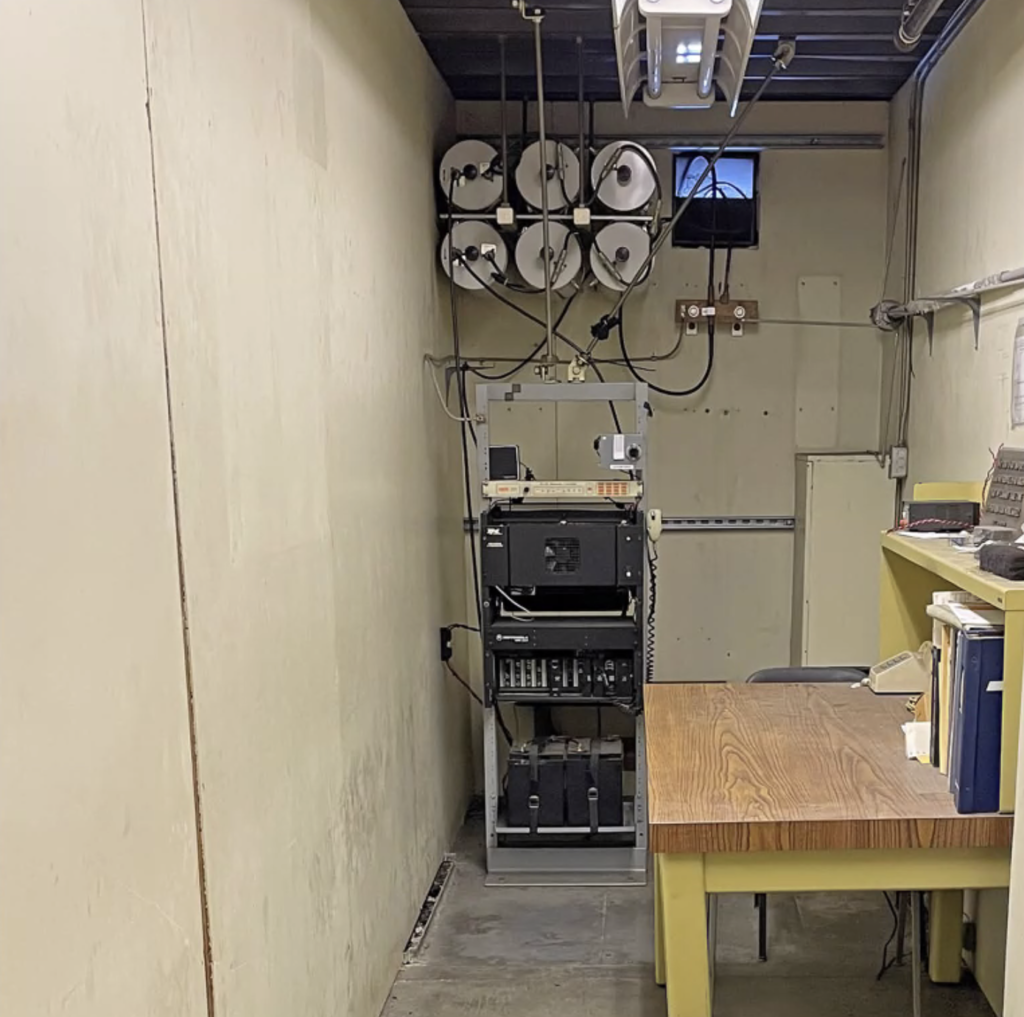
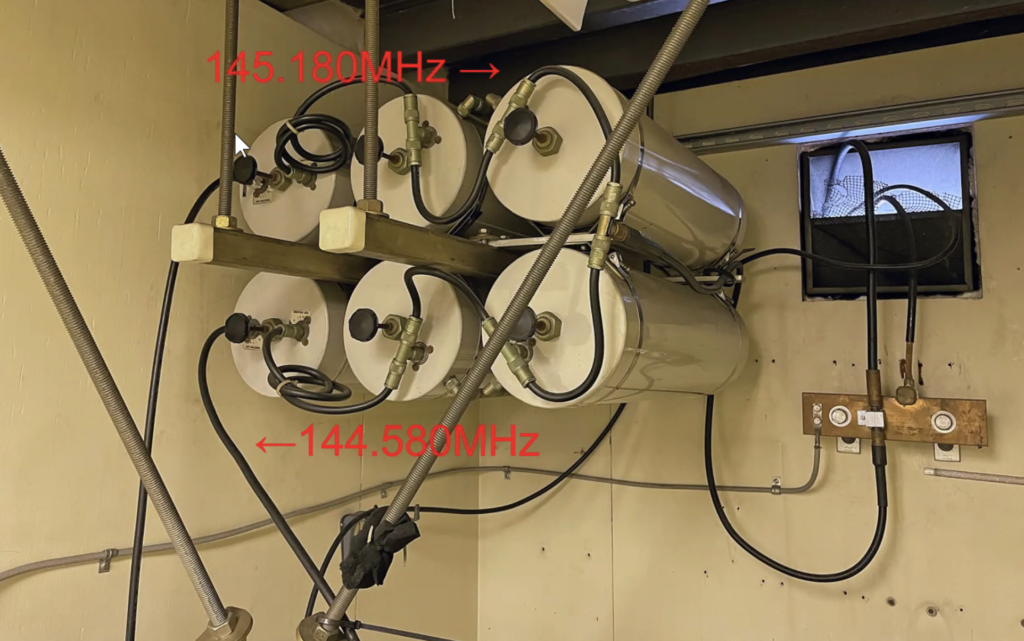
TELCO’s current configuration. Its output power is 30 Watts. The small grey box with the dial is an exciter driver built by Allen Wolff KC7O.Two rows of duplexers separate the input frequency (bottom) from the output frequency (top).
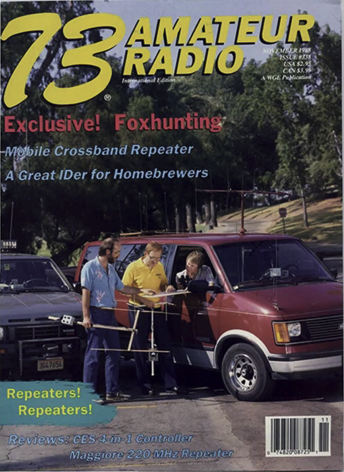
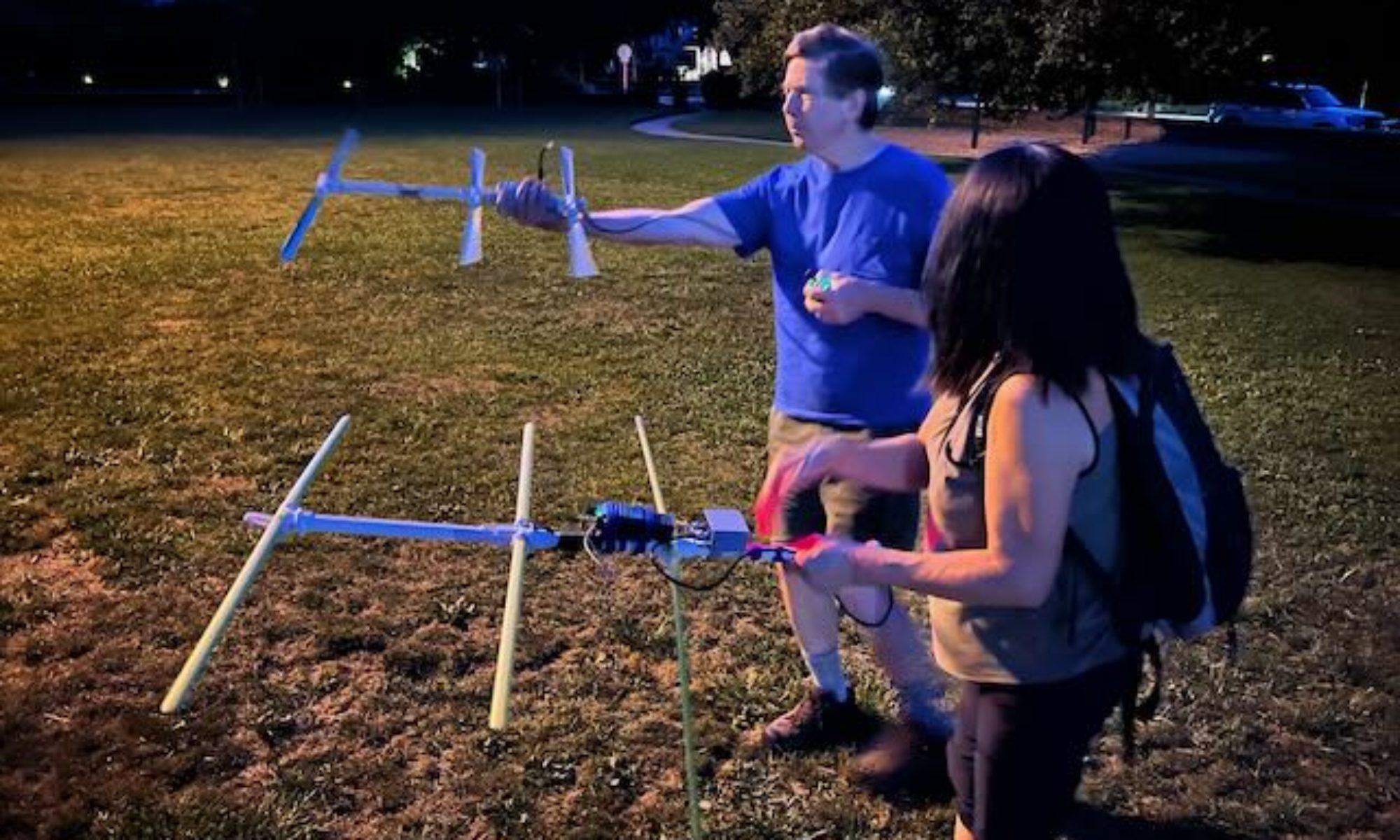
On Wednesday, March 2, SPARC welcomed Scott Bovitz, N6MI and Bill Hacker, WB6MGT as they presented “Transmitter Hunting: How to Drive Yourself Crazy, Hunt Sometimes-Hidden Signals and Still Have Fun on a Weekend!”
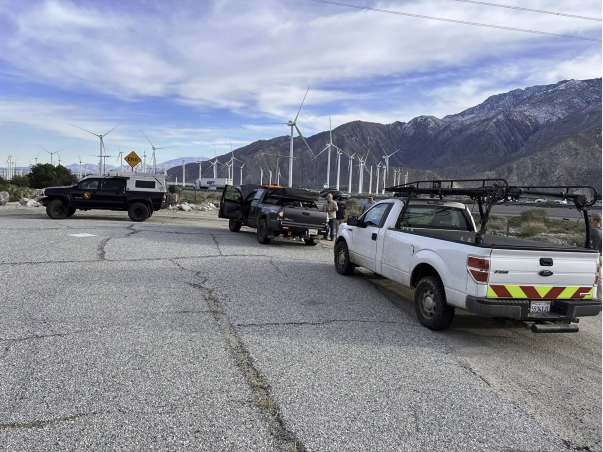
Both Scott and Bill have been licensed operators since 1969, and of all the aspects of the hobby, t-hunting is the one they are most passionate about. Scott explained that the best way to think of t-hunting (also known as fox hunting) is “electronic hide and seek.” Scott and Bill have been on day-long hunts that have taken them throughout Southern California, into Arizona and Nevada, and as far as St. George, Utah. The image above shows a gathering of t-hunters earlier this year in Palm Springs.
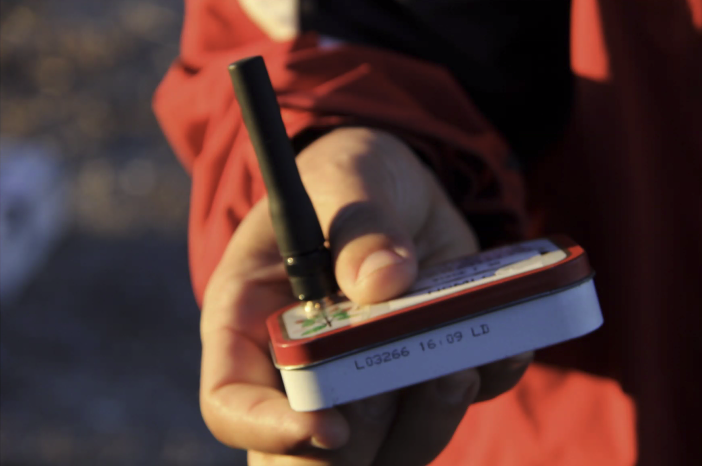
A tiny transmitter, or “fox box,” made from an Altoids tin. This model of transmitter is a fun DIY project and the perfect size for a t-hunt in a park.
All it takes to get started in t-hunting is a handheld and, ideally, a four-element Yagi antenna. Scott’s mobile station is far more elaborate, based on an Icom 7100 and a sturdy antenna mast that slides in through the roof of his car. Hidden transmitters broadcast a beacon signal on 146.565 simplex, the nationally-coordinated t-hunt frequency. Typically, when a hunter finds the transmitter, there is a sign-in sheet for logging call signs, mileage driven, and the time. There are usually no prizes, just bragging rights.
Here are a few links that Scott shared for those who’d like to explore t-hunting:
At our February 2022 monthly membership meeting, SPARC welcomed a fixture of the local ham community, Nancee Darling, K8NBD. Nancee is an active member of several local groups including ARESLAX Northeast and ALERT. She gave an important presentation on Stop the Bleed, a program from the American College of Surgeons that teaches how to stop bleeding in a severely injured person. Nancee is a certified STB instructor, and she advocates that everyone should learning how to provide assistance in an emergency. Stop the Bleed is “a skill that can be utilized with your family, in your neighborhood or after that horrific traffic accident. You will enhance your ability and confidence to recognize life-threatening bleeding and intervene effectively. The person next to a bleeding victim may be the one who’s most likely to save him or her or yourself.”
Nancee followed up a few days later with more detail on liability concerns about intervening when someone is injured. “While Good Samaritan laws are different between jurisdictions,” she explained, “most of them share three common elements. They are that the helper is protected from liability if:
They obtain the permission of an ill or injured victim to render aid, when possible. They provide care in an appropriate and non-reckless manner. They provide care due to the situation being an emergency, and trained help has not arrived yet.”
Below is a video Nancee recommends on how to use a tourniquet.
SPARC thanks Nancee for sharing this practical and potentially life-saving information.
At our August monthly membership meeting — yes, six months ago, sorry — SPARC welcomed Jason Oleham, KM4ACK, the creator of Build-a-Pi. If you’re thinking about using a Raspberry Pi as your shack computer, Jason’s Build-a-Pi script can install many of the most popular ham radio apps and utilities automatically. Jason’s YouTube channel is a great source of information about Raspberry Pi, field operations, EmComm and digital modes. SPARC thanks Jason for speaking with us and for sharing his work with the entire ham community!
The South Pasadena Amateur Radio Club is taking a short summer break and will NOT meet on Wednesday, September 1, 2021. The weekly check-in nets will continue and the monthly meetings will resume on Wednesday, October 6, 2021.
At the August meeting of the Pasadena Radio Club, Jim Marr, AA6QI, presented a selection of ham equipment that PRC has been collecting from the estates of deceased members and friends. Some of the equipment is outstanding and available at very low prices. Prospective buyers should contact Jim at AA6QI@arrl.net. The equipment is available for pick up in Pasadena. Jim has tested the equipment to ensure it operates properly or to identify what must be done to make it operate correctly. The below PDF (4.7 MB) lists and illustrates the available equipment. (Note for new hams: The term “SK” means “silent key,” a radio operator who has passed away.)
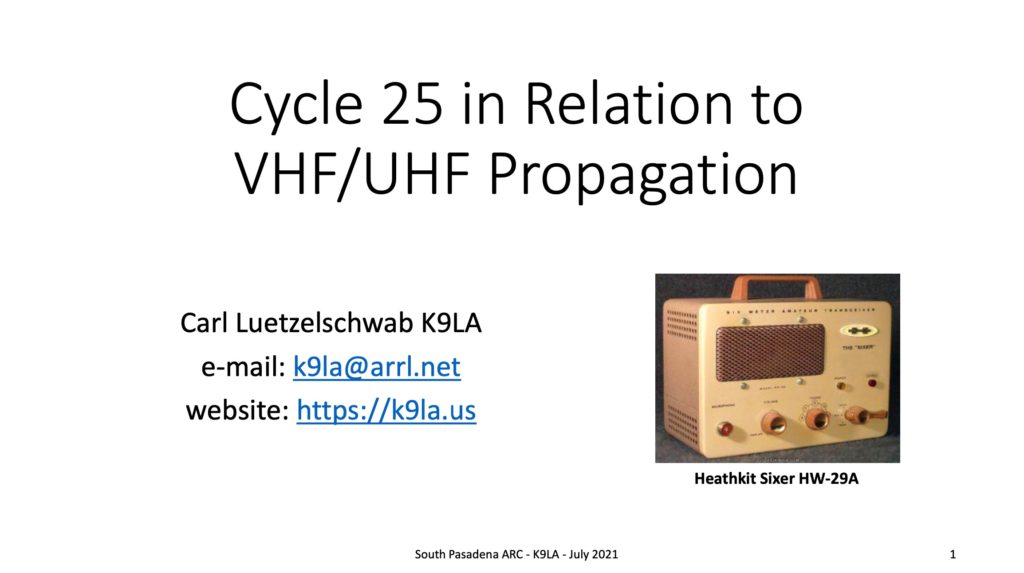
At our July monthly membership meeting, SPARC welcomed Carl Luetzelschwab K9LA, an expert on the science of radio propagation. Professionally, Carl worked for forty-one years as an RF design engineer, and in his spare time he was a columnist for WorldRadio (and later CQ) beginning in 1997. He continues to write a monthly column on radio topics at his personal website. His presentation to our July meeting is linked below (2 MB PDF). SPARC thanks Carl for speaking with us and for his continued devotion to the hobby!
Members of the South Pasadena Amateur Radio Club will be activating a few local Summits on the Air (SOTA) peaks on Sunday, July 18, 2021. SOTA is a great opportunity to combine hiking and portable operating (see the Summits on the Air website for more information). Peaks and times will be posted as “alerts” and “spots” on SOTAwatch during the day on Sunday. Bands and modes will vary but the operators will use the “North American Adventure Frequency” 146.580 MHz FM simplex for local contacts at some point during their activations. Please feel free to make contact with those operators, they will certainly appreciate adding you to their logs.
If you are interested in activating a peak, consult the map at SOTLAS and the Bobcat Fire closure map to find peaks in open areas of the Angeles National Forest. As with any voluntary wilderness activity, choose a peak well within your physical ability, consult weather and trail conditions, take appropriate water/food/clothing/equipment, and tell someone where you are going and when you expect to return.
You can use the Contact Us page of our site to let me know if you plan to participate (activator or chaser), and I’ll make sure we listen for your call sign and maybe even arrange some summit-to-summit contacts.
Be safe and have fun, Richard Besocke, KI6ZKM SPARC President
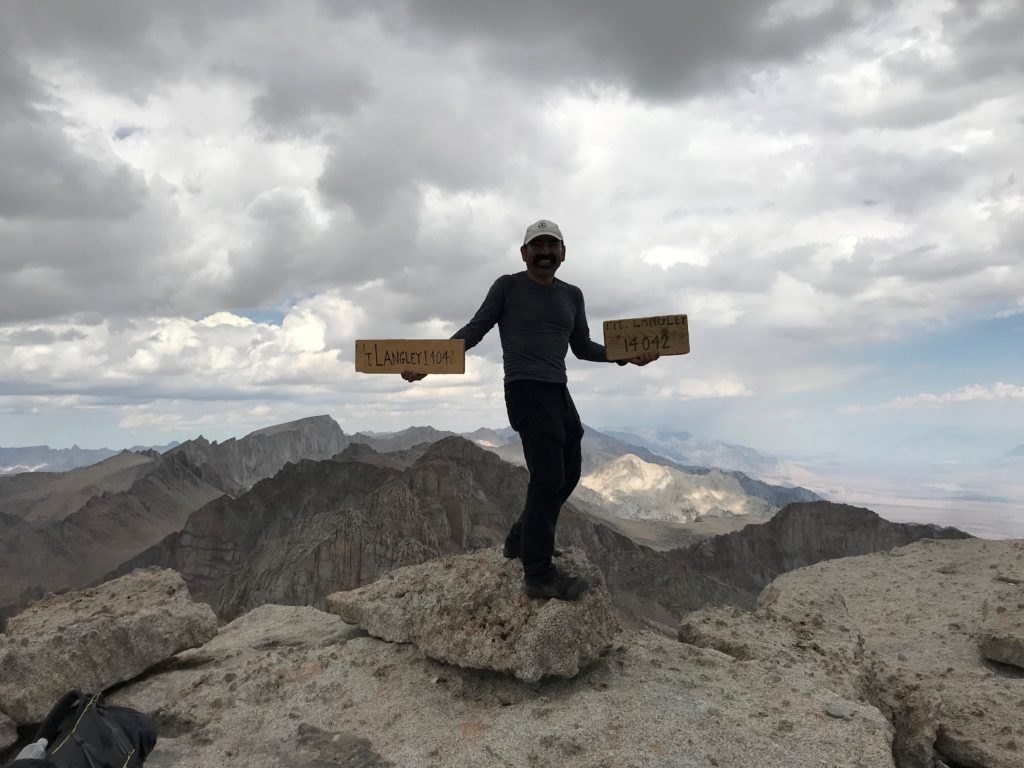
To inspire your own SOTA adventures, below is a report from SPARC member Jose Gonzalez KM6PFM about activating Mt. Langley in the Sierras last weekend. Langley is a 14,000’+ peak neat Mt. Whitney and is quite an accomplishment.
A lot busier area than I had envisioned. For some reason I thought people would be elsewhere. Boy was I wrong. Arrived at sundown. Horseshoe Meadow is in the thin air — 10,000ish feet. [The area] has to offer, yes, horses. I overheard a little boy say, “Boy, these horses are loud!” lol… Camp full, luckily scored a parking spot. My hiking group wanted to get all 22ish miles done in a day and rest back at Horseshoe Meadow. So at 4am the next morning with views of the Milky Way overhead, we headed out. Cottonwood Lakes were awesome with the sunrise. Old Army Pass was a bear in the searing sun (take more water than you think if you come out). Up on the pass at 12,000 feet, found some bighorn sheep roaming. Followed the Jenga-style cairns on the way to the summit. Some clouds rolled in, and it started snowing a bit. The rocks get larger, and the ground gets sandier. Made it to the summit, and after a few pics, it started raining under partially-cloudy skies. Lots of blue sky still and thankfully no thunder or lightning.
Jose KM6PFM at the summit of Mt. Langley
Quickly assembled my Yagi in the rain and got to it. Tried to self spot with SOTA Goat, but I guess the signal bars on my phone were just there for decoration because it wouldn’t establish the link, lol. Made a few local contacts in Bishop area then aimed the Yagi south. Very happy to reach ~280km away to W6/CT-013 Keller Peak where W6MHS, KJ6IJT, KM6WCO [thanks for spotting me!], and KE6PLA had set up to try and catch me. Some raw video is linked below. I don’t normally get to hear myself on the other side of the QSO, so that was cool. I was only active about 10-15min then had to pack it up due to increasing rain/snow and friends clamoring for me to hurry up ?. Made it back down and enjoyed a nice evening at camp. Grateful for no nausea or altitude sickness Could have benefitted from another day at camp — blood oxygen levels ranged from a low of 82% on arrival day to 85-93% on summit day. All in all, another memorable activation!
At our June monthly membership meeting, John Aboud, KK6ZVQ presented an overview of Field Day rules. This is the second year that the ARRL has modified Field Day rules to accommodate social distancing. You can download the presentation here (445 KB PDF). He also discussed two online tools that could make a socially-distanced Field Day more fun.
Discord Discord is a chat and video streaming app much like Zoom. But unlike Zoom, which was designed for business use, Discord was designed by and for video gamers, so it has extra features that are useful for radio contesting. For example, rather than a specific, time-limited Zoom meeting, Discord “servers” are up and running at all times. Members of that server can log in and log out as they please and talk to whomever else is logged in at the time. Also, many people can share their screens simultaneously and stream their activity. You could share a view of your N3FJP screen or GridTracker or just your face. And you can selectively mute any of these streams — it would be overwhelming to hear all of them at once. If you’d like to join the SPARC Discord server, use the Contact Us page to request access.
ContestOnlineScore.com ContestOnlineScore.com is what the URL implies, an online scoreboard for monitoring a particular contest. Once you create your account, you can affiliate with a club and/or a contest team. You configure your logging program (N3FJP, N1MM+, etc.) to share your score with the site. To affiliate with SPARC, you can select “South Pasadena Amateur Radio Club” from the pull-down menu of clubs. Click here for information on how to configure your logger to post the scores.
This year Field Day will start at 11:00 a.m. Pacific time (1800 UTC) on Saturday, June 26 and end on Sunday, June 27 at 1:59 p.m. (2059 UTC). SPARC encourages everyone to get out, make some contacts and have fun!