Are You in a Hazard Zone?

Los Angeles Times quake reporter Rong-Gong Lin II is back with an epic article headlined “The ‘Nightmare’ California Flood More Dangerous Than a Huge Earthquake.” Lin describes a scenario that USGS scientists have named the ARkStorm or “Atmospheric River 1,000-year Storm.” In summary, it would be bad. He uses the phrase “inland sea.” Given that this model is a “1,000-year storm,” you probably don’t need to run out and buy a raft, but you may be tempted.

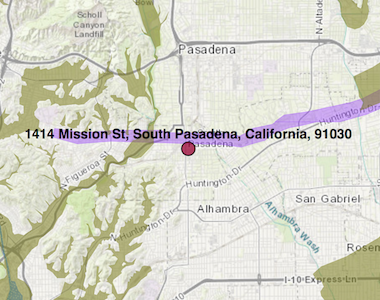
One reader comment promoted by the Times editors links to a service called MyHazards hosted by the Governor’s Office of Emergency Services. Once you input your address, the service tells you what hazards may impact your home, including fire, flood, tsunami and earthquake. Take a look, and then take action to prepare for an emergency. Because there are plenty of scenarios short of a 1,000-year storm that could disrupt your community.

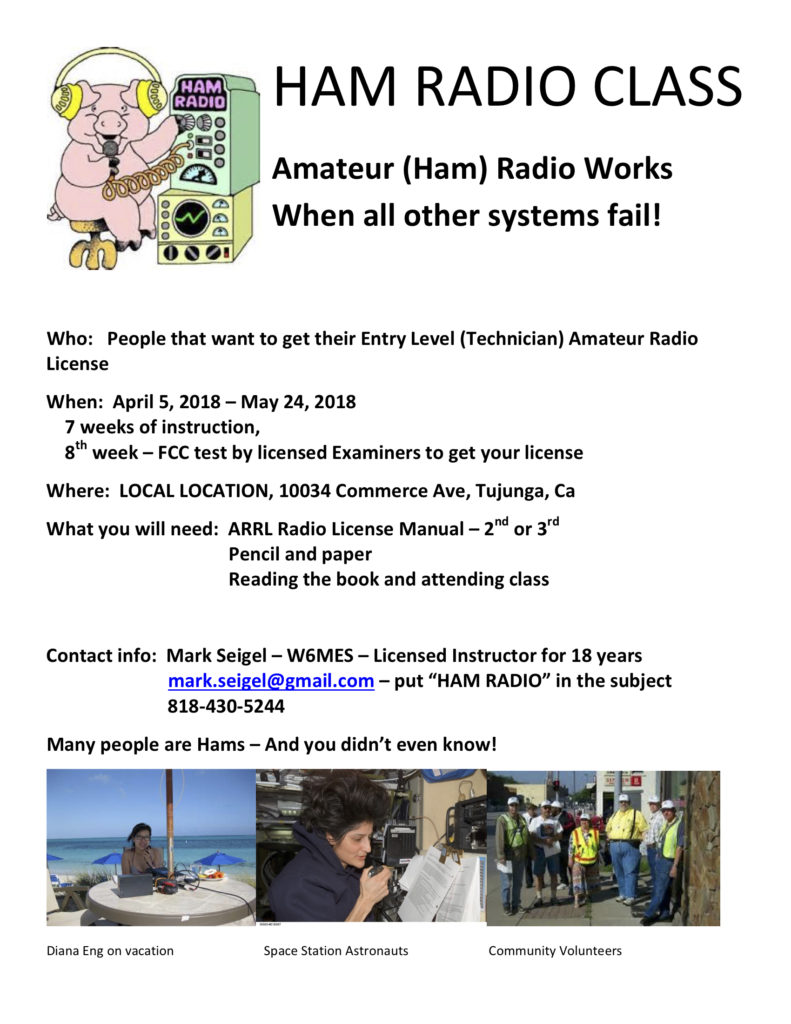
Looking for a Technician License Class?

If you’ve been waiting for an entry level class to earn your ham ticket (your FCC amateur radio license), consider this one from Mark Seigel W6MES. Mark is a member of the PRC and provides printing services for their monthly newsletter.

When: April 5, 2018 – May 24, 2018
7 weeks of instruction
8th week – FCC test by licensed examiners

Where: 10034 Commerce Ave, Tujunga, CA

What you will need: ARRL Radio License Manual – 2nd or 3rd edition
Pencil and paper

Contact info: Mark Seigel W6MES – licensed instructor for 18 years
mark.seigel@gmail.com – put “HAM RADIO” in the subject
818‐430‐5244

Train for an Emergency with Ham Basics 101

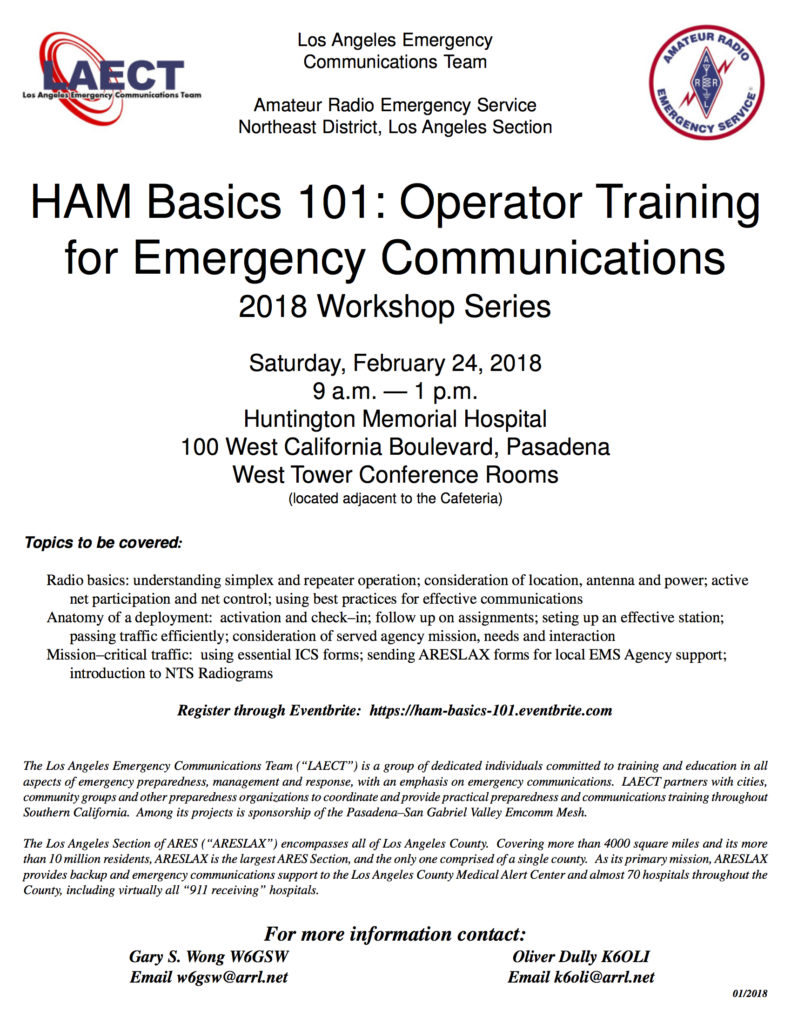
SPARC’s own Oliver Dully K6OLI will be leading a series of training sessions at our ARES Northeast activity days, held the last Saturday of the month at Huntington Hospital. The goal is to practice emergency communications skills. If you have never had proper training or you would like a better understanding of how to put your ham skills to use, visit the first session on February 24.  If you have any questions, feel free to contact Oliver or Gary Wong W6GSW at the email addresses on the flyer below.

Click here for Activity Day Training 2018 flyer as PDF.

Is It Legal to Operate Your Radio in the Car?

The short answer: Yes, it is legal to operate your radio in the car.

Long answer: Governor Jerry Brown recently signed into law AB-1222, which clarifies that operating mobile is still legal. Hams in California had been concerned about a law passed last year that seemed to ban operating amateur radios in cars. The well-intentioned law, AB-1785, was meant to cut down on accidents and deaths from distracted driving, a growing problem. The target of the law was, obviously, driving while using mobile phones. But the language in AB-1785 was broad and could have been interpreted to ban ham radio use as well.

AB-1222, signed on September 26,  removed the terms “specialized mobile radio device” and “two way messaging device” as prohibited devices.

Here is a quote from the Assembly Transportation Committee bill analysis:
“The author believes AB 1785 inadvertently included devices that were not intended to be included in the wider cellphone ban. Devices such as two-way radios functioning on business band or civilian band (CB) radios which have a more limited scope of functions, and thus, a more limited potential for distracting a driver. … According to guidance issued by the California Highway Patrol, a radio installed and mounted in a vehicle with a wired hand microphone, for example, business band or CB radio, is not considered to be wireless communication device, nor is it considered a specialized mobile radio device, and therefore not subject to enforcement under AB 1785.”

Many thanks to the local ARRL chapters who reached out to their state representatives and made sure this important clarification was passed. The quote above was taken from a useful post about AB-1222 by Andrew Silvester KC6O of the Sacramento Valley chapter. (They also have a post about how pot grow lights interfere with ham radio because, you know, Northern California.)

Don’t do this though.

Getting Ready to Build a 2m J-Pole

Allen Wolff, KC7O
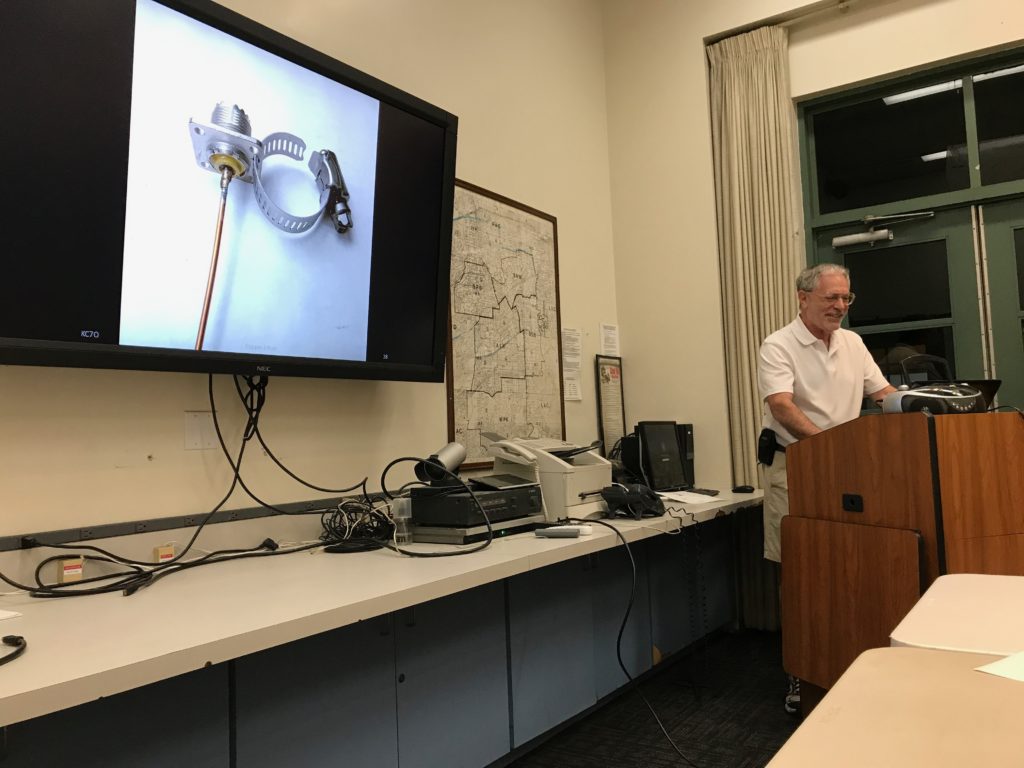
Allen Wolff, KC7O explains his antenna connector clip on September 6, 2017.

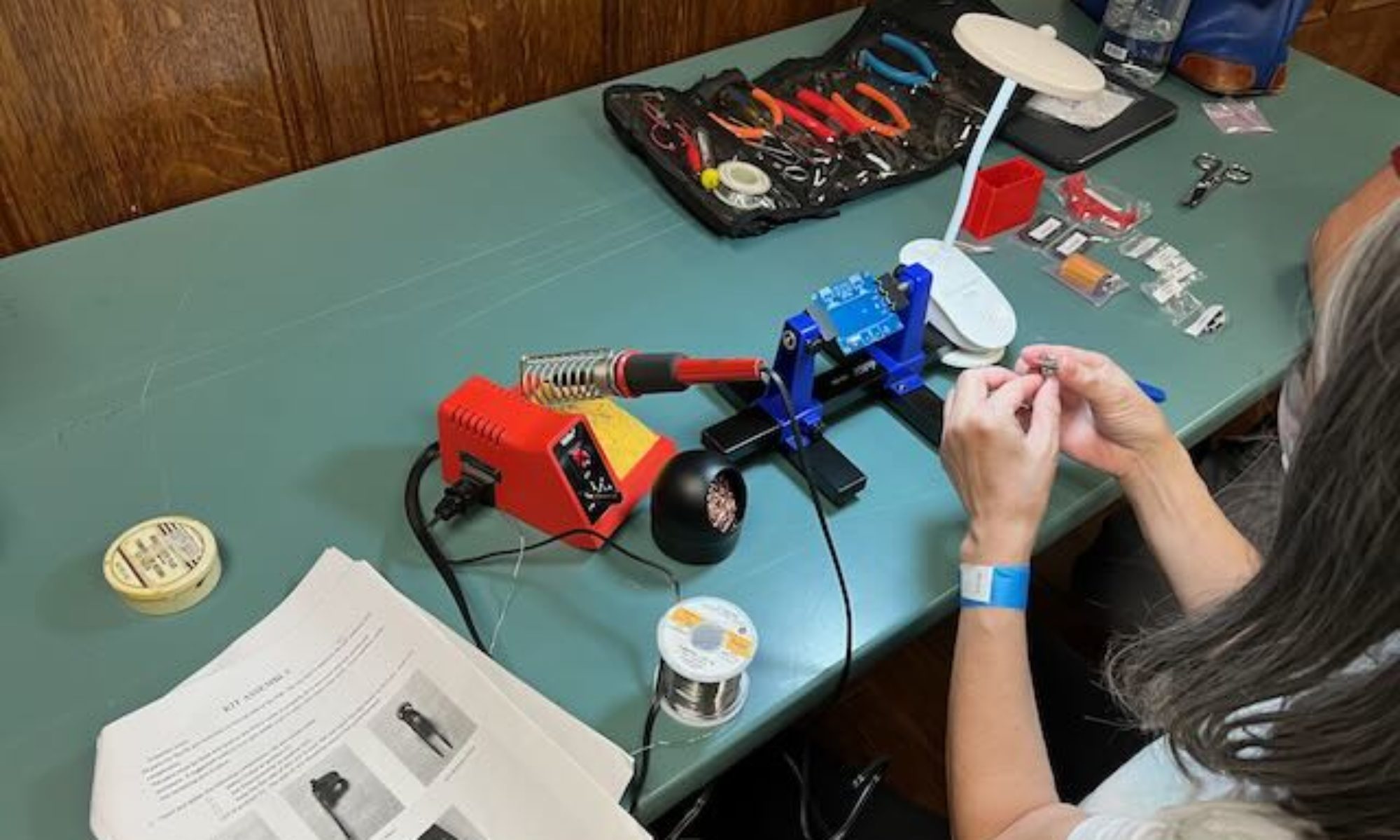
Our thanks to Allen Wolff, KC7O for once again sharing his expertise with SPARC. At our September 6 meeting, Allen spoke about building a 2m J-Pole antenna. He explained the pros and cons of various plans available on the Internet and how he settled on a design that balances performance with simplicity.  We also had a quick refresher on soldering, an essential skill for antenna building. Allen will lend us his story sticks — boards marked to show the proper lengths of copper pipe in the antenna design — when we hold a club build later this year.

If you are interested in building a J-Pole for 2m operation, contact us before September 29. We plan to have a group build over two sessions in October. As Allen discussed, making your own antenna from scratch is a great way to learn about radio physics — and you get a shiny “copper cactus” to show off.

Meet SPARC at the 2017 SP Police and Fire Open House

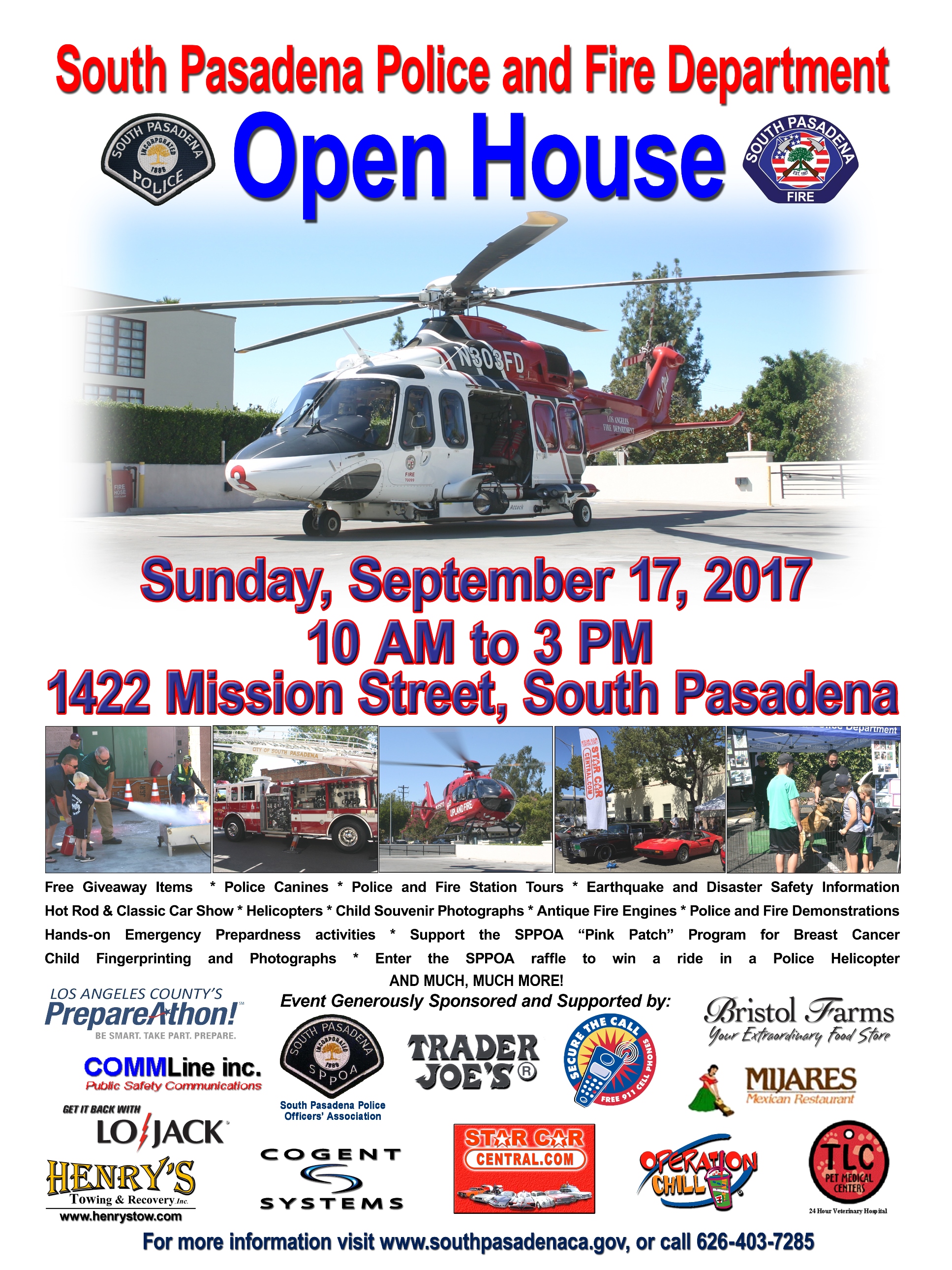
Stop by the SPARC booth at this year’s SP Police and Fire Department Open House on Sunday, September 17. The open house runs from 10am to 3pm. This fun and informative event runs in conjunction with the Cruz’n for Roses classic car show supporting the SouthPas Tournament of Roses float committee. SPARC members will be happy to tell you about club activities and our work with CERT and Neighborhood Watch. Hope to see you there!

Sunday, August 17!
2017 SP PD/FD Open House

The Raymond Fault: Now Even Bigger!

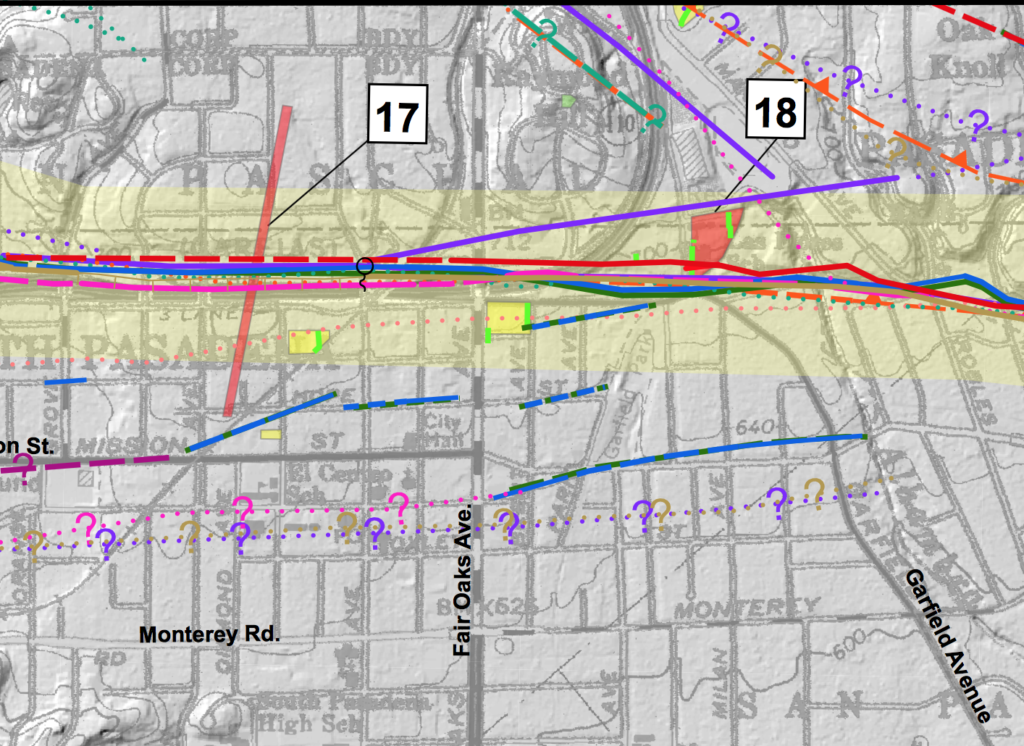
The LA Times reported today that  the California Geological Survey has issued a revised map of the Raymond fault which indicates the fault is longer than was previously believed. Experts now say that an earthquake along the Raymond fault, which runs directly under South Pasadena, could be as large as a magnitude 7. Uh oh.

California Geological Survey Map

Today’s article by Rong-Gong Lin mentions a specific risk factor in our city. “South Pasadena only recently decided to take a new look at brick buildings and found out that nearly half of the 60 brick structures — including stores, restaurants, apartments and churches — in that city were not retrofitted” to protect against earthquake damage.

If you want to learn more about the new map, check out the full press release on the California Geological Survey’s website. The Survey also provides a detailed map of faults throughout the entire state. And if you’ve been meaning to get more prepared for a possible quake, “Putting Down Roots in Earthquake Country” by the USGS is a great place to start.

Thanks to Oliver K6OLI and Tim WA0PTC for the info. 


How to Solder with Allen KC7O

SPARC thanks Allen Wolff, KC7O for the entertaining and informative presentation on soldering that he delivered at our June 7 meeting. Allen has over forty-five years of experience in aerospace manufacturing operations and quality management. He has worked on the Apollo lander, military communications, missile guidance systems, spacecraft deployment, satellites, and Radio Frequency Identification (RFID) systems.

Due to copyright issues, we can’t distribute Allen’s slides, but below is a list of references Allen consulted while creating his presentation.  Use these links to brush up on your soldering skills now as we prepare for our next club activity, creating an antenna for use in a radio “go box.” As Bob, WB6YJJ said in his recent club email, “Antenna connectors are tricky to solder, so come and learn the CORRECT way from an expert.”

Wikipedia on soldering
Crimping vs. Soldering
Instructables on soldering tips and tricks
Hakko brand wick
Science Buddies primer
Adafruit guide to common solder problems
Death by “tin whiskers”