
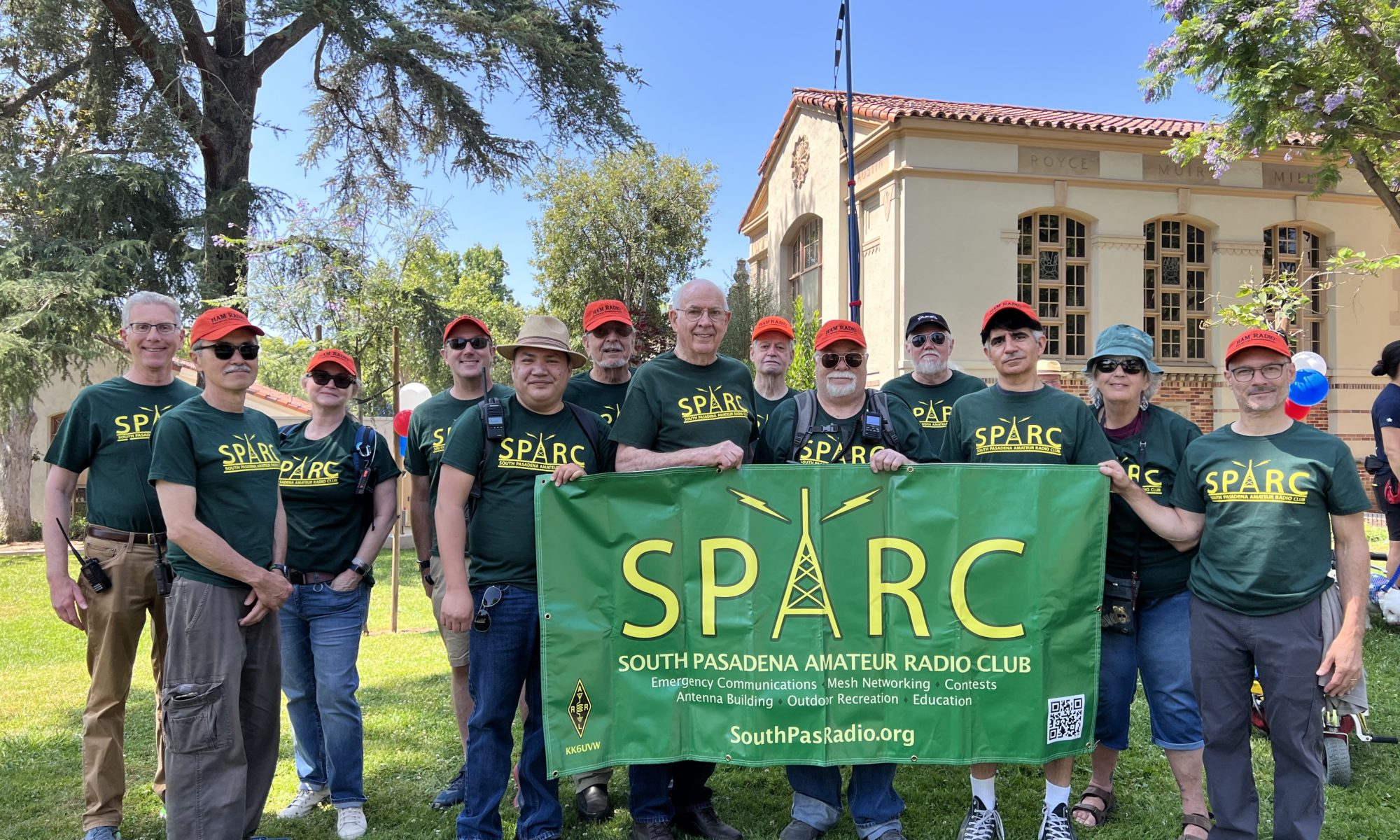
SPARC was proud to march in South Pasadena’s annual July 4th parade and reconnect with friends from across the community. Our thanks go out to the Festival planning committee for hosting another fantastic celebration.
Festival of Balloons 2023
SPARC was proud to march in South Pasadena’s annual July 4th parade and reconnect with friends from across the community. Our thanks go out to the Festival planning committee for hosting another fantastic celebration.
Members and friends of the South Pasadena Amateur Radio Club gathered in Eddie Park on June 10 for the annual ARRL June VHF Contest. Propagation conditions varied over the course of several hours, and most of our contacts were located in LA or Orange counties. We were happy to be ambassadors for the hobby to several passersby, and we discussed the city’s emergency preparedness plans with a representative from the South Pasadena police department. We look forward to the next opportunity to get on the air together and share our expertise.
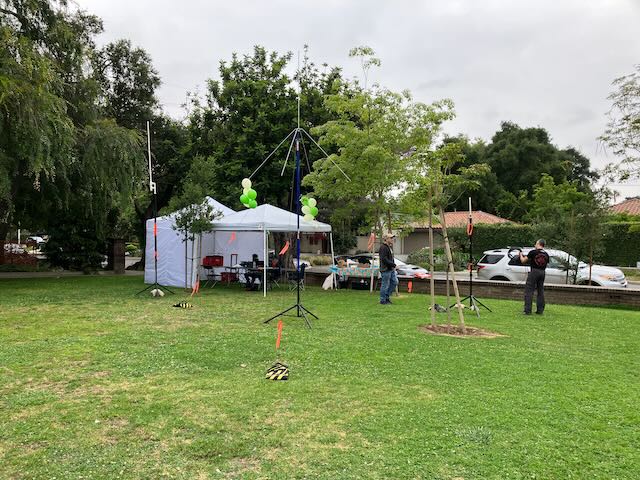
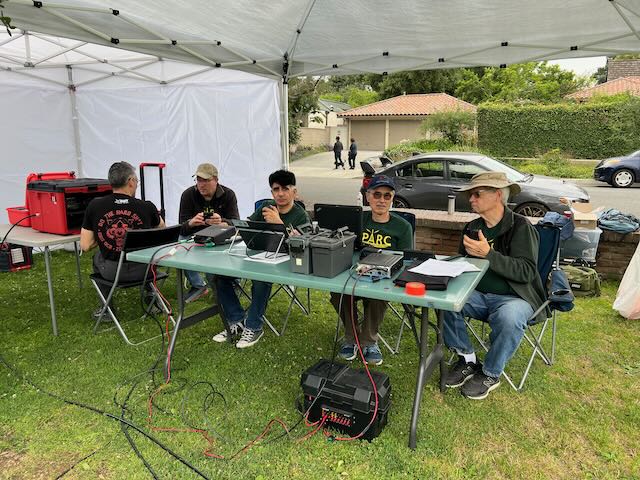
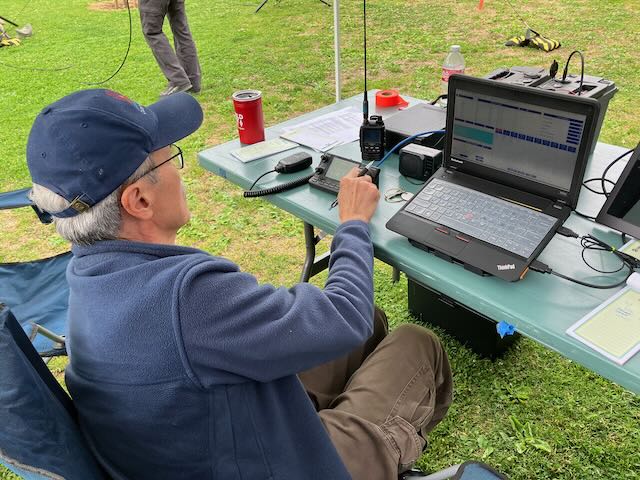
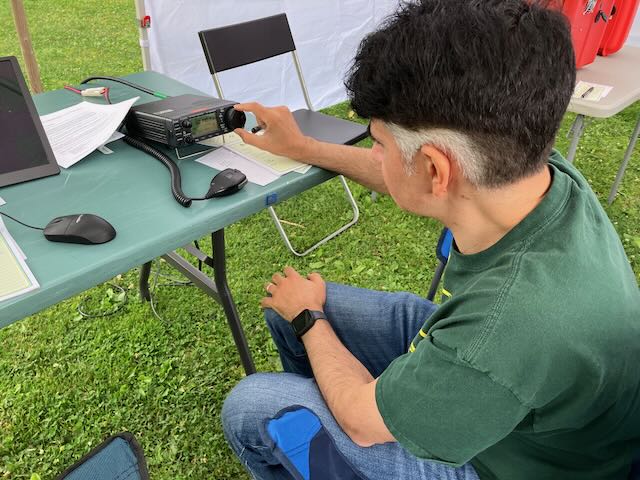
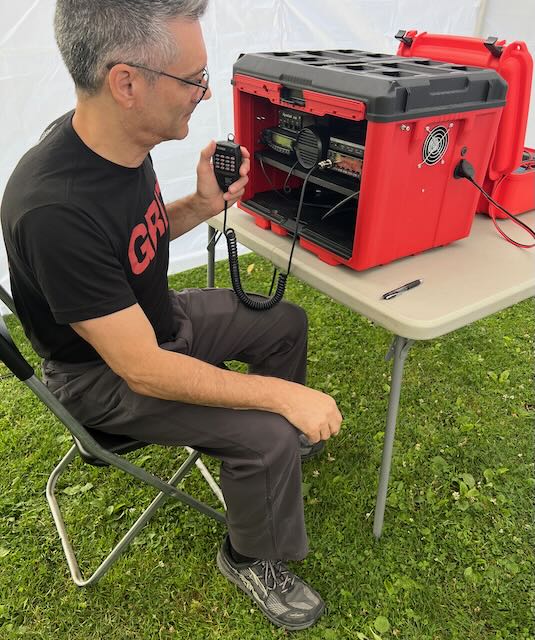
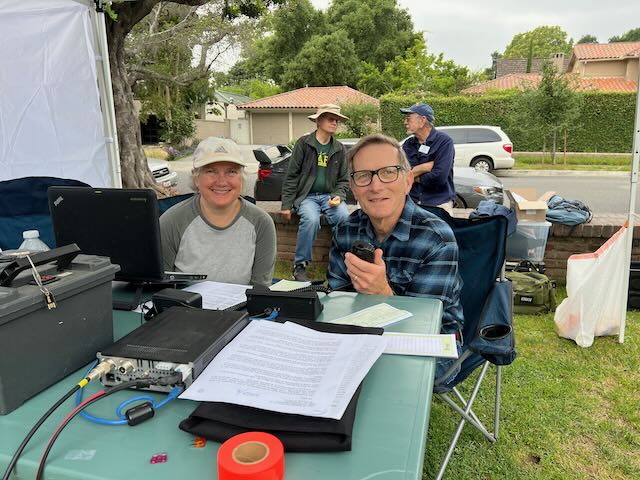
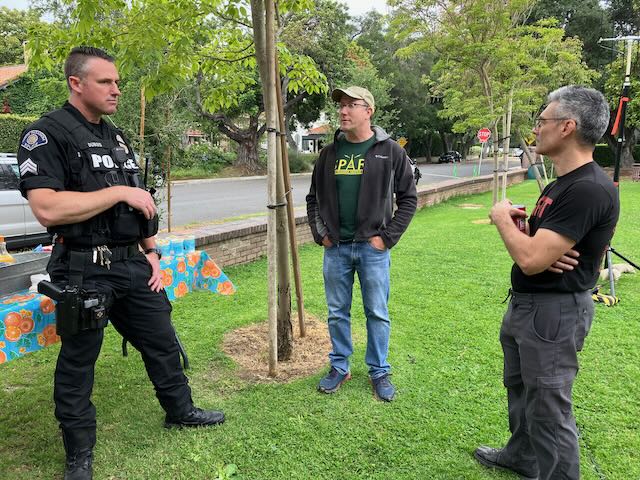
Photos courtesy of John, AC6VV and Carol, KE6SRN.
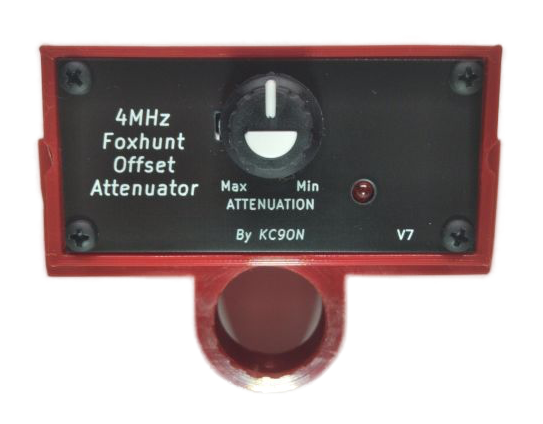
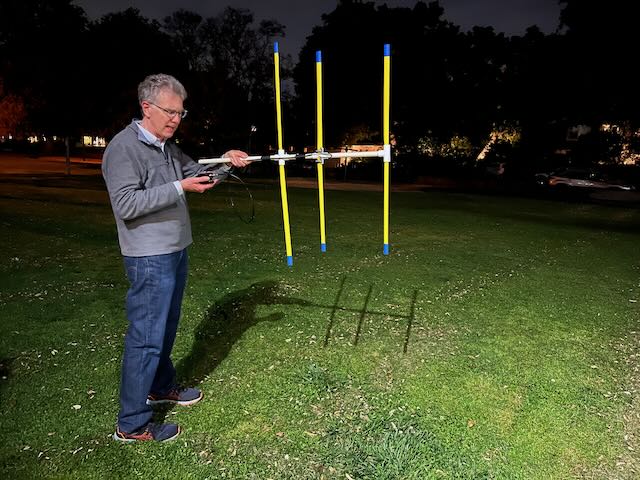
At SPARC’s April, May, and June meetings, we continued working with the tape measure beam antennas we constructed in February. At the April meeting, we tuned the antennas to make sure they resonated at 146.565 MHz, the local t-hunting frequency. By adjusting the spacing of the steel elements, we made sure each antenna was ready to hear a hidden transmitter.
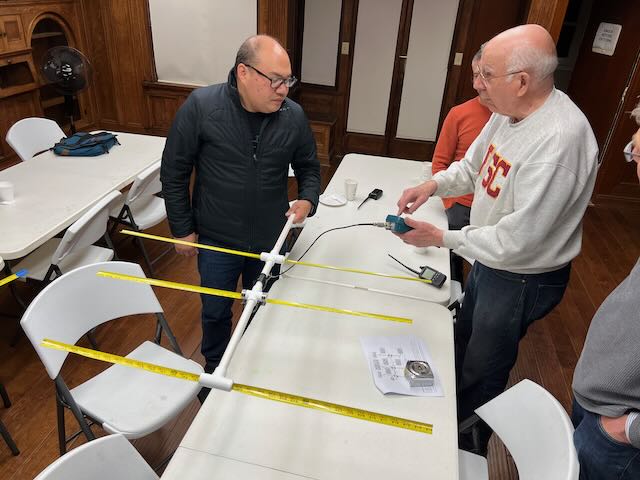
At the May and June meetings, we constructed an attenuator kit to pair with the antennas. Stan, KR6CV arranged a group purchase of kits from KC9ON. The V7 kit provides 4 MHz of signal attenuation. KC9ON explains how that helps:
When you’re closing in on the fox [the hidden transmitter] you may find the signals to be strong enough you can no longer find a peak or null with your antenna. Sometimes the signal is so strong that the RF will leak straight into the radio, connections and other equipment making the antenna useless. The solution is to use an offset attenuator. The circuit consists of a small RF generator, in this case 4 MHz, which will mix with the incoming fox signal (such as 146.52 MHz) and produce new signals at plus and minus the fox signal (142.52 MHz and 150.52 MHz). A potentiometer on the board changes the injection level of the RF generator which in turn attenuates the incoming mixed signal to your radio to a level where tracking can continue.

Instructions for building the kit can be found here.
With our antennas and attenuators ready for action, we planned to hold a practice t-hunt at our August member meeting.
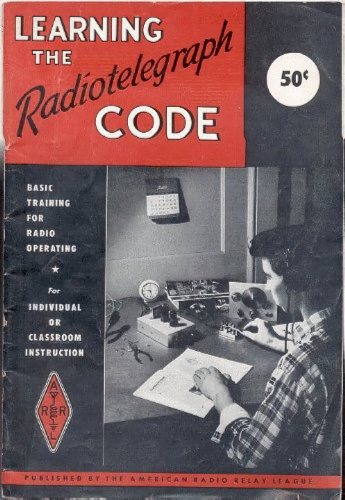
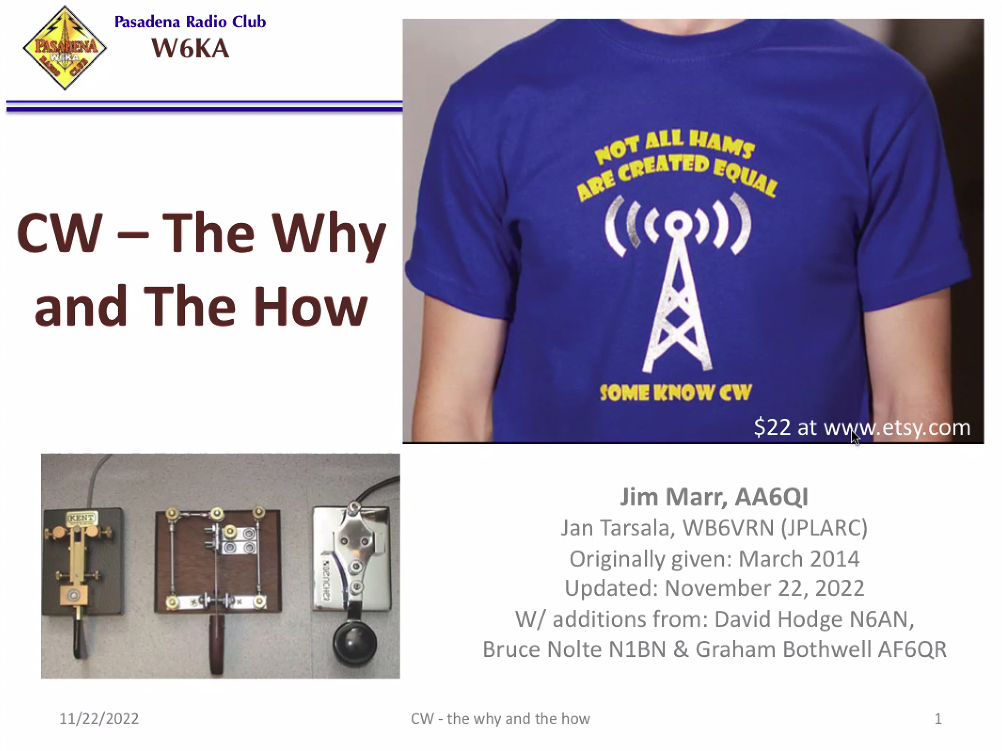
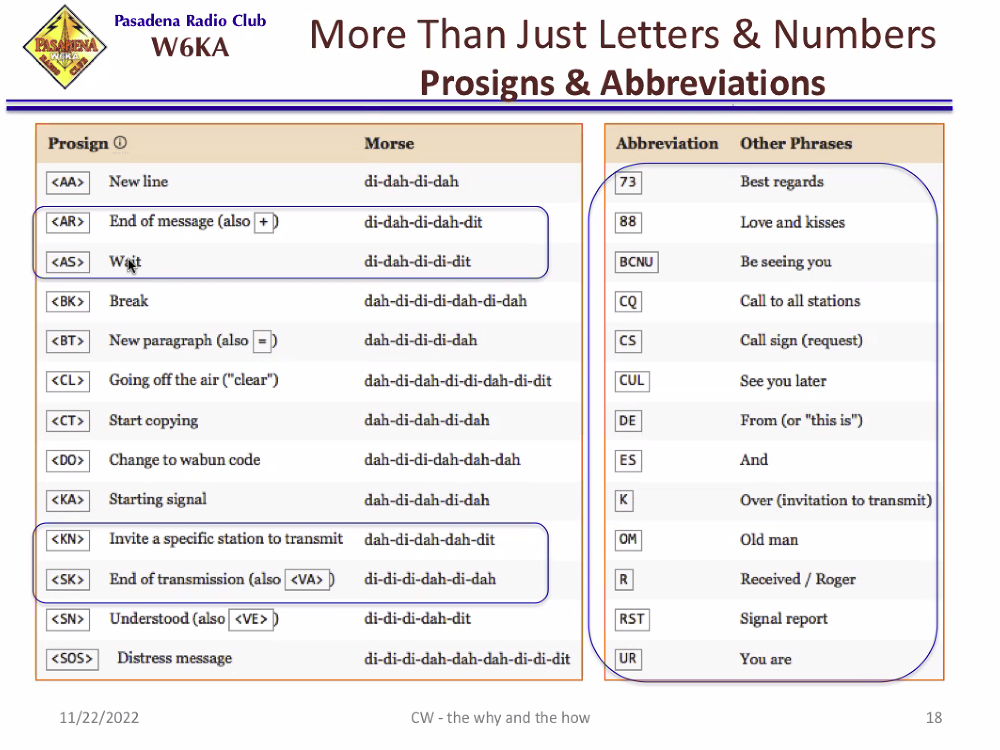
At our March, 2023 member meeting, Jim Marr, AA6QI presented “CW – The Why and the How.” Sending Morse code over CW is the oldest radio transmission mode, but it remains useful today. CW isn’t merely a nostalgic throwback. Jim explained that while digital modes like FT8 and JT65 may be more efficient, they can only exchange limited information. CW is “totally unstructured” with no limits on what knowledgable operators can communicate.
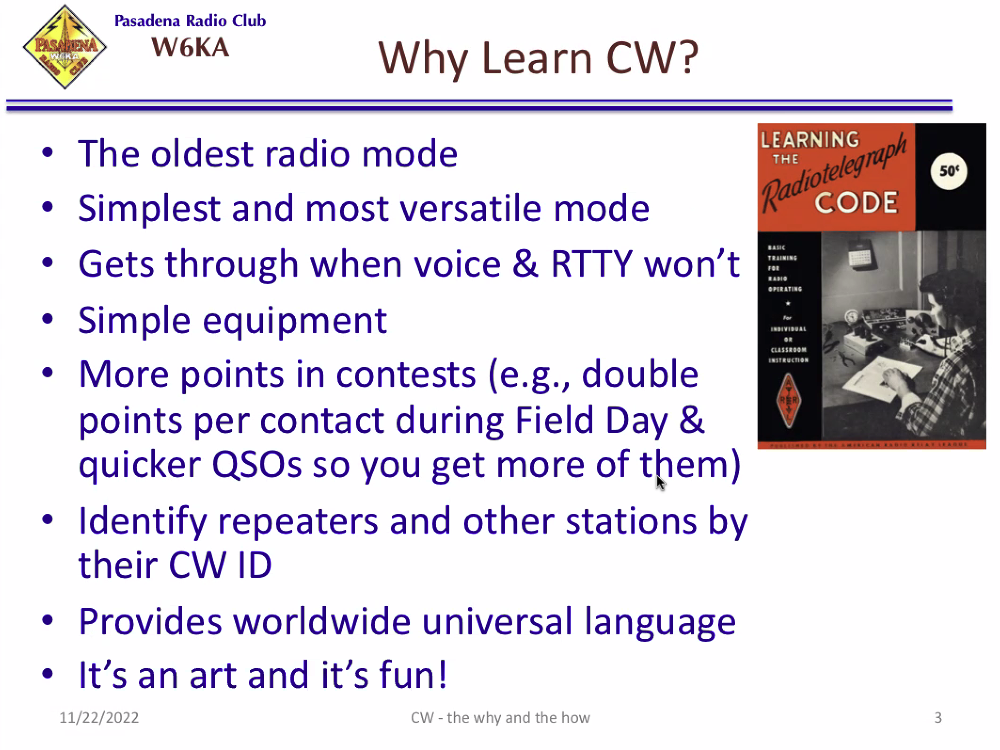
Learning CW continues to be a badge of honor for hams, as expressed on the shirt seen here on Jim’s introductory slide.
In his teen years, Jim practiced his code skills by transcribing stories from the daily newspaper. As his proficiency increased, the practice of sending and receiving CW became more enjoyable. “You like to do what you’re good at, and you’re good at what you do a lot,” Jim observed.
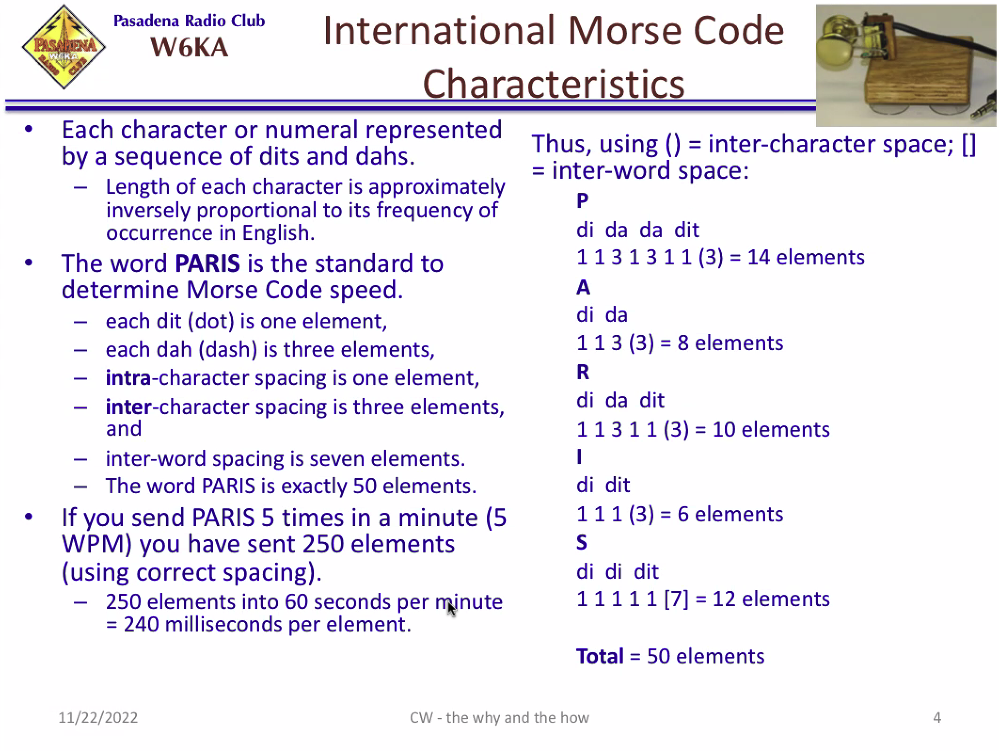
Jim recommended that anyone interested in learning CW should explore the two most popular training methods, Farnsworth and Koch, and see which one feels more natural. Some online resources include:
Koch Trainer app for iOS and Mac
G4FON Koch app for Windows
Morsle.fun, a daily challenge inspired by Wordle
The FISTS CW club
Many HF rigs include an internal CW keyer, but some operators may prefer an external device such as a WinKeyer-compatible kit sold by K1EL.
SPARC thanks Jim for his comprehensive guide to radio’s most famous mode.
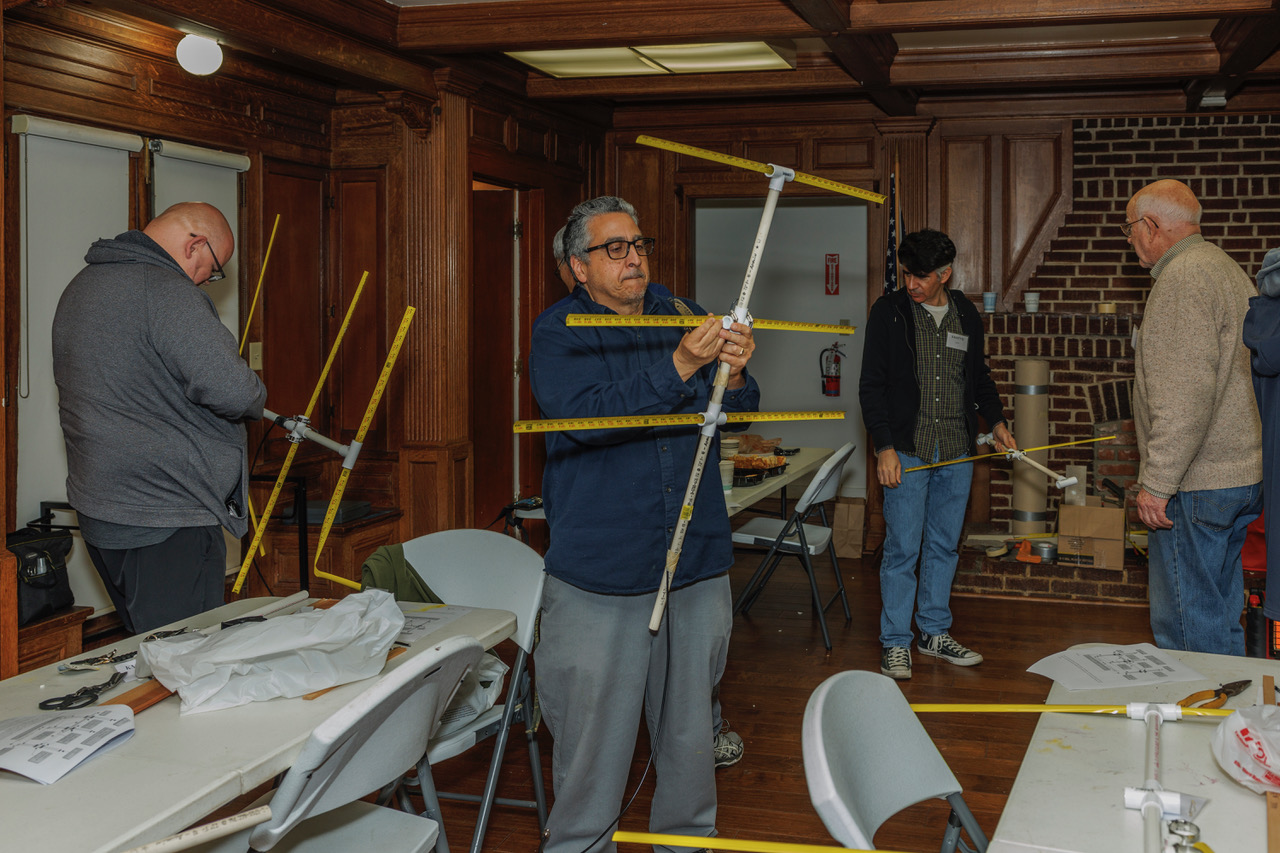
At our February 2023 membership meeting, the South Pasadena Amateur Radio Club organized a group building project. We constructed 2 meter tape measure antennas ideal for radio direction finding or “t-hunting.” The club provided a kit of necessary parts to all dues-paying members who wished to participate.
The project was led by Bob WB6YJJ, Rick KI6ZKM, and Stan KR6CV, who provided instruction and assistance as members assembled the antennas. The process involved measuring and cutting tape measure segments to the correct length, assembling a frame from PVC pipe sections, then soldering the components of the driven element (the part of the antenna that radiates).
There are various plans for similar tape measure beam antennas, or “cheap Yagis,” available on the Internet. Here is the schematic for the one we built, designed by Joe Leggio WB2HOL:
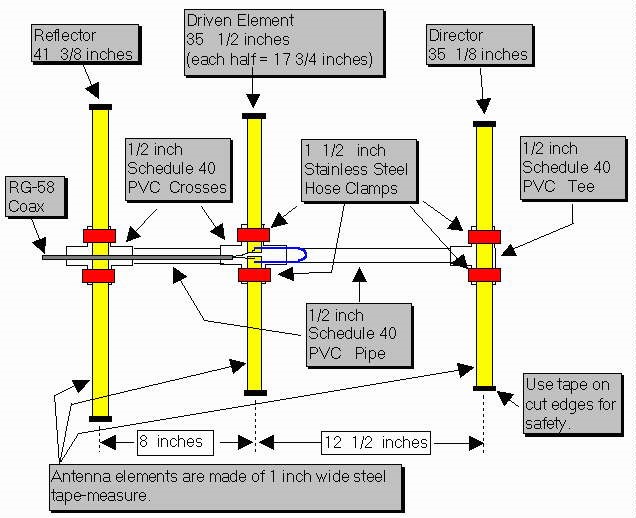
Visit Joe’s page linked above or this re-post for a full explanation of how the antenna works and instructions for building one.
Below are photos of all the steps in the building process, courtesy of Robert K6YZF, Stan KR6CV, and John KK6ZVQ.
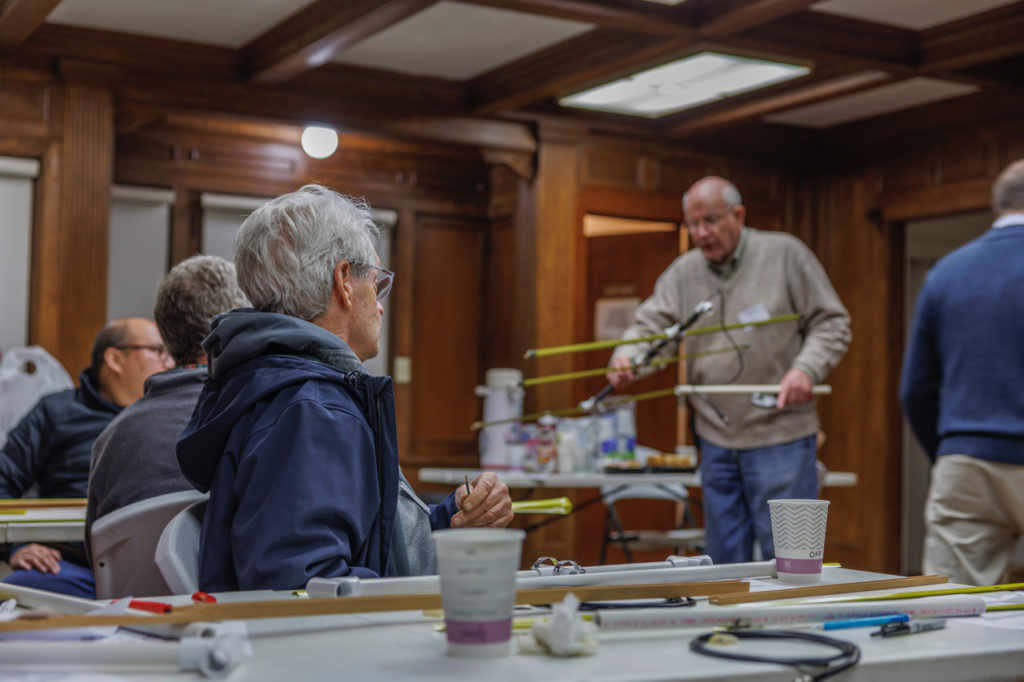
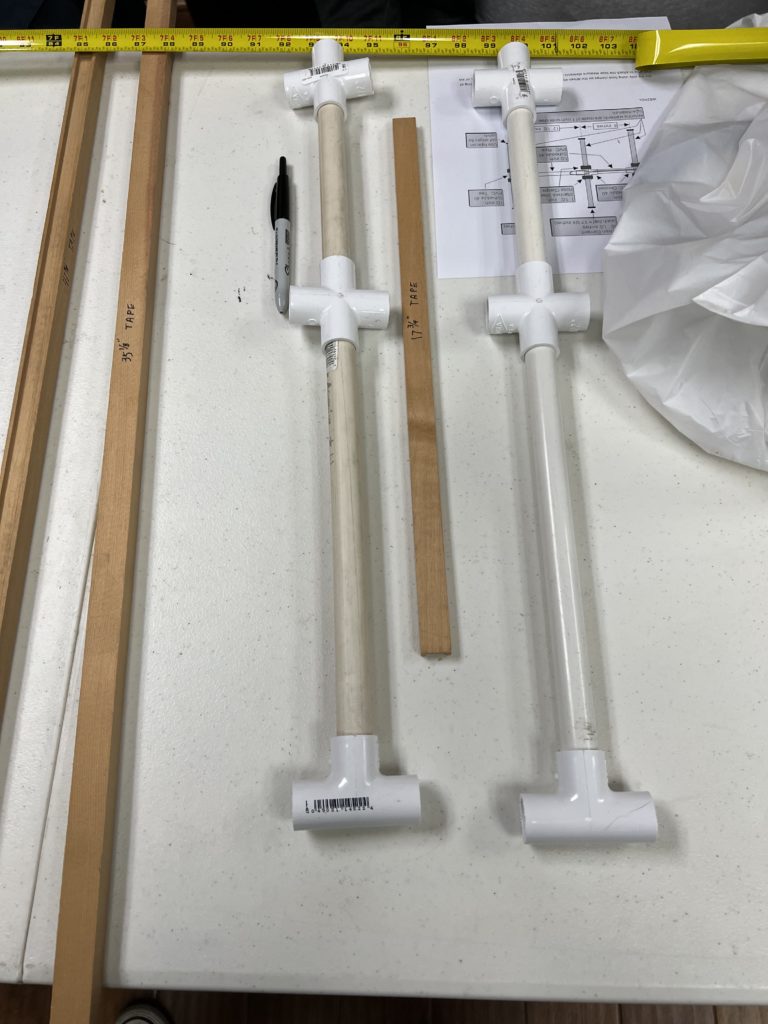
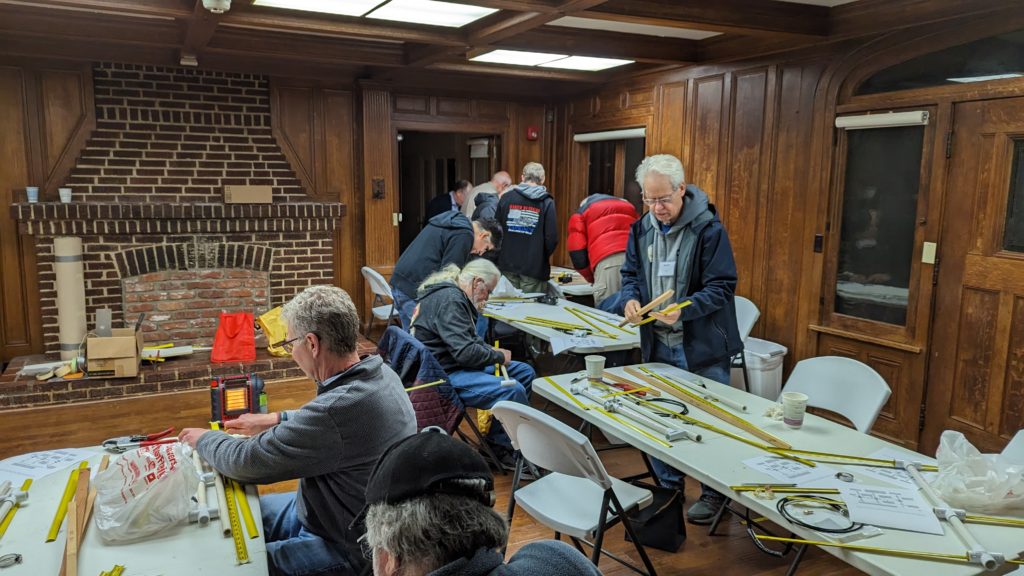
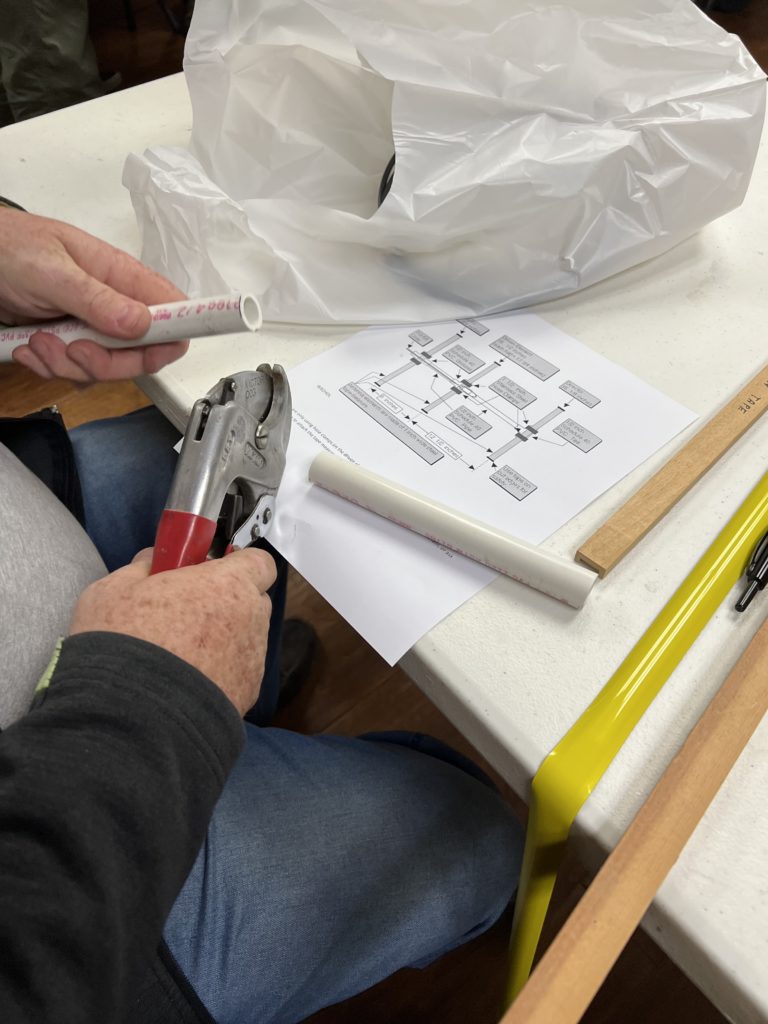
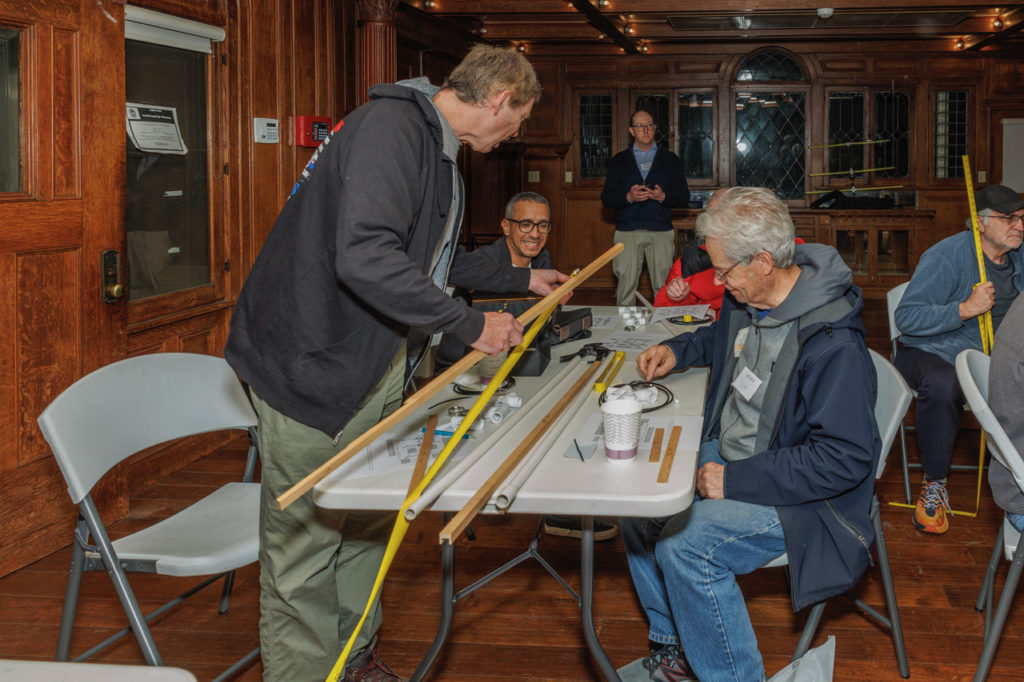
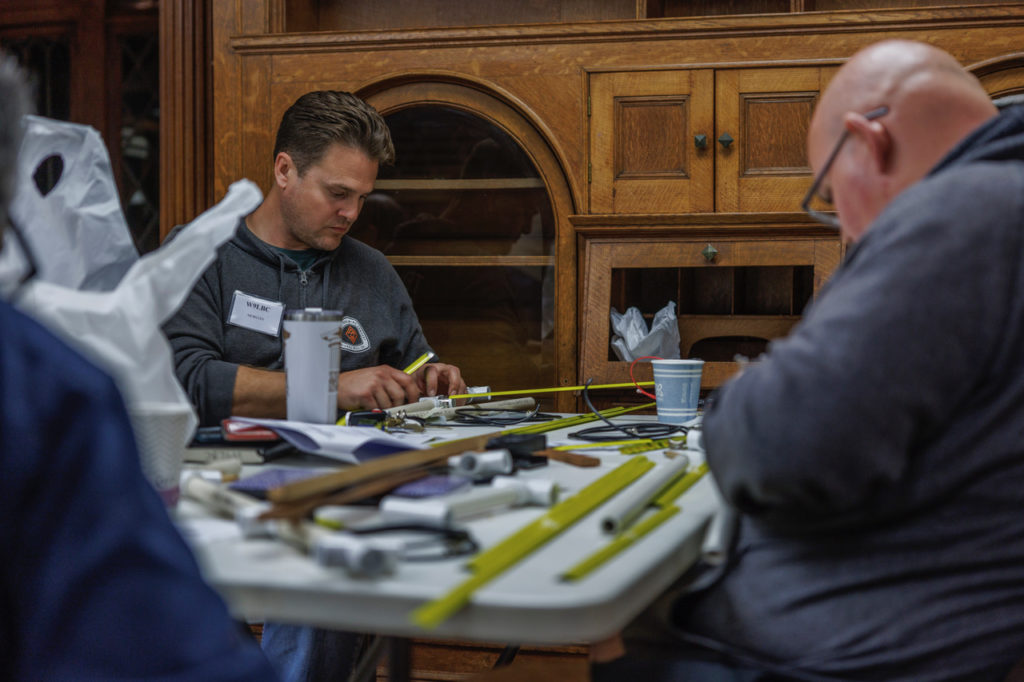
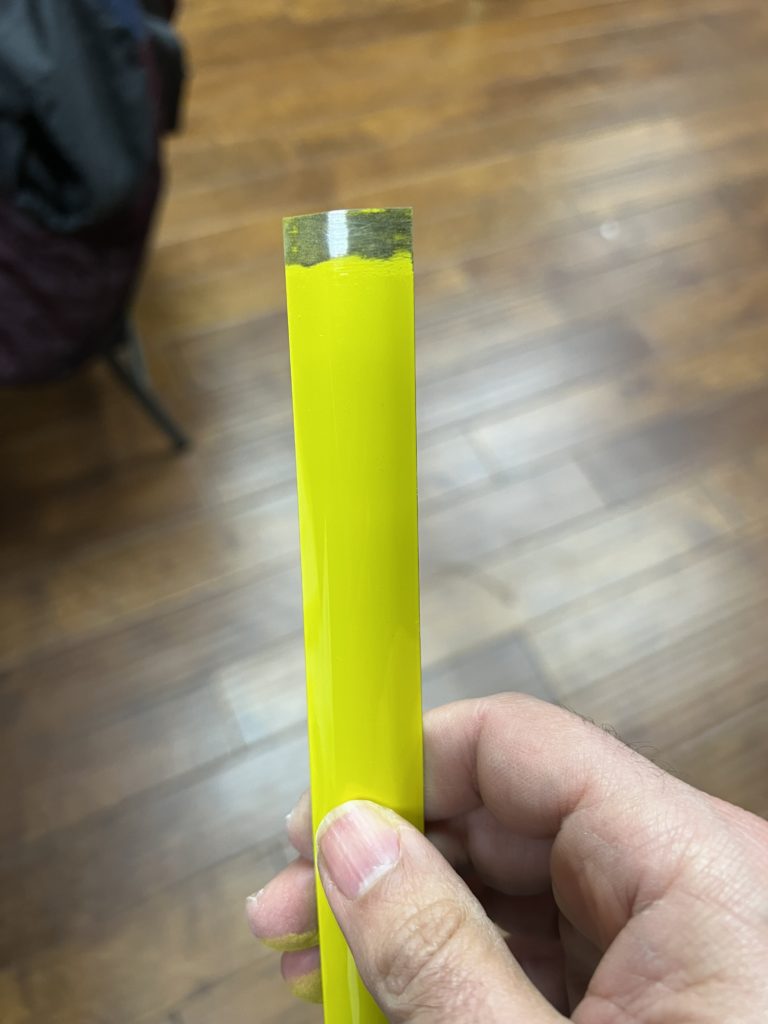
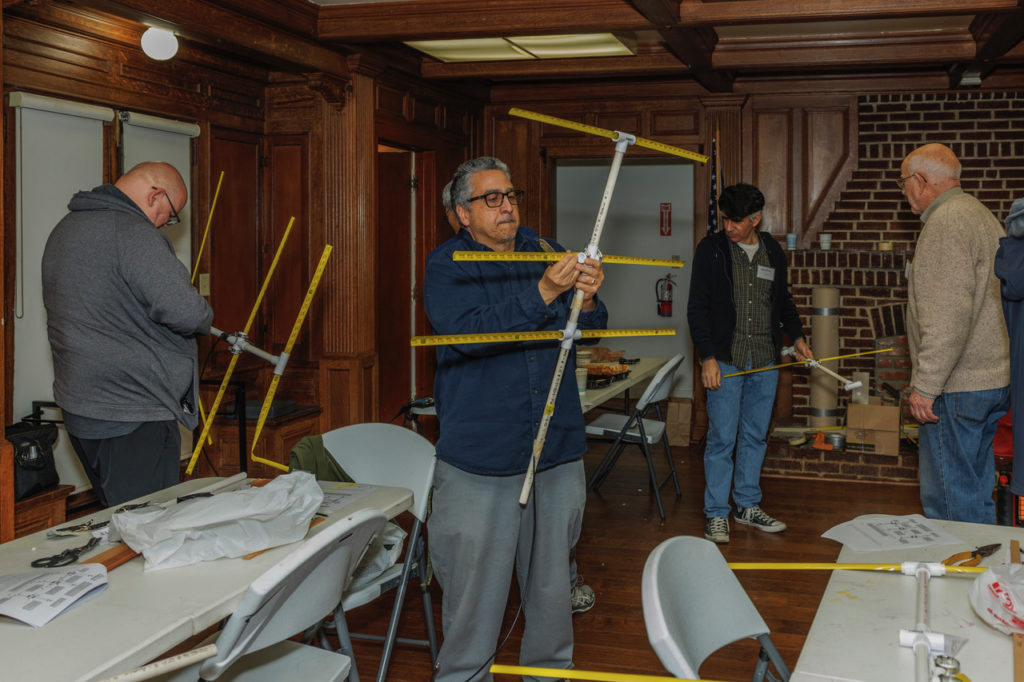
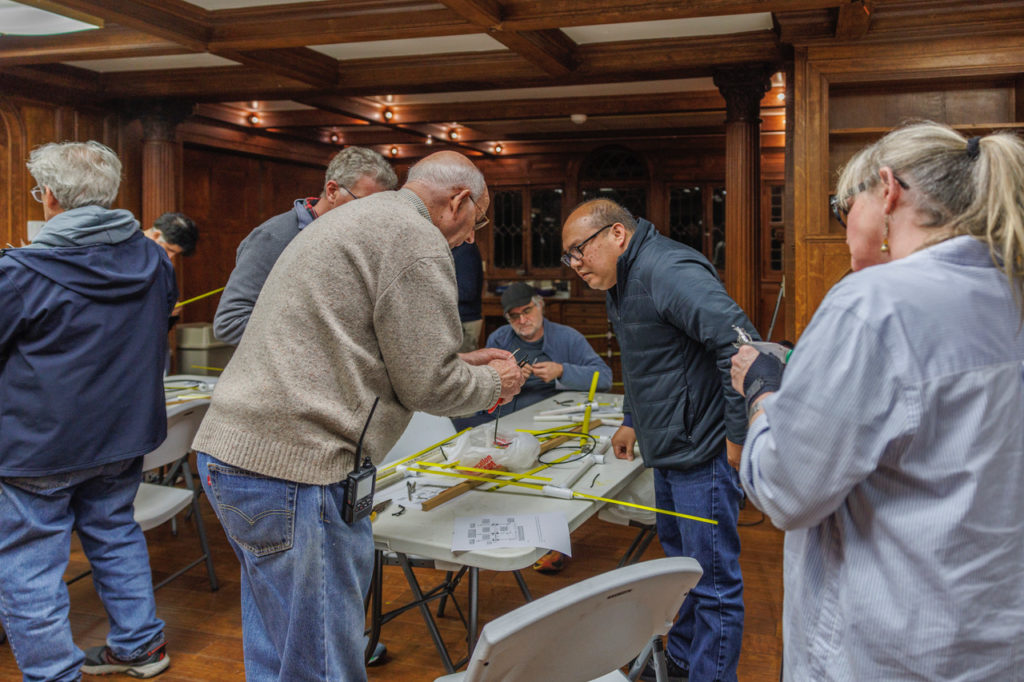
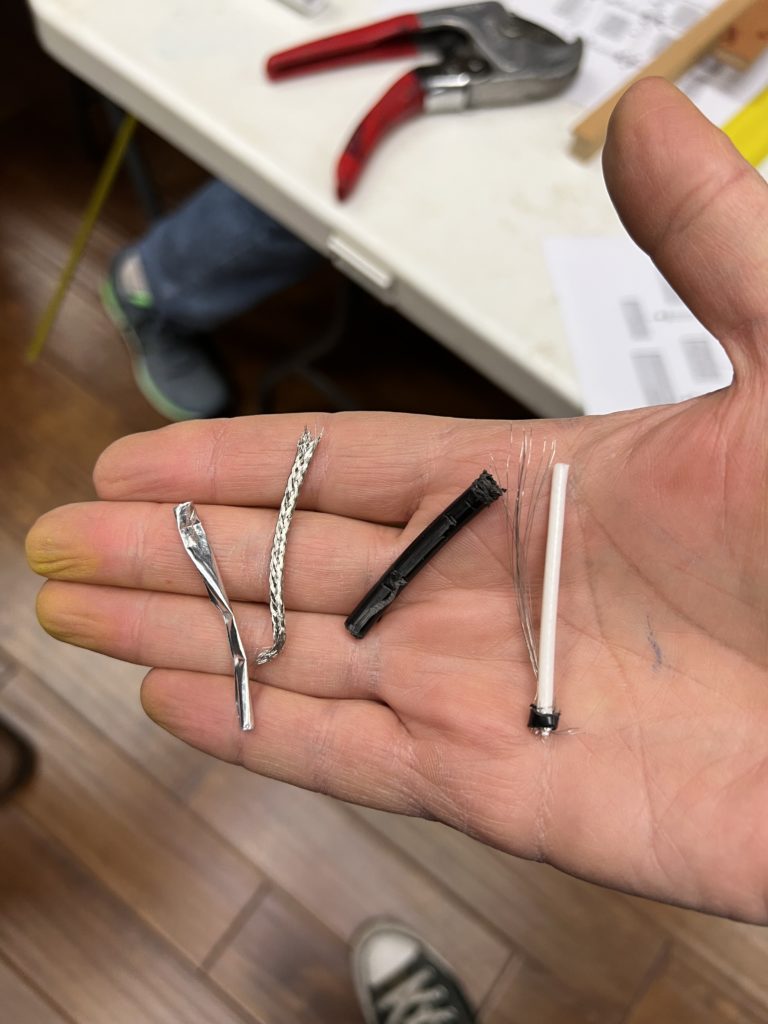
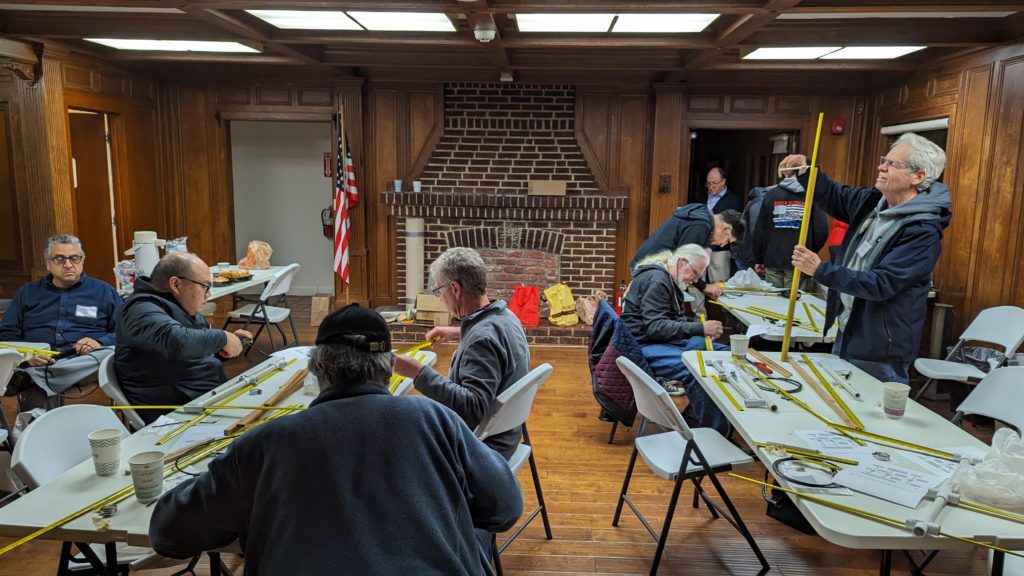
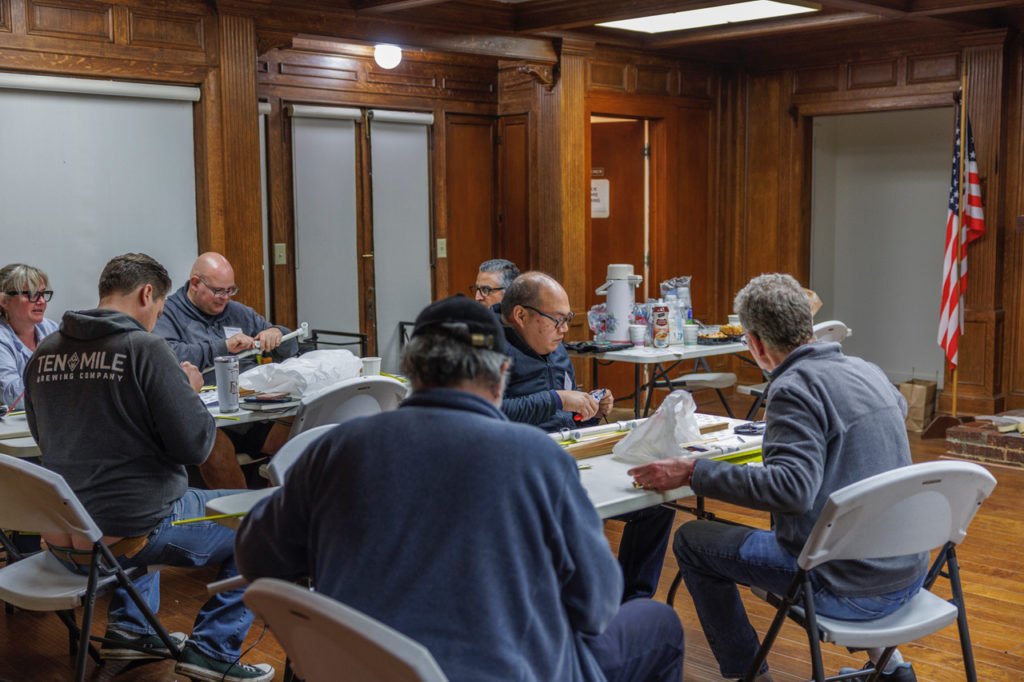
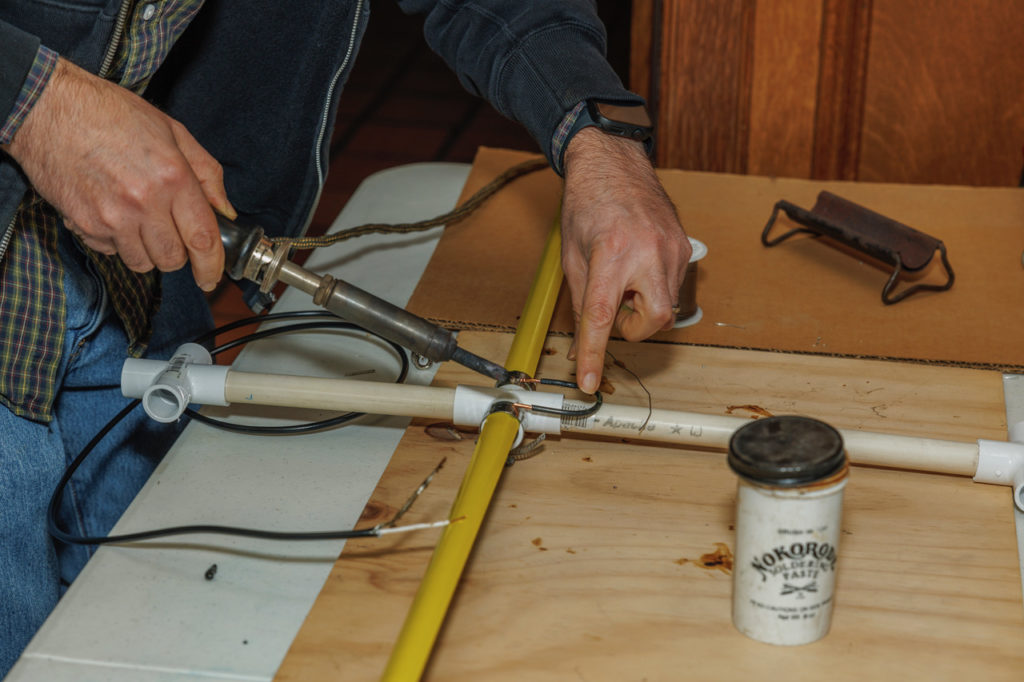
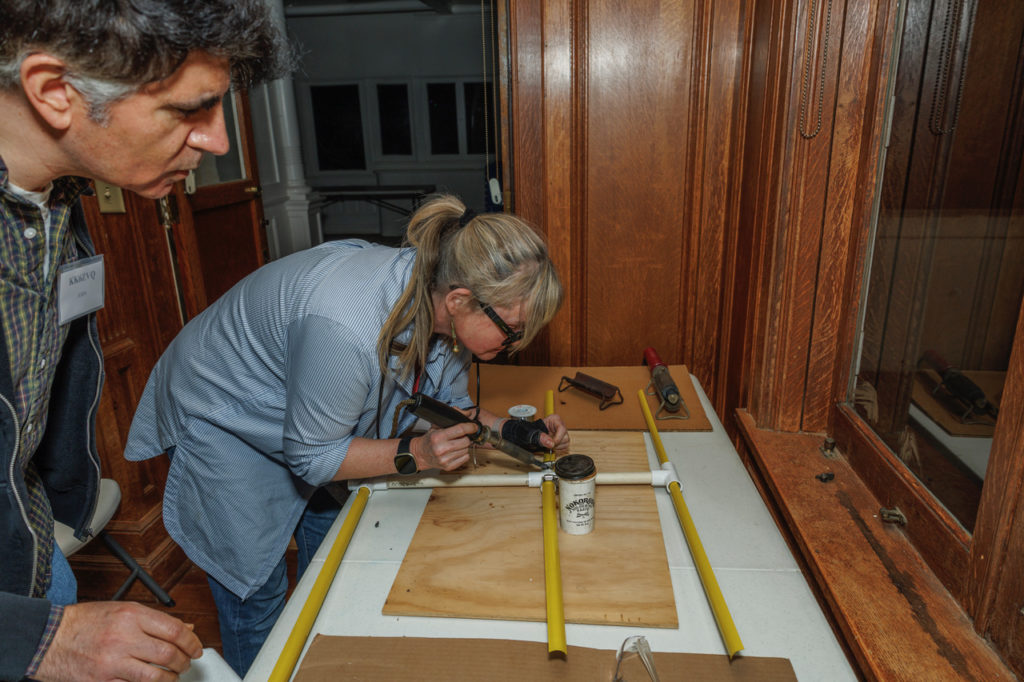
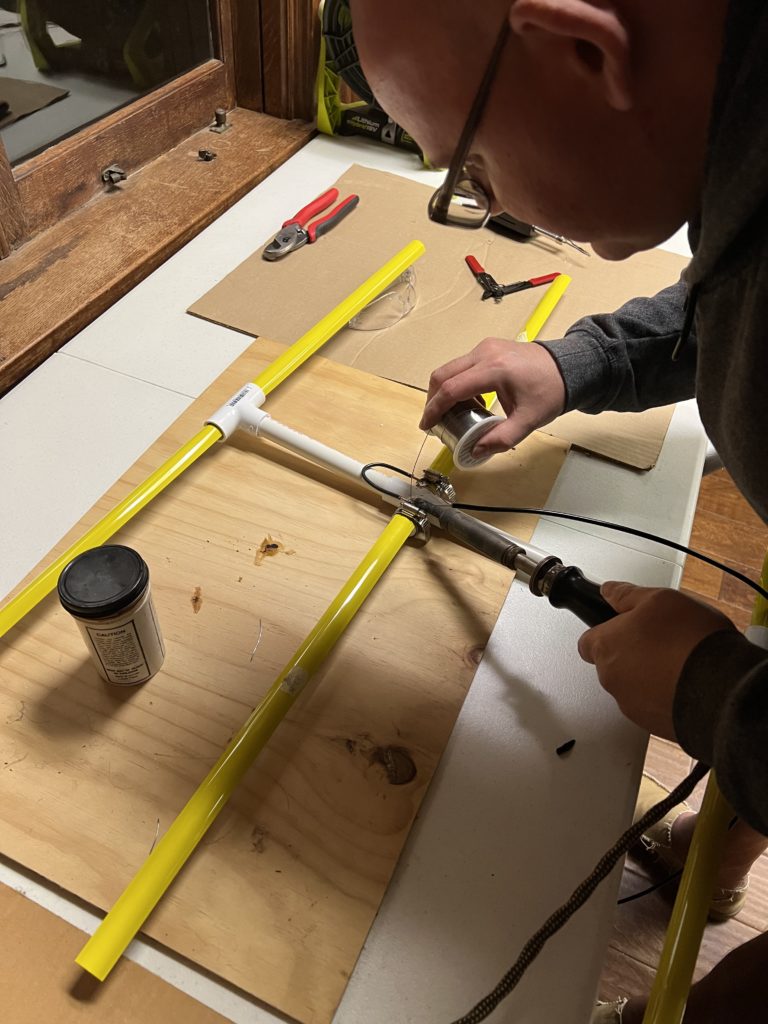
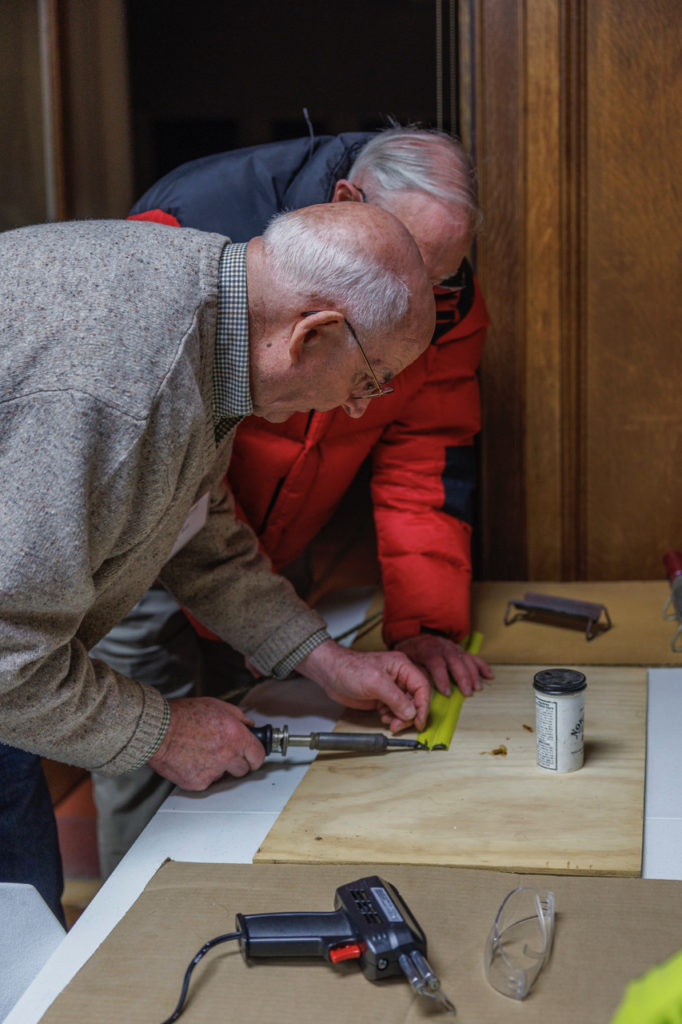
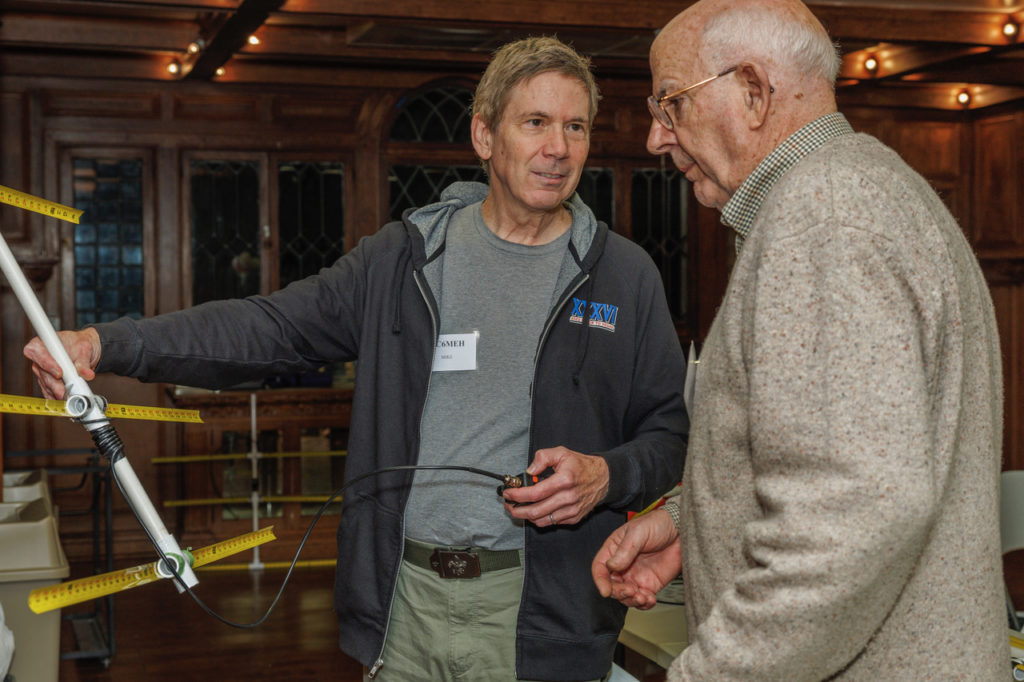
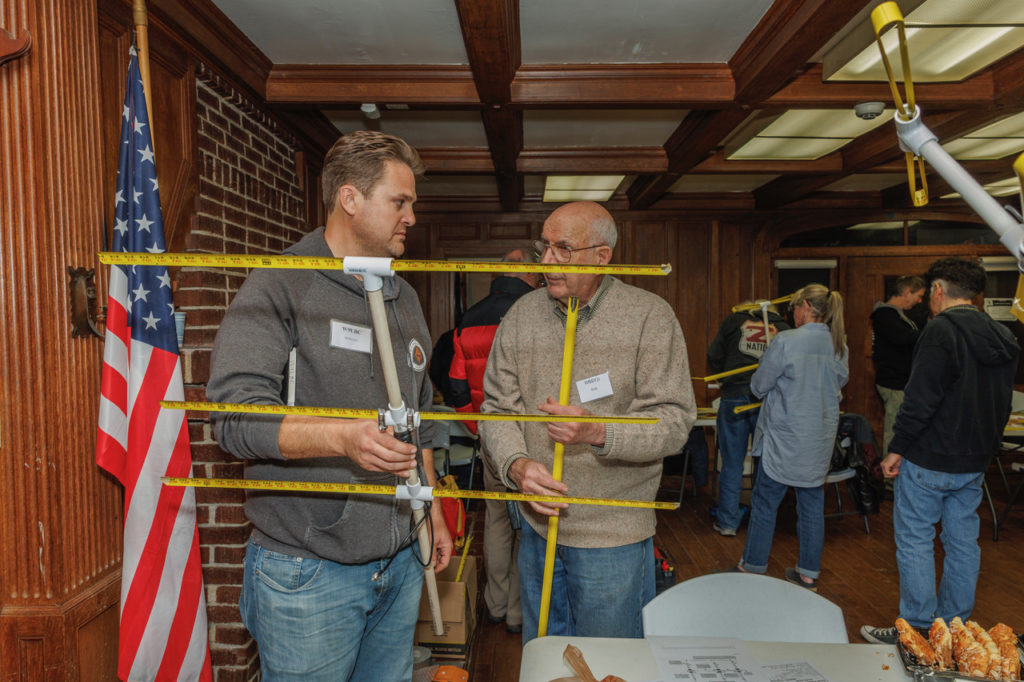
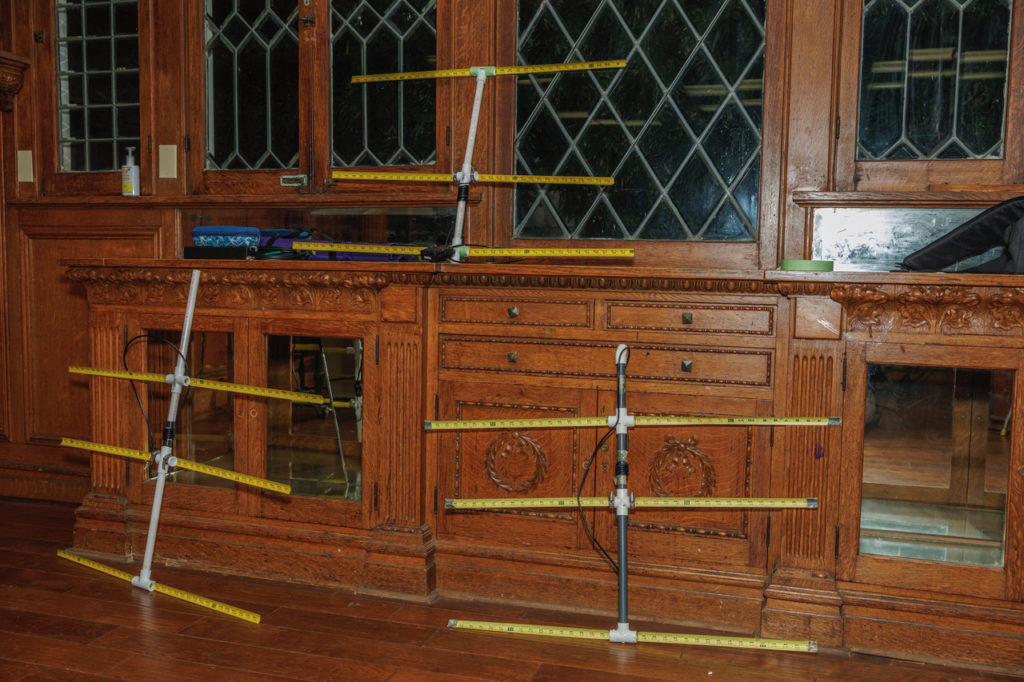
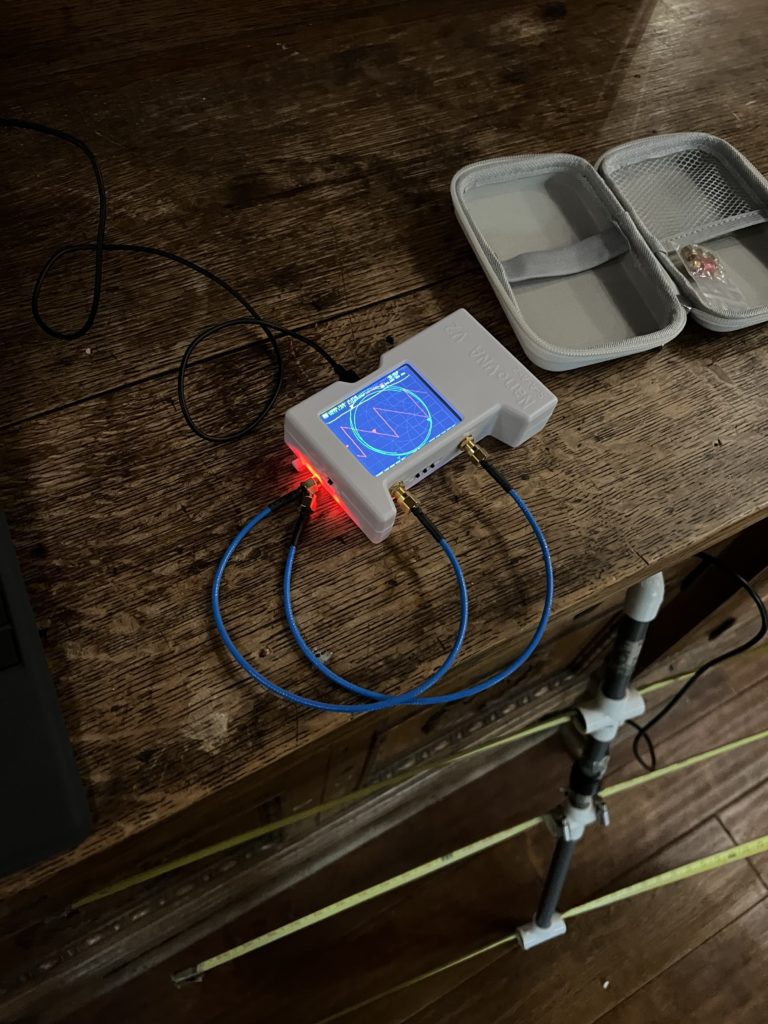
This building activity was a welcome return to hands-on projects at our meetings, and we look forward to hosting more in the future.
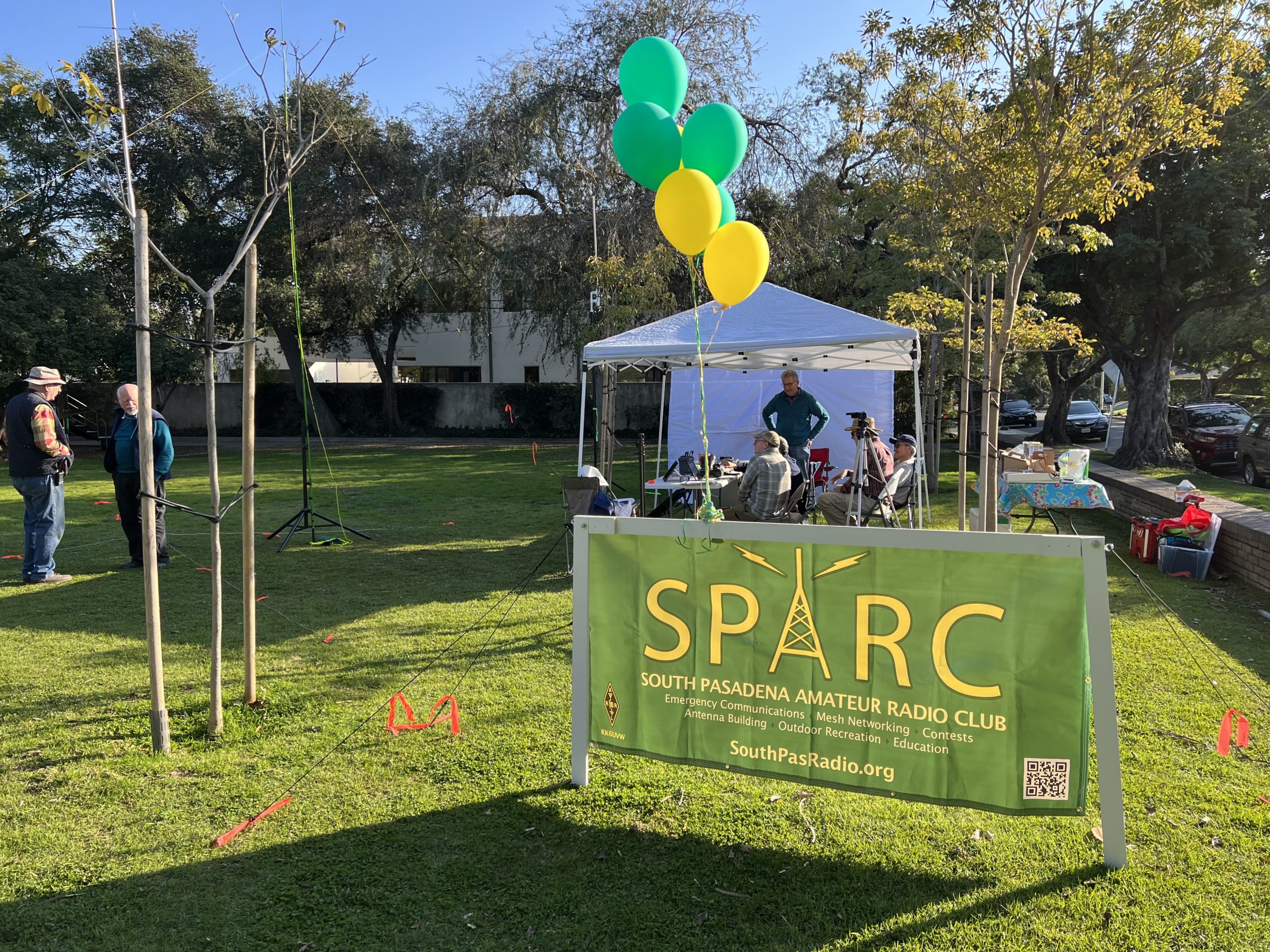
Thank you to everyone who dropped by Eddie Park to hang out and make contacts on Winter Field Day! SPARC members and friends operated with the club call sign W6SPR and a “Two Oscar” class designation, meaning two simultaneous transmitters. Highlights of the afternoon included a visit from YouTube/TikTok personality Natalie NW6S (aka the Glam Ham), and one visitor making his first-ever HF contact. We hope to see you at our next “SPARC in the Park” opportunity!
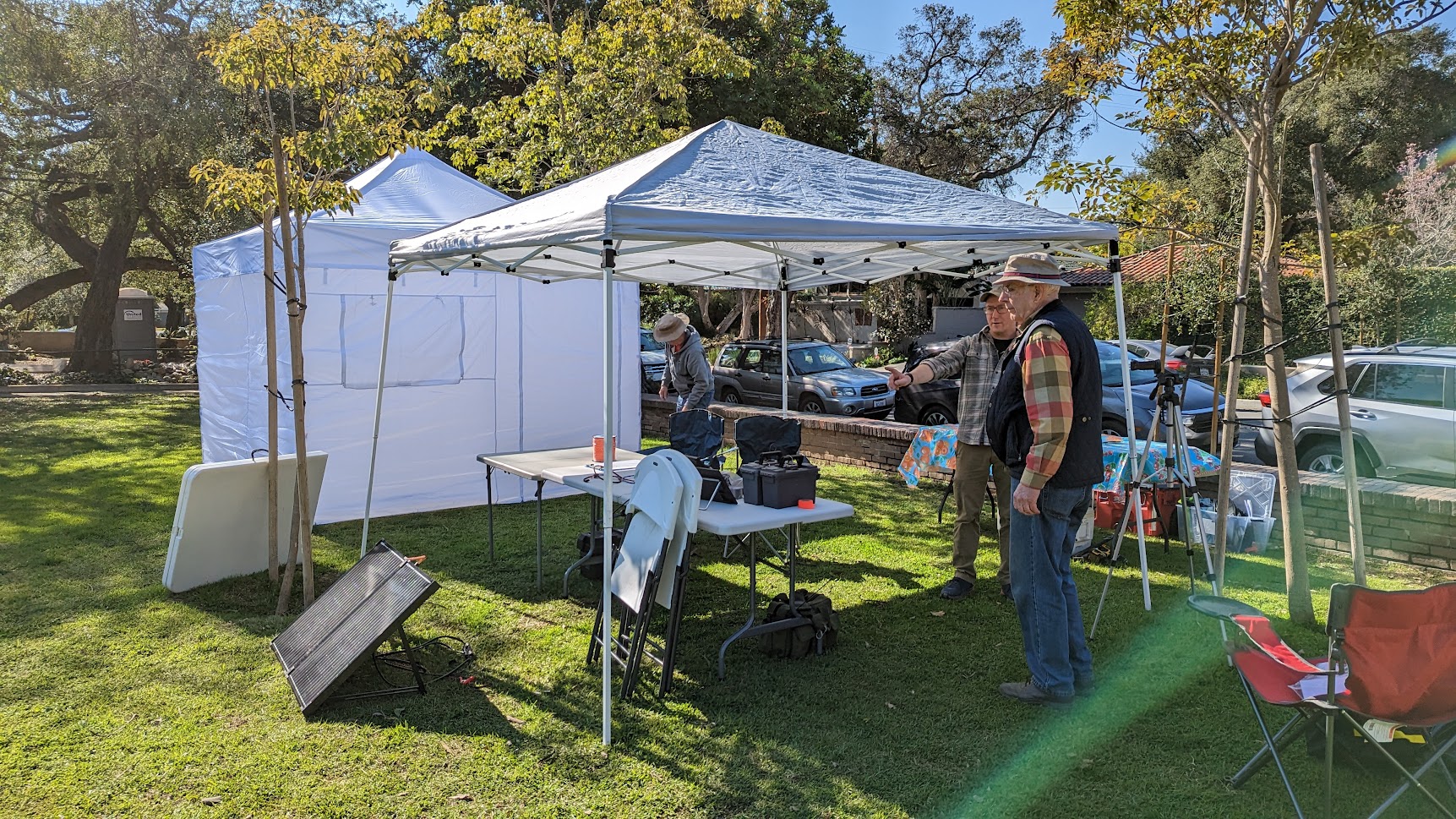
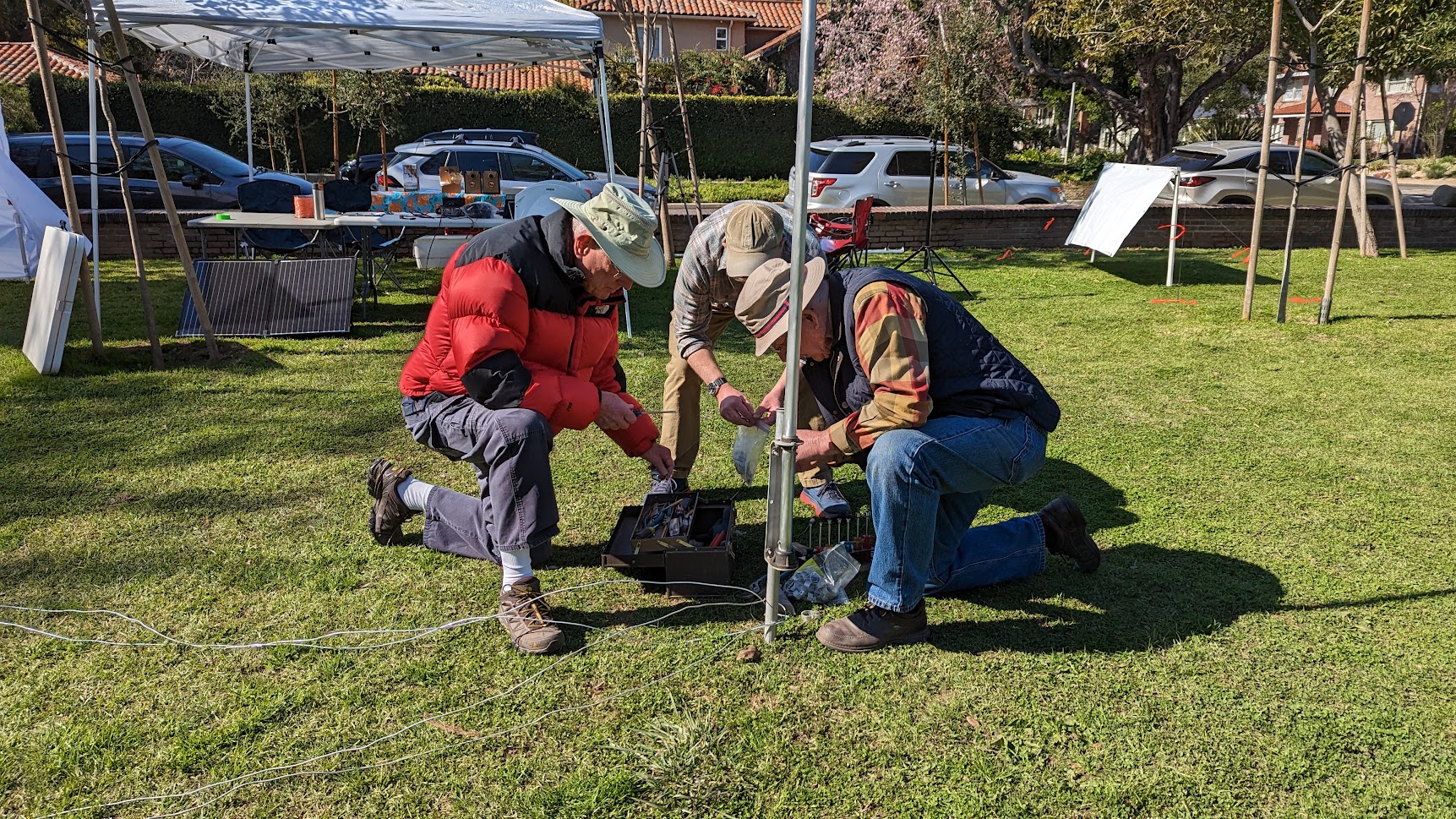

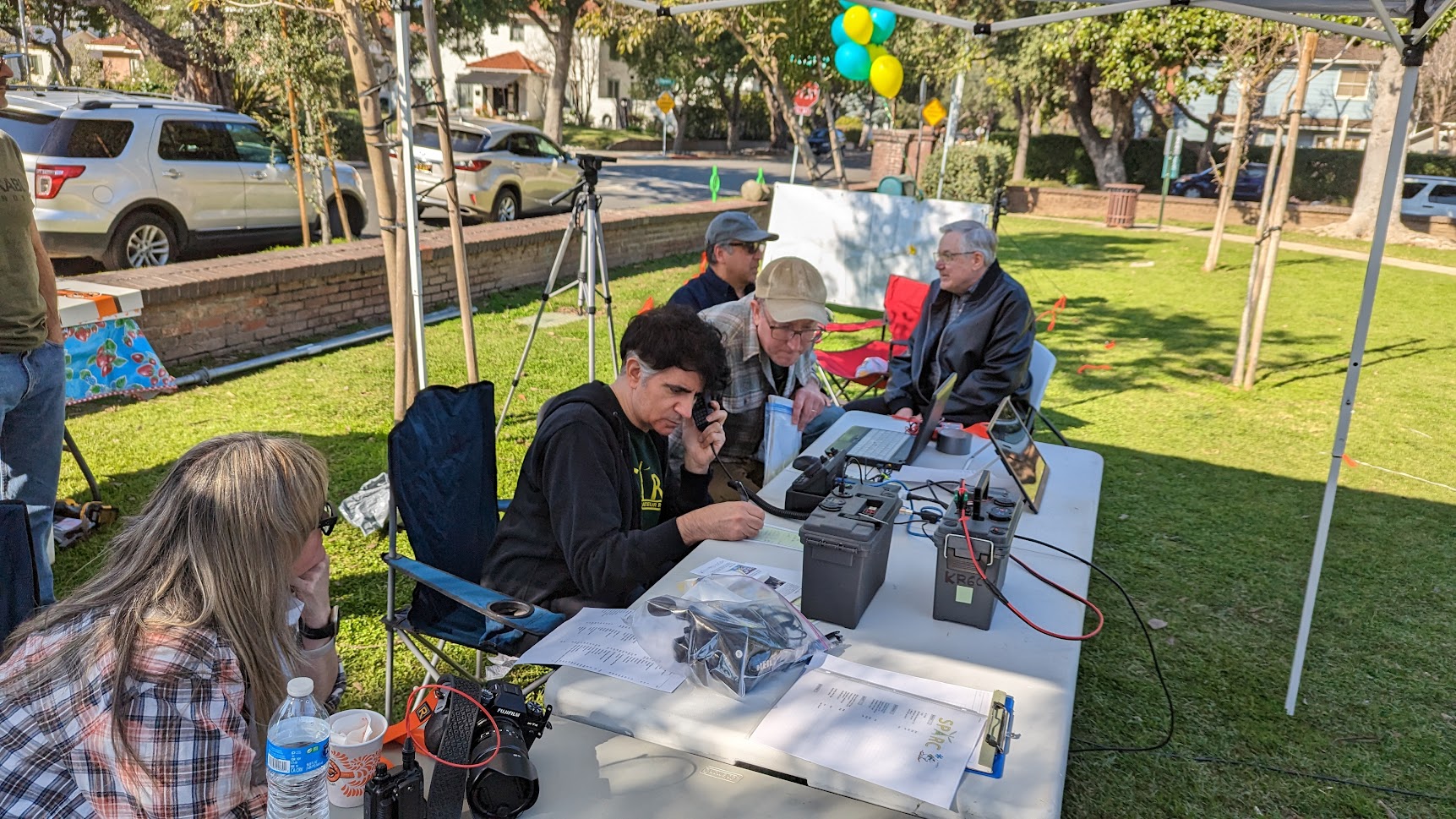
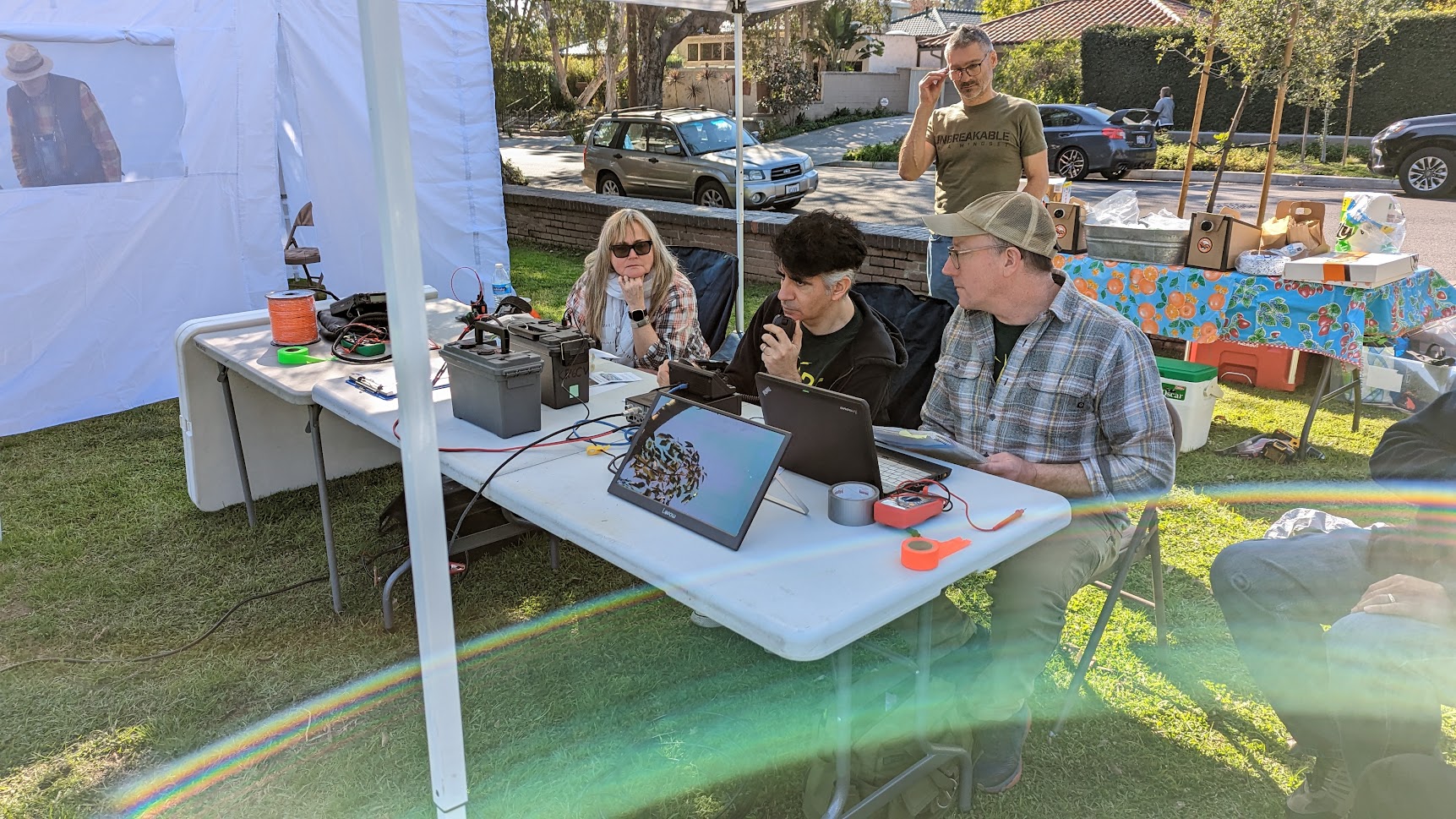
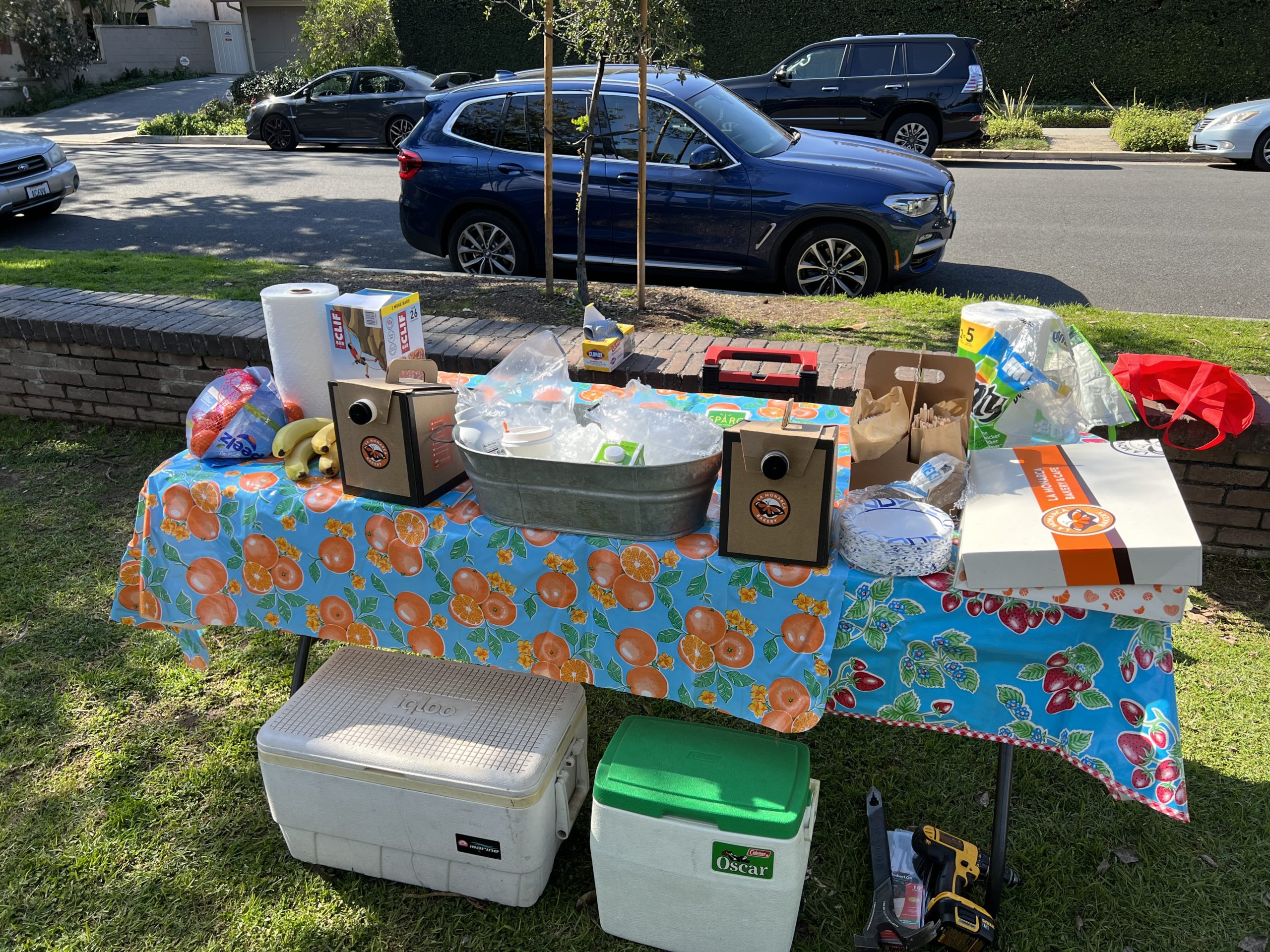
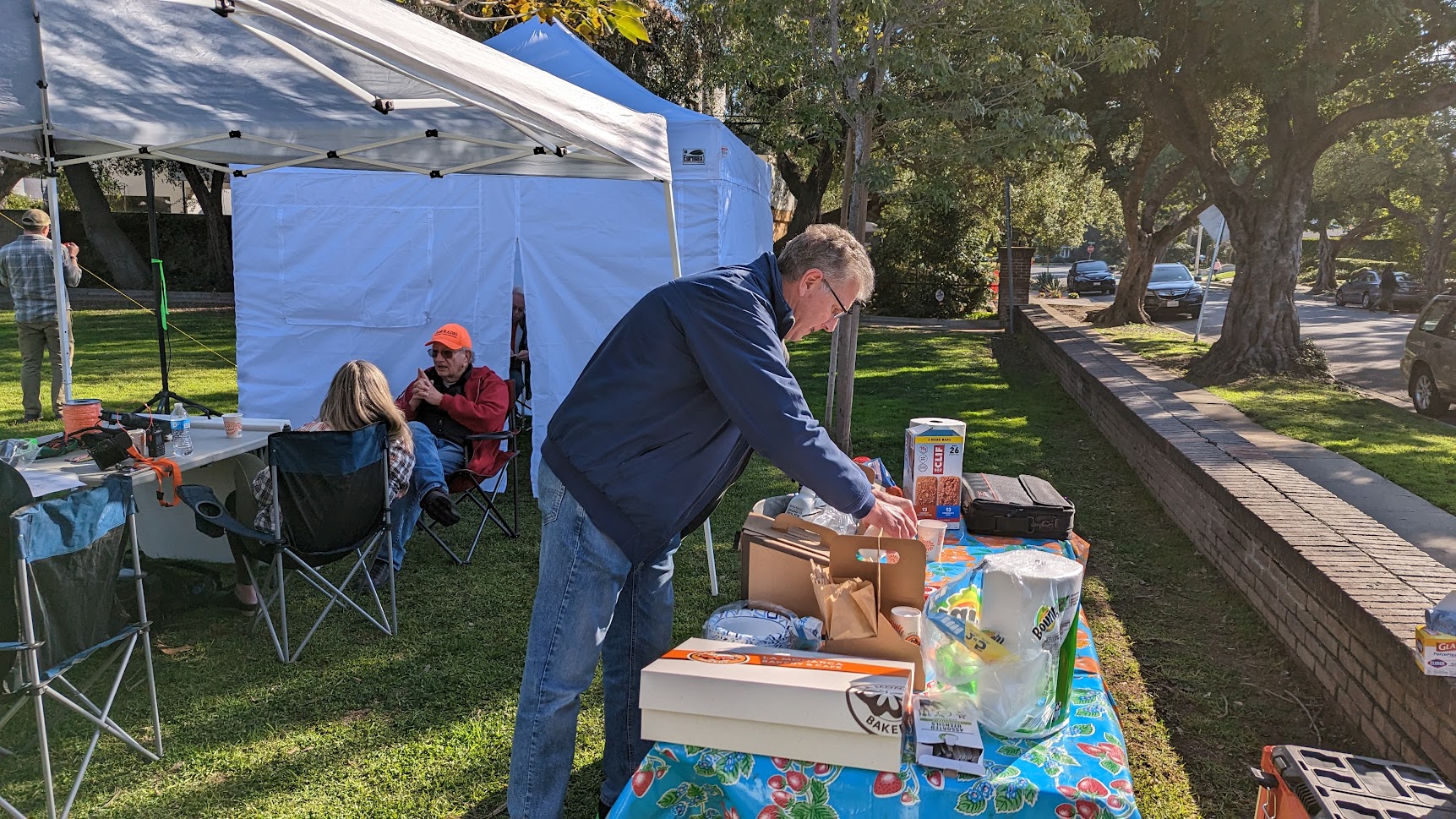
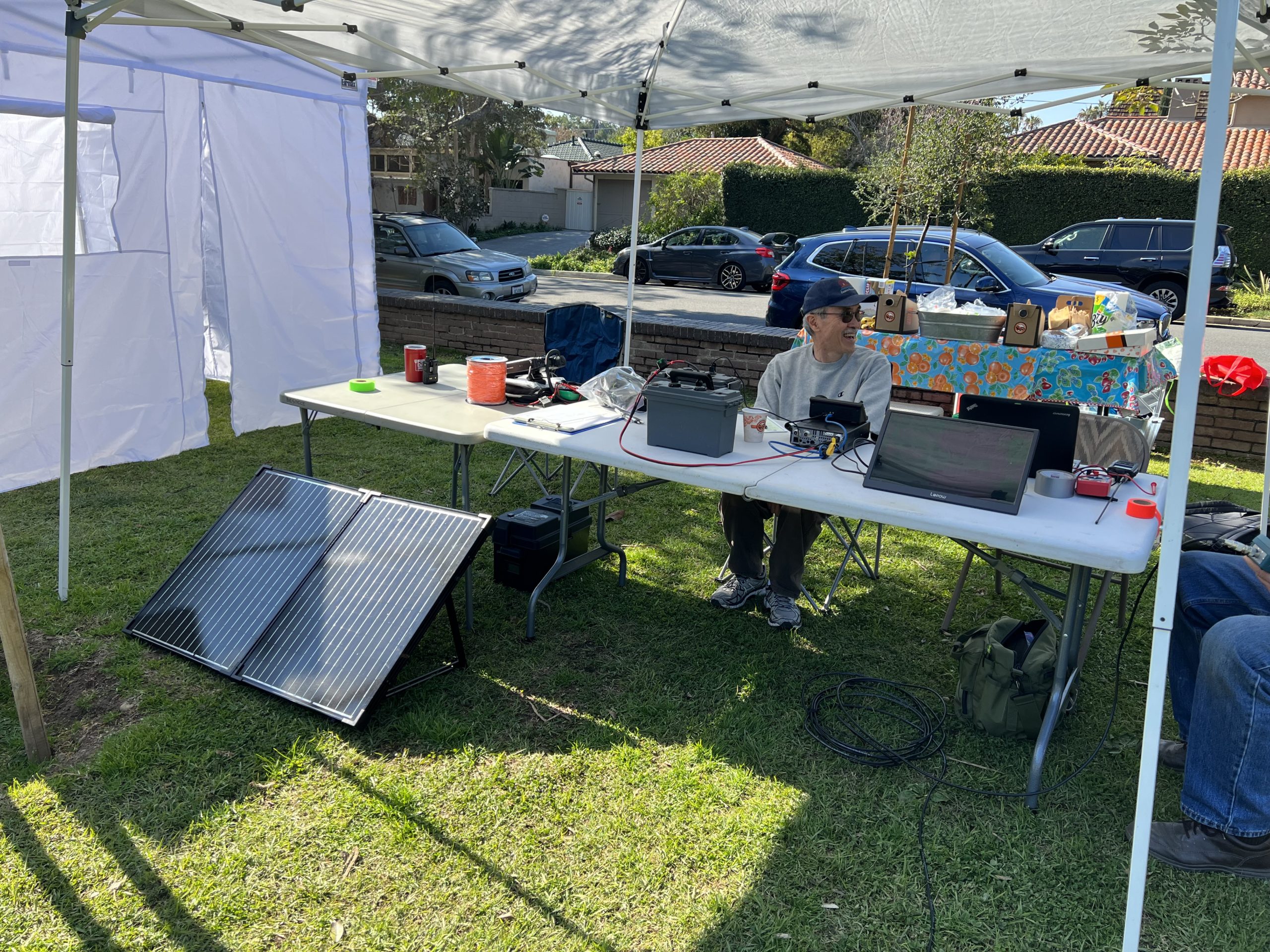
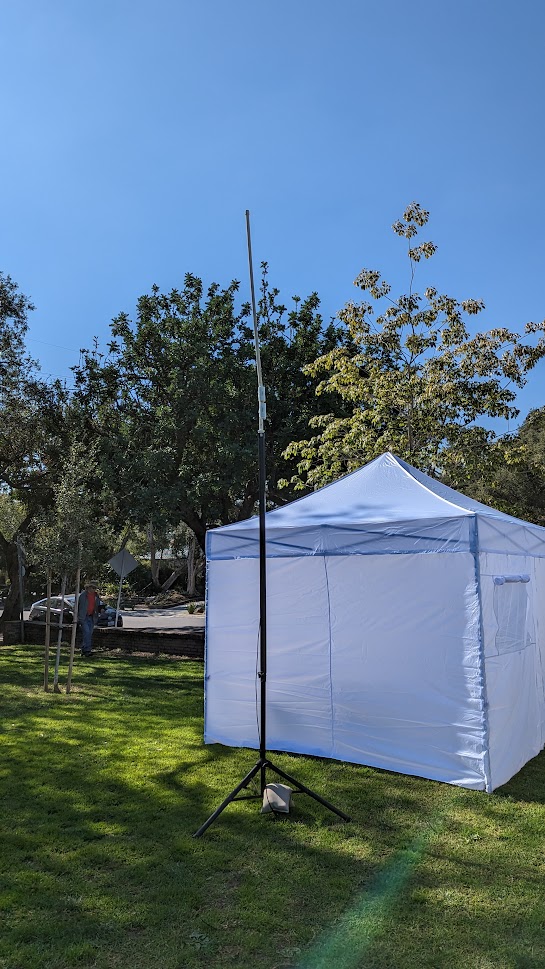
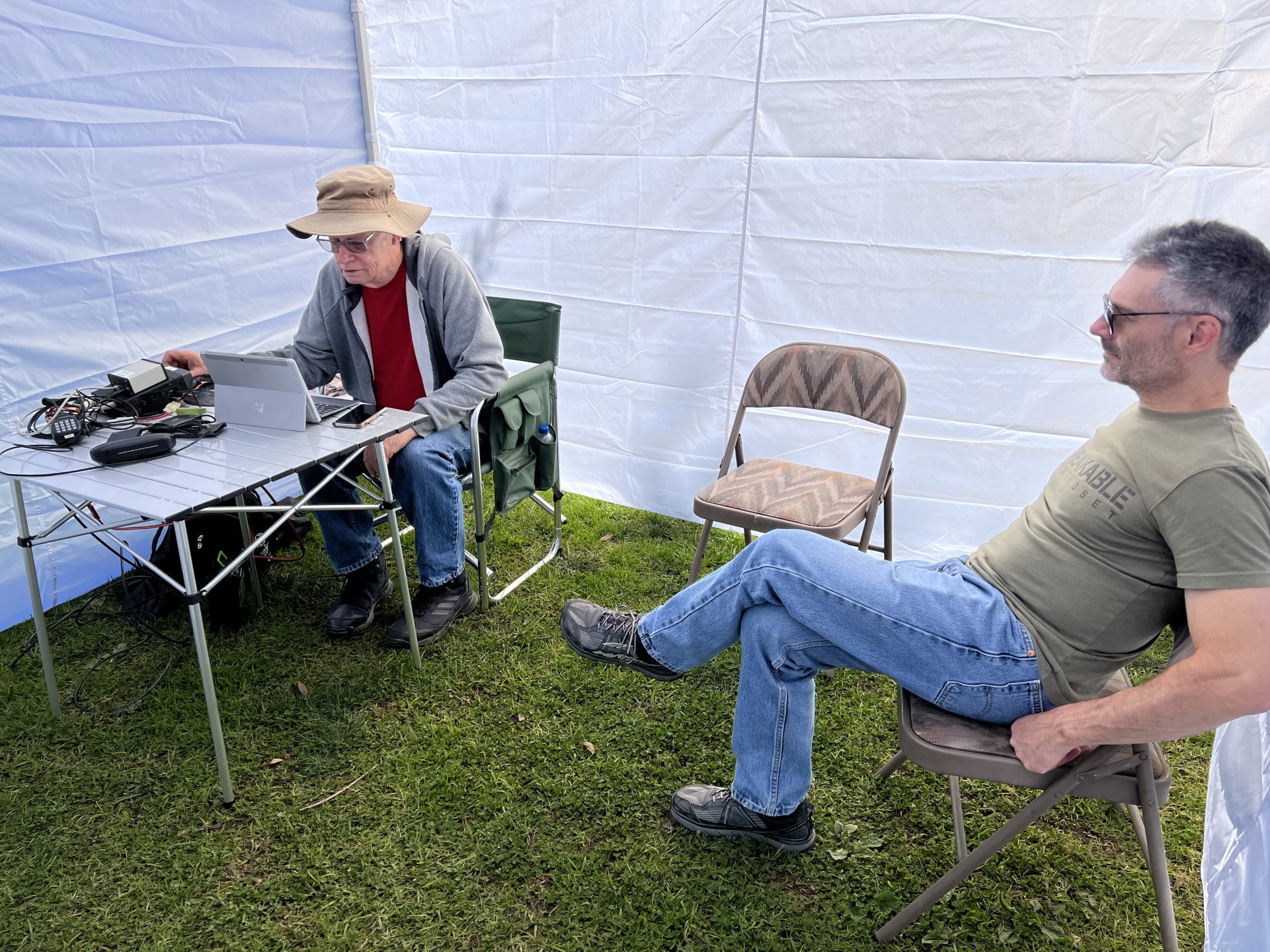
SPARC will participate in Winter Field Day on the afternoon of Saturday, January 28, 2023. We will set up a few operating stations in Eddie Park, just outside our monthly meeting venue, the Eddie Park House. More details to follow in the new year. In the meantime, Happy Holidays and 73!
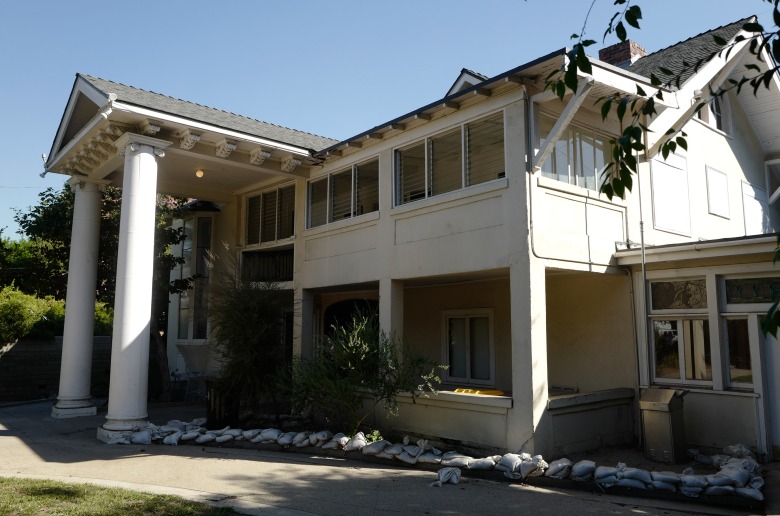
It’s official: The South Pasadena Amateur Radio Club has resumed in-person monthly meetings. The timing remains the same, the first Wednesday of the month at 7:30 p.m., but our location has changed. As of October, we are now meeting at the Eddie Park House at 2017 Edgewood Drive, South Pasadena, CA 91030. SPARC would like to thank the City of South Pasadena for their help in securing this new venue. We look forward to increasing the scope and ambition of our monthly meetings now that we can once again meet offline. Eyeball QSOs are back, and we hope to see you soon!
Photo credit: Keith Birmingham, Pasadena Star-News/SCNG
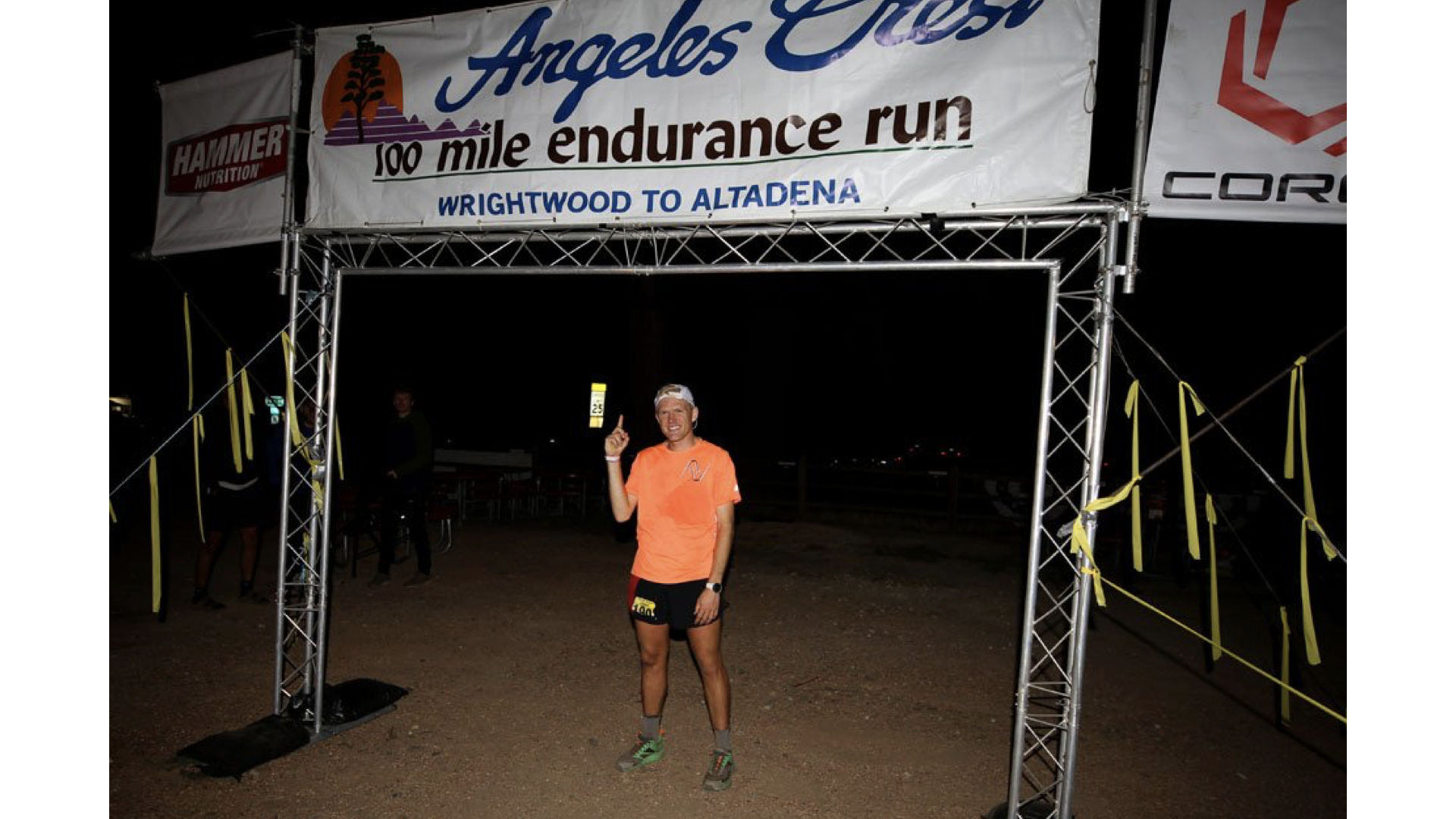
At our September meeting, SPARC member John Minger, AC6VV gave a presentation on the radio tools he uses to support the Angeles Crest 100 Mile Endurance Run. As the ham radio coordinator for the AC 100, John oversees a mix of analog and digital equipment that tracks the location and safety of the runners. Below is a selection of John’s slides which gives a sense of the scale of this annual event in our local mountains. If you’re interested in volunteering to help the AC 100, visit the official web site. SPARC thanks John for this informative and exciting look at operating under difficult conditions.
For our August membership meeting, SPARC conducted a live test of SPEAR, the South Pasadena Emergency Amateur Radio, a Kenwood 710GA. Bob Vanderwall, WB6YJJ, operated the station from Garfield Park in an attempt to determine how far SPEAR’s signal could reach. SPARC thanks the following stations for their participation.
Richard King, KE6VYZ
Jeff Liter, W2JCL
Clark Miller, K9IXS
Daniel Duncan, WA6NZZ
Randy Canfield, N9BM
John Wooten, N7JAY
Stan Tahara, KR6CV
Chad Alapag, AJ6UX
Chris Cronin, KM6OUK