At our February 2022 monthly membership meeting, SPARC welcomed a fixture of the local ham community, Nancee Darling, K8NBD. Nancee is an active member of several local groups including ARESLAX Northeast and ALERT. She gave an important presentation on Stop the Bleed, a program from the American College of Surgeons that teaches how to stop bleeding in a severely injured person. Nancee is a certified STB instructor, and she advocates that everyone should learning how to provide assistance in an emergency. Stop the Bleed is “a skill that can be utilized with your family, in your neighborhood or after that horrific traffic accident. You will enhance your ability and confidence to recognize life-threatening bleeding and intervene effectively. The person next to a bleeding victim may be the one who’s most likely to save him or her or yourself.”
Nancee followed up a few days later with more detail on liability concerns about intervening when someone is injured. “While Good Samaritan laws are different between jurisdictions,” she explained, “most of them share three common elements. They are that the helper is protected from liability if:
They obtain the permission of an ill or injured victim to render aid, when possible. They provide care in an appropriate and non-reckless manner. They provide care due to the situation being an emergency, and trained help has not arrived yet.”
Below is a video Nancee recommends on how to use a tourniquet.
SPARC thanks Nancee for sharing this practical and potentially life-saving information.
At our August monthly membership meeting — yes, six months ago, sorry — SPARC welcomed Jason Oleham, KM4ACK, the creator of Build-a-Pi. If you’re thinking about using a Raspberry Pi as your shack computer, Jason’s Build-a-Pi script can install many of the most popular ham radio apps and utilities automatically. Jason’s YouTube channel is a great source of information about Raspberry Pi, field operations, EmComm and digital modes. SPARC thanks Jason for speaking with us and for sharing his work with the entire ham community!
The South Pasadena Amateur Radio Club is taking a short summer break and will NOT meet on Wednesday, September 1, 2021. The weekly check-in nets will continue and the monthly meetings will resume on Wednesday, October 6, 2021.
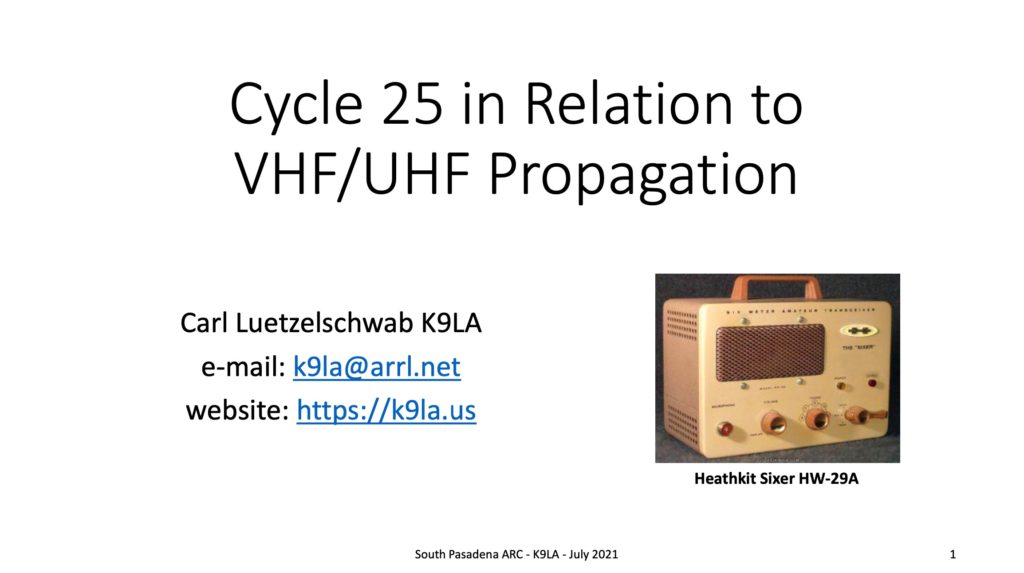
At our July monthly membership meeting, SPARC welcomed Carl Luetzelschwab K9LA, an expert on the science of radio propagation. Professionally, Carl worked for forty-one years as an RF design engineer, and in his spare time he was a columnist for WorldRadio (and later CQ) beginning in 1997. He continues to write a monthly column on radio topics at his personal website. His presentation to our July meeting is linked below (2 MB PDF). SPARC thanks Carl for speaking with us and for his continued devotion to the hobby!
At our June monthly membership meeting, John Aboud, KK6ZVQ presented an overview of Field Day rules. This is the second year that the ARRL has modified Field Day rules to accommodate social distancing. You can download the presentation here (445 KB PDF). He also discussed two online tools that could make a socially-distanced Field Day more fun.
Discord Discord is a chat and video streaming app much like Zoom. But unlike Zoom, which was designed for business use, Discord was designed by and for video gamers, so it has extra features that are useful for radio contesting. For example, rather than a specific, time-limited Zoom meeting, Discord “servers” are up and running at all times. Members of that server can log in and log out as they please and talk to whomever else is logged in at the time. Also, many people can share their screens simultaneously and stream their activity. You could share a view of your N3FJP screen or GridTracker or just your face. And you can selectively mute any of these streams — it would be overwhelming to hear all of them at once. If you’d like to join the SPARC Discord server, use the Contact Us page to request access.
ContestOnlineScore.com ContestOnlineScore.com is what the URL implies, an online scoreboard for monitoring a particular contest. Once you create your account, you can affiliate with a club and/or a contest team. You configure your logging program (N3FJP, N1MM+, etc.) to share your score with the site. To affiliate with SPARC, you can select “South Pasadena Amateur Radio Club” from the pull-down menu of clubs. Click here for information on how to configure your logger to post the scores.
This year Field Day will start at 11:00 a.m. Pacific time (1800 UTC) on Saturday, June 26 and end on Sunday, June 27 at 1:59 p.m. (2059 UTC). SPARC encourages everyone to get out, make some contacts and have fun!
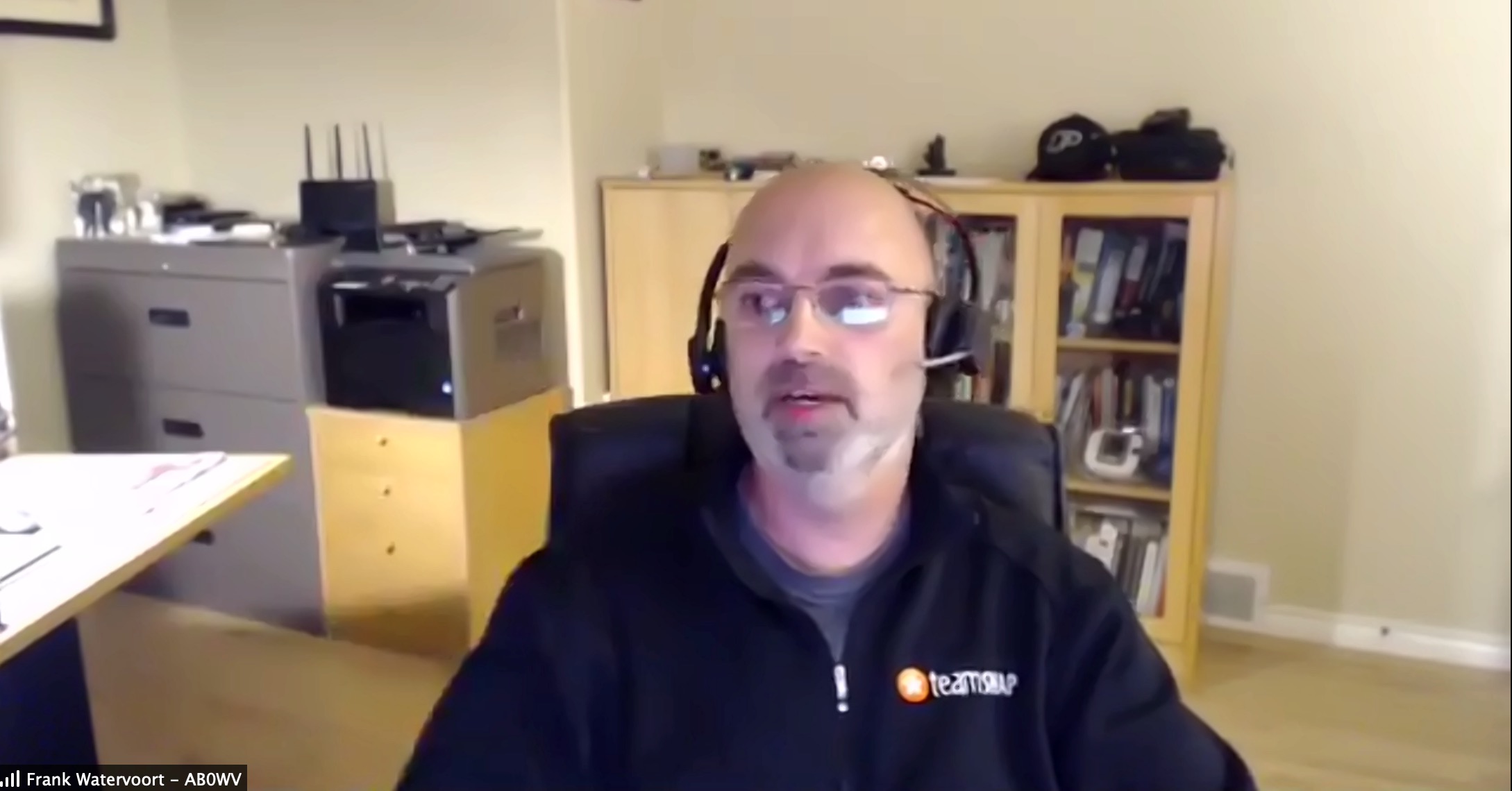
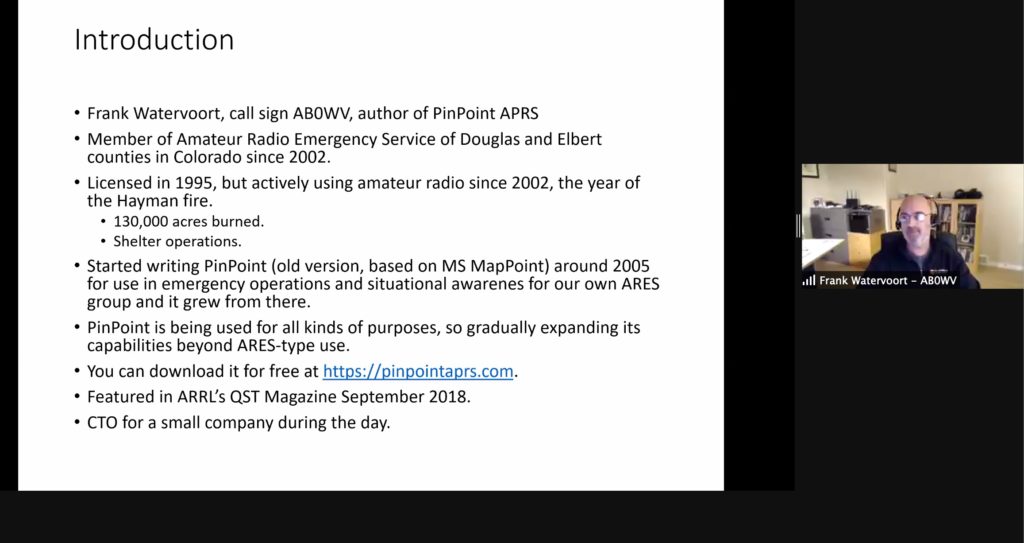
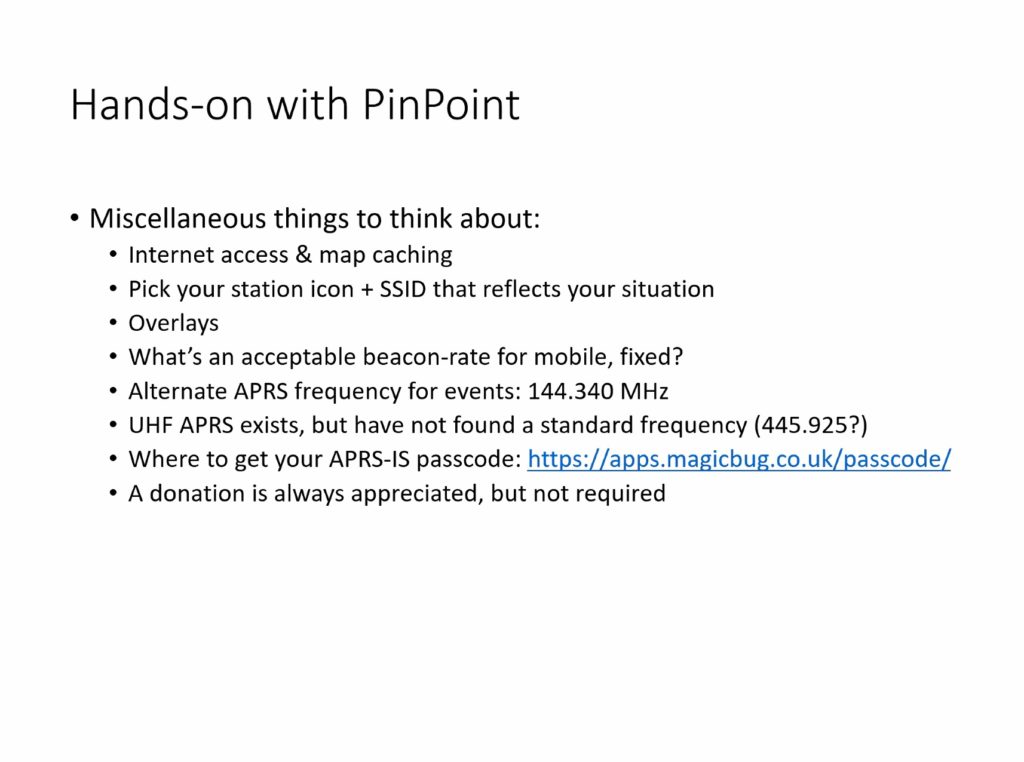
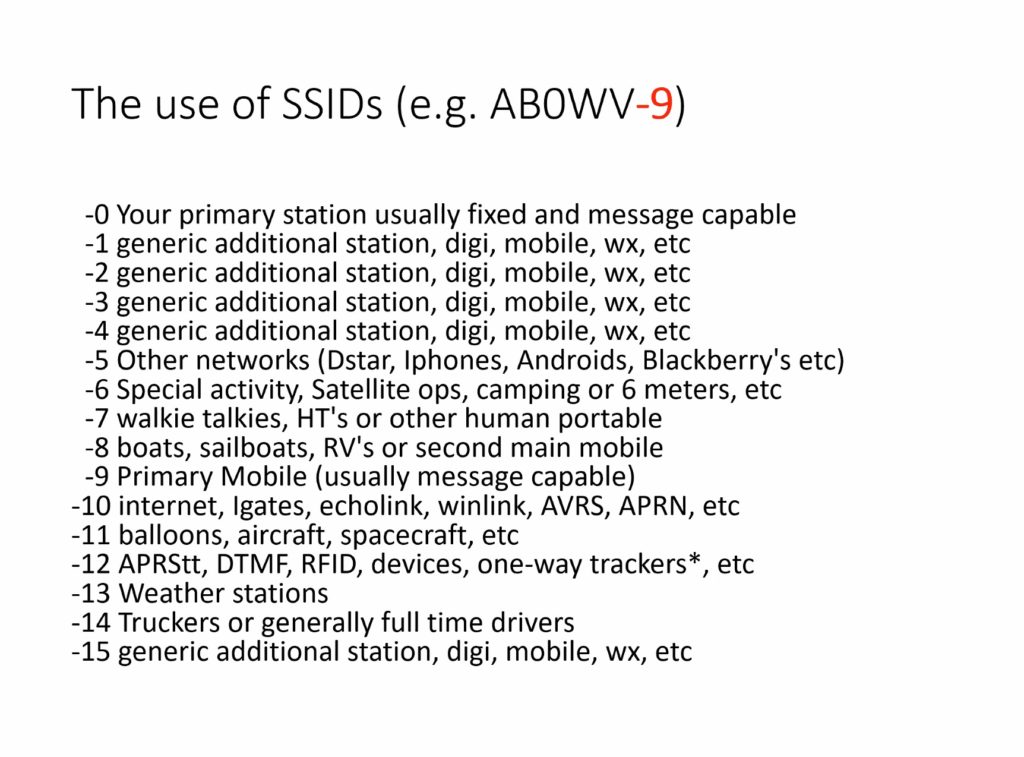
SPARC welcomed Frank Watervoort, AB0WV, to its May 5, 2021 membership meeting. Frank is the developer of PinPoint APRS, a Windows client for the automatic packet reporting system. PinPoint APRS has been adopted by our local ARES LAX Northeast as a useful tool for maintaining situational awareness and sharing location information.
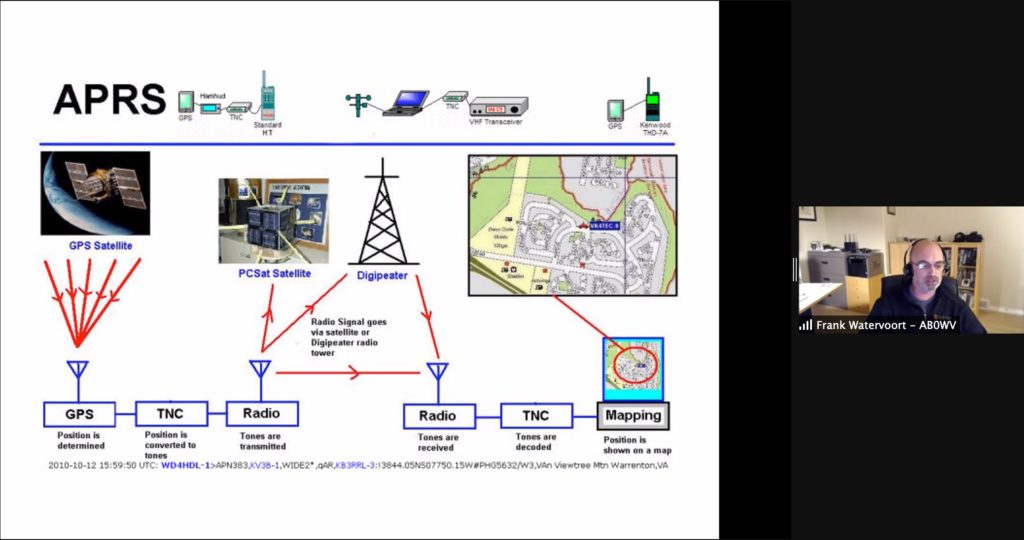
Frank explained the hardware requirements for using APRS with PinPoint or other software clients like APRSDroid. Devices manufactured by Kantronics, Byonics, and MobilinkD can bridge your computer or smartphone and your radio to send and receive APRS data. Certain radios, like the Kenwood D700 series, have APRS decoders built-in.
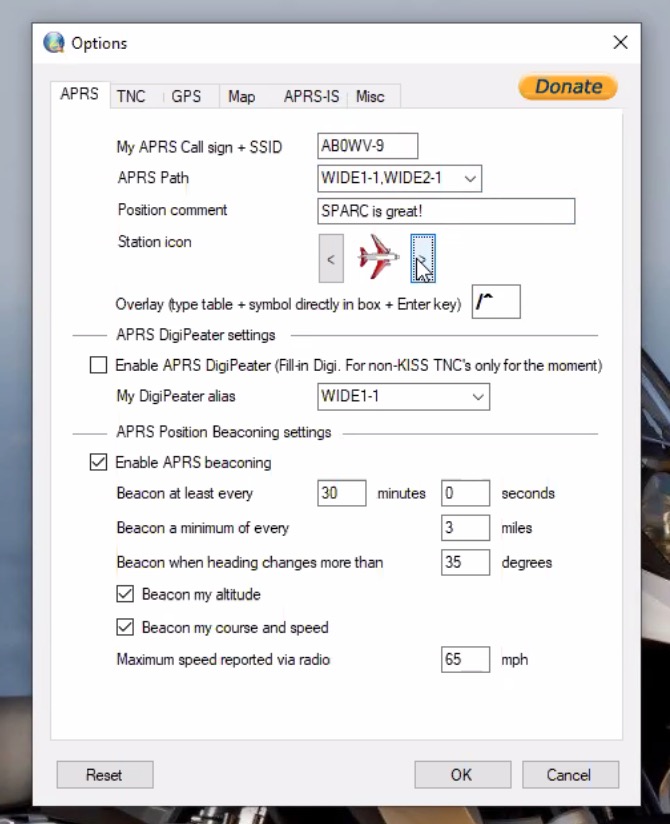
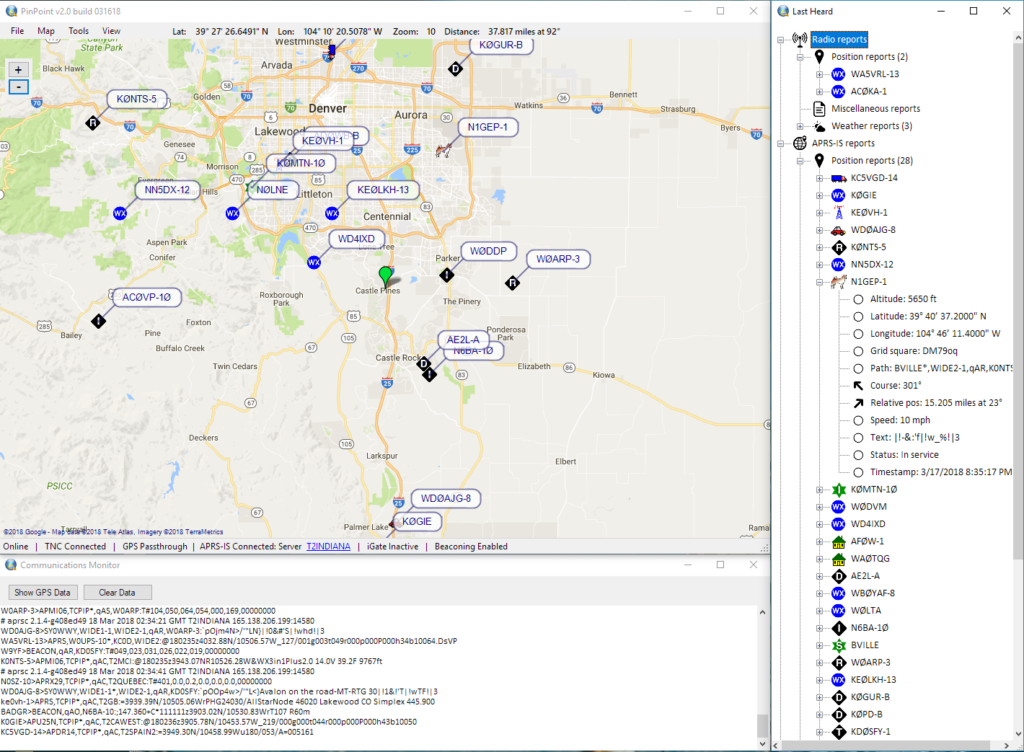
A shout out to SPARC in the position commentThe user interface of PinPoint APRS
Frank gave a detailed tour of PinPoint’s capabilities and encouraged everyone to explore APRS through such activities as public safety exercises and SOTA activations.
SPARC thanks Frank for his time and effort in maintaining this excellent program.
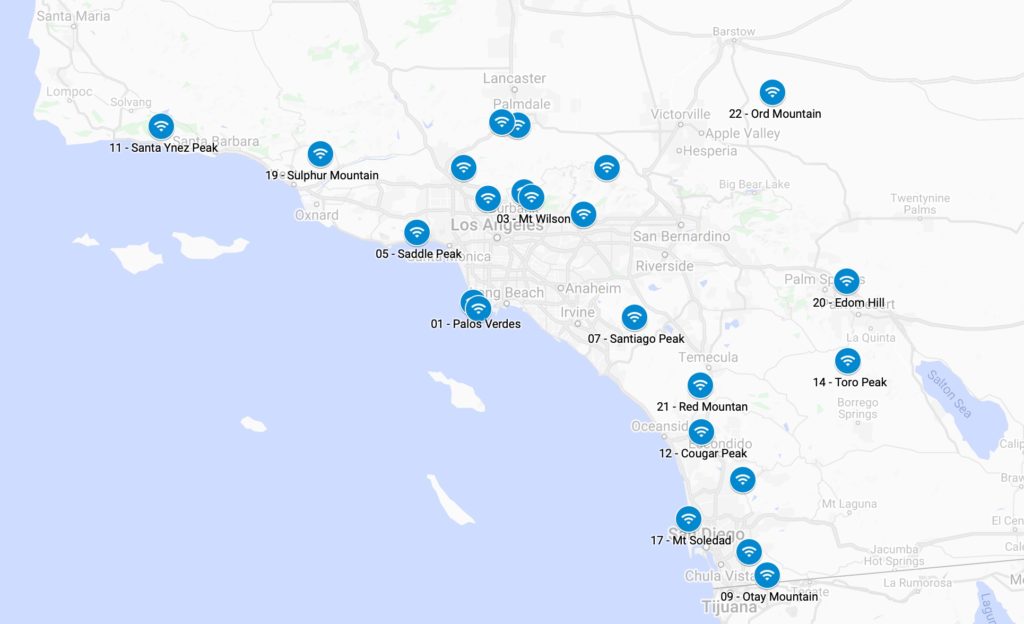
Forty-six members and guests attended to hear a presentation on DARN by Dick McKay, K6VGP, and Mike Lee, K6MJU. DARN stands for the Disaster Amateur Radio Network. It’s an impressive system of linked repeaters with coverage all over our region. K6VGP started the system back in 1959, but today it features the latest technologies such as IRLP, EchoLink, and AllStar. The technical aspects of maintaining the system largely fall to K6MJU.
Managing such a capable network is expensive, and DARN depends on memberships to keep everything running. Different membership tiers offer privileges designed for the occasional visitor all the way up to the power user.
SPARC thanks Dick, Mike and all the members of DARN for providing this vital public service to Southern California.
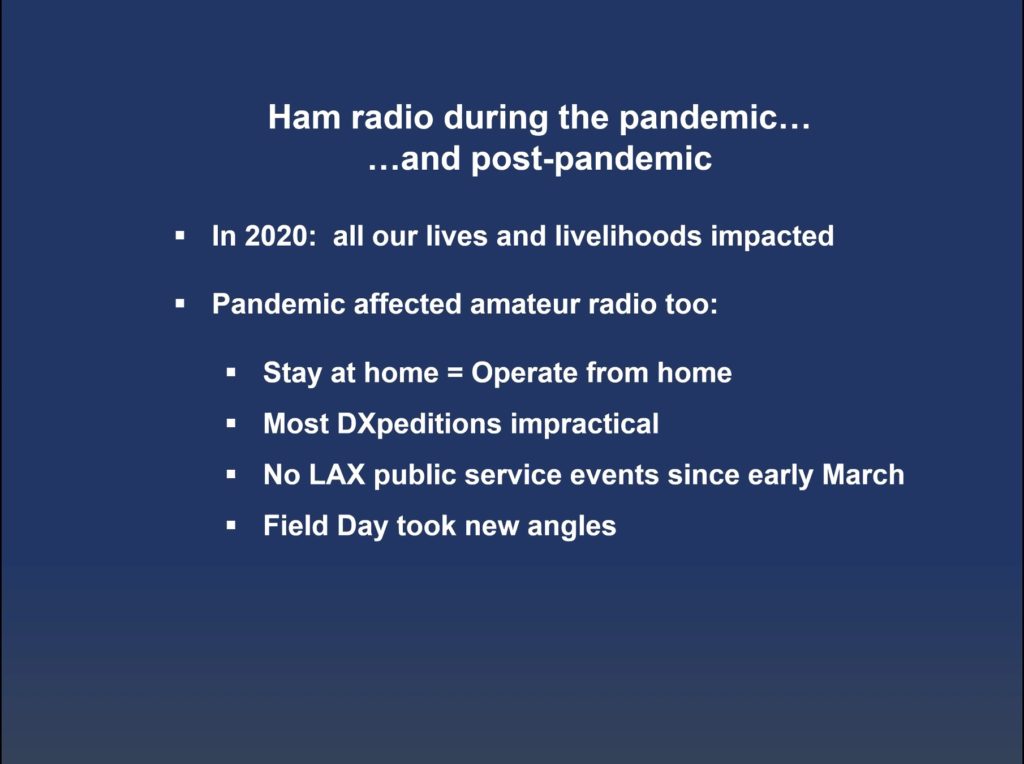
ARRL Los Angeles Section Manager Diana Feinberg, AI6DF, was the featured speaker at our February 3, 2021 membership meeting. Diana reported on the state of the League and reflected on how the pandemic has affected ham radio more generally.
After Diana’s presentation, Jeff Liter, W2JCL, explained how to participate in a digital Winlink net.
Thirty minutes before the net:
Turn on your radio and your TNC or soundcard.
FOR PACKET: Start the software modem Soundmodem. Check that your computer’s soundcard is set to “USB audio codec.” Check your settings by tuning to the APRS national frequency of 144.390 MHz.
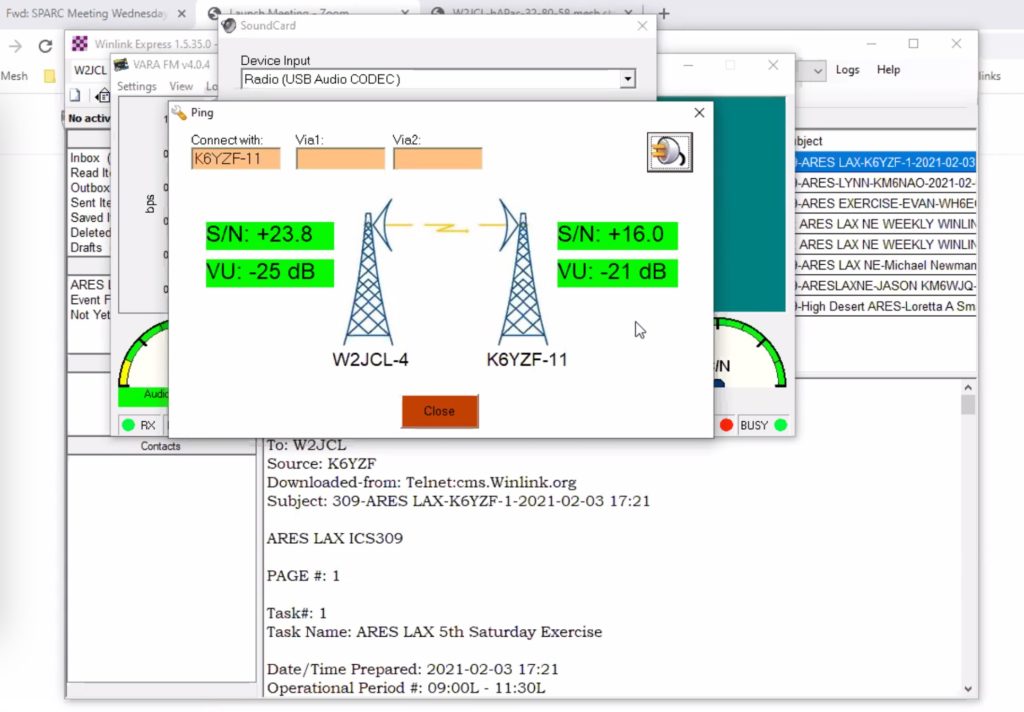
FOR VARA FM: Start VARA. Check that your comptuer’s soundcard is set to “USB Audio codec.” Check your settings by tuning to the SoCal VARA FM Autobahn at 145.030 MHz. Send a ping.
Sending a ping from within VARA FM
Tune to the frequency of the digital net exercise.
Open Winlink. You don’t have to open and close Winlink session during the exercise, it’s fine to set it up ahead of time.
Be sure to open the right kind of session: Peer to Peer or Gateway (use the switch button if necessary).
Select your template.
Fill it out.
Go back to Winlink and make sure the “Send As” is correct for your session.
Wait for net control to signal you to send.
Winlink can be an incredibly efficient means of communication. During a recent net, Jeff moved almost 100 Winlink peer-to-peer messages in under 2 hours.
SPARC was excited to welcome Pascal Villeneuve VA2PV as a guest speaker at our January 6, 2021 meeting. Pascal is known for his frequent reviews in QST magazine and for his in-depth YouTube videos covering gear, technique, and hamfests. Pascal spoke about how to get started creating ham-related videos for YouTube. Highlights included:
What kind of content on your channel is most popular? Reviews of the latest gear often lead to new subscribers, but those videos have a limited shelf life. Evergreen instructional content gets more views over time.
What is your workflow? Pascal recommends starting with the tools you already have and using free software until your needs expand. For example, DaVinci Resolve is a free, professional-level editing program. Pascal’s editing program of choice is Pinnacle Studio, which charges a one-time fee.
What is the ideal length of a video? YouTubers tend to believe that they cannot monetize anything shorter than ten minutes. But the ideal length depends upon the subject of the video. And it doesn’t matter how short a video is if it’s jittery, so use a gimbal for stabilization.
Do you storyboard? Yes, but the videos rarely turn out as planned. Pascal likes to work off a script. His most carefully scripted piece was a 2017 documentary The DXer and the Technician.
Any mistakes to watch out for? Don’t get into arguments online!
Do you get waivers from people in your videos? Pascal tends to film in public places like hamfests where there are posted notices about recordings. But he also edits thoughtfully to avoid embarrassing anyone.
Do you make any money from your channel? Yes, approximately US$200/month based on an average of 40k views/month. YouTube content is not a great way to make money. His most-viewed video is a review of the KenwoodTS-990 which has (as of January 2021) 98k views, and it has earned CN$380 over five years. He estimates it takes a minimum of 20 hours to create a video.
Any hints for recording video outdoors? Beware of backlighting. The camera on an iPhone is more than sufficient to record outdoors. If you want to invest in a dedicated 4K camera, the Sony ILCE6400 has one of the fastest auto-focus features.
What would you suggest as a question or subject to a get a club started making videos? Have club members share their projects. And don’t feel bad if the first videos aren’t professional. You’ll get better with practice. “If you’re not good at shooting videos, you better be good at editing videos.” He recommends using Open Broadcaster Software’s OBS Studio for screen capturing in 4K. “Don’t aim your camera at your computer screen.” Clubs could also start with a video answering the most commons questions from new members or people looking to join the club.
Show us your set up. Pascal explained much of the equipment in his shack studio and stressed the importance of three-point lighting.
What proportion of your videos are in French vs. in English? Pascal assumed he’d post all his content in English, but MFJ requested a French video. He now produces all his videos in both French and English versions. The videos in French receive about two-thirds of the views of the English ones, likely because there are few other channels posting ham radio content in French.
“All YouTubers are ashamed of their first video. And in five years, we’ll be ashamed of the videos we make today.”
It’s only appropriate that we recorded Pascal’s presentation and posted it on our own YouTube channel. We now have a whopping TWO videos!
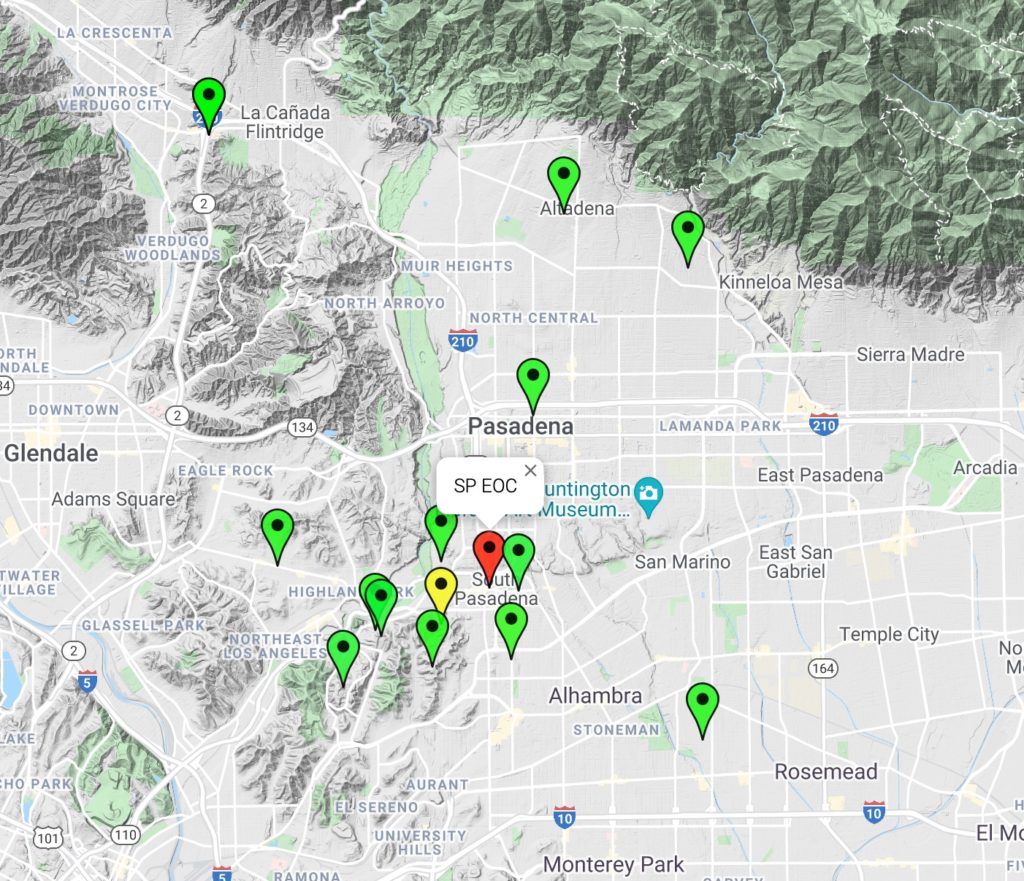
For our December 2020 meeting we ran a test of the ham station installed at the South Pasadena Emergency Operations Center. By coordinating the test over Zoom, we were able to troubleshoot in real time and share a live map of participating stations. As you can see in the map below, the coverage area from the station was impressive, reaching all the way to Verdugo Hills Hospital. The red pin is the South Pas EOC, the yellow pin is the water tower, and the green pins are station that particpated in the test.
Our hope is to consistently run nets from the EOC once Covid-19 safety protocols are no longer necessary.